






 Portuguese
  Spanish


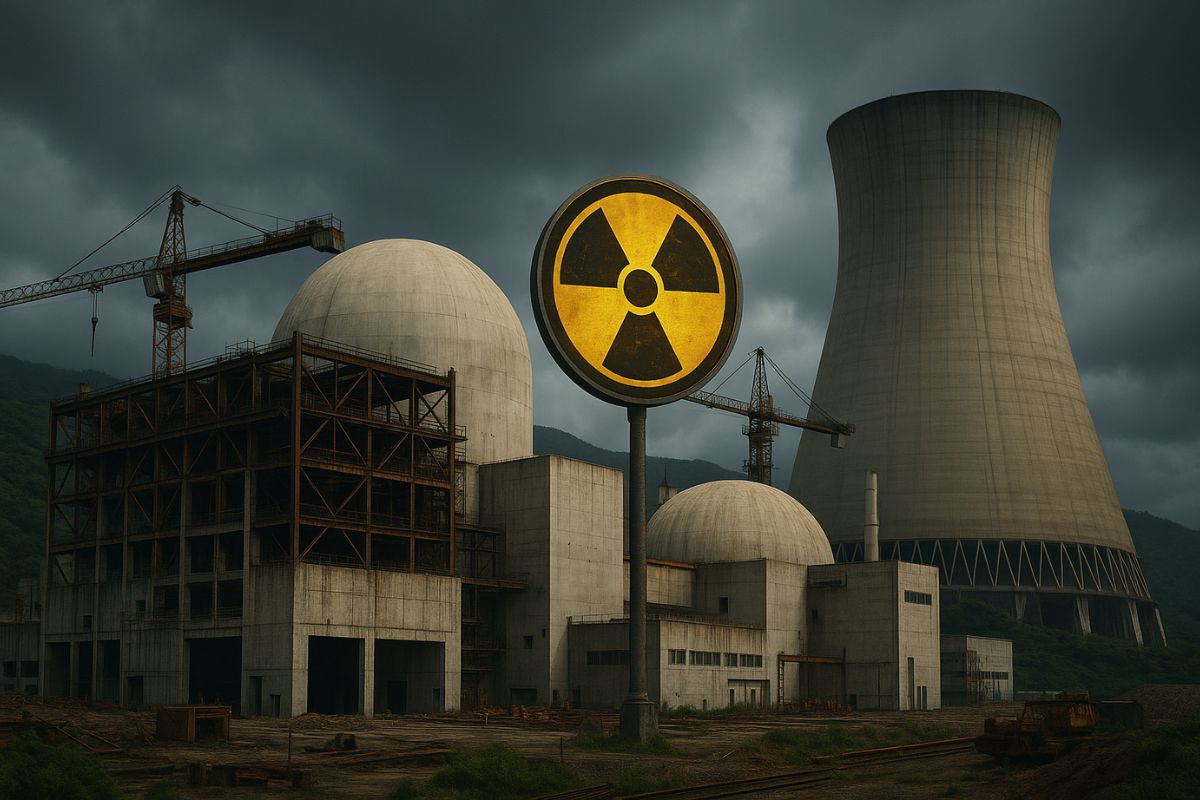


With Two-Thirds of the Works Completed, Angra 3 Nuclear Power Plant Depends on Technical, Economic, and Legal Reassessment to Advance or Be Definitely Canceled
The Angra 3 nuclear power plant, under construction since the 1980s in Angra dos Reis (RJ), will return to square one in terms of planning. Despite more than half of the project being physically complete, the federal government has determined that BNDES conduct a new technical, economic, and legal feasibility study to decide the unit’s fate. This measure comes after Eletrobras’ exit from the project and uncertainties surrounding its financing.
Eletronuclear, the state-owned company currently responsible for the country’s nuclear plants, reported that the decision was agreed upon between the Union and Eletrobras in early 2025. With the privatization of the former state-owned company, it was agreed that it would no longer be obligated to invest in Angra 3, which forced the government to seek new financing options, including possible partnerships with the private sector.
Angra 3: Dilemma Between Advancing or Giving Up
According to previous studies by BNDES itself, completing the construction of Angra 3 would cost R$ 23 billion, while abandoning the project would incur an estimated loss of R$ 21 billion. So far, approximately R$ 12 billion has already been invested. The value and risks involved make the decision strategic, especially in the current context of seeking energy security and reducing greenhouse gas emissions.
-
Former Banker Invests $24,000 to Create Award-Winning Burgers with Unique Brazilian Ingredients, Drawing Customers from Across Regions

-
Imported Electric and Hybrid Cars in Brazil Face 35% Tax Increase, Raising Prices Starting July 1st
-
Rio de Janeiro Buses Stop Accepting Cash: How to Pay and Maintain Fare Integration

-
Toll Fees in São Paulo’s Countryside Drop by Up to 50% Starting Today




The plant would have the capacity to serve 4.5 million people, equivalent to 70% of the electrical energy consumption of the state of Rio de Janeiro. Nevertheless, the National Energy Policy Council (CNPE), composed of representatives from various ministries, has not yet reached a consensus on the continuity of the project.
Why the Government Hesitates to Advance with Angra 3
The uncertainty is exacerbated by the debts accumulated by Eletronuclear, which already total around R$ 7 billion, in addition to an annual operational cost of R$ 800 million. As a result, the state-owned company requested a temporary suspension of payments to BNDES and Caixa Econômica Federal until December 2026, seeking time for BNDES’s new analysis and a possible financial restructuring.
Despite the history of corruption surrounding Angra 3, revealed in Operation Lava Jato, some government officials and experts advocate for the project’s resumption, arguing that nuclear energy can serve as a reliable base to compensate for the intermittency of renewable sources such as solar and wind.
And If the Project Is Resumed, Who Will Finance It?
Given the impossibility of the government bearing the costs alone, Eletronuclear assessed the interest of the private sector in a public consultation last year. The expectation now is to launch a tender for contracting via EPC (Engineering, Procurement, and Construction) contract, with majority financing through credit and investors.
The plan is to raise up to 90% of the resources with private capital, a strategy seen as essential to unlock the completion of the construction site that has been halted for over 40 years.
Nuclear Context in Brazil and the World
Currently, Brazil operates with two nuclear power plants: Angra 1 and Angra 2, which represent 0.8% of the national electricity generation capacity, according to ONS. In 2024, Angra 1 had its license renewed for another 20 years, after undergoing a technical stoppage for modernization.
Internationally, nuclear energy has returned to the debate for its ability to provide constant energy with low carbon emissions, although it continues to face resistance due to past accidents and high costs.
Do you think Brazil should complete the construction of Angra 3? Is the investment worth it, or is it time to turn the page? Share your thoughts in the comments — your opinion could illuminate this crucial energy debate.







Acho que o PT ainda nao conseguiu roubar tudo que podia. Precisa abrir outra licitação.
A Suíça que é 206x menor que o Brasil em m² tem 3 usinas nucleares, a conclusão dessa usina culminará em uma viabilidade econômica, social e até política para o país. E esse valor que dizem ter sido gasto no que já foi construído é uma farsa, deve ser feito um novo levantamento.
Enquanto o mundo todo aumenta seus investimentos em Nuclear o Brasil ainda questiona se vale ou não a pena finalizar Angra. É uma vergonha e visão muito curta para não enxergar que sem a energia nuclear estaremos fora da próxima “revolução industrial” que vem com as IAs e datacenters. Alguém quer que o Brasil fique fora dessa….