






 Portuguese
  Spanish


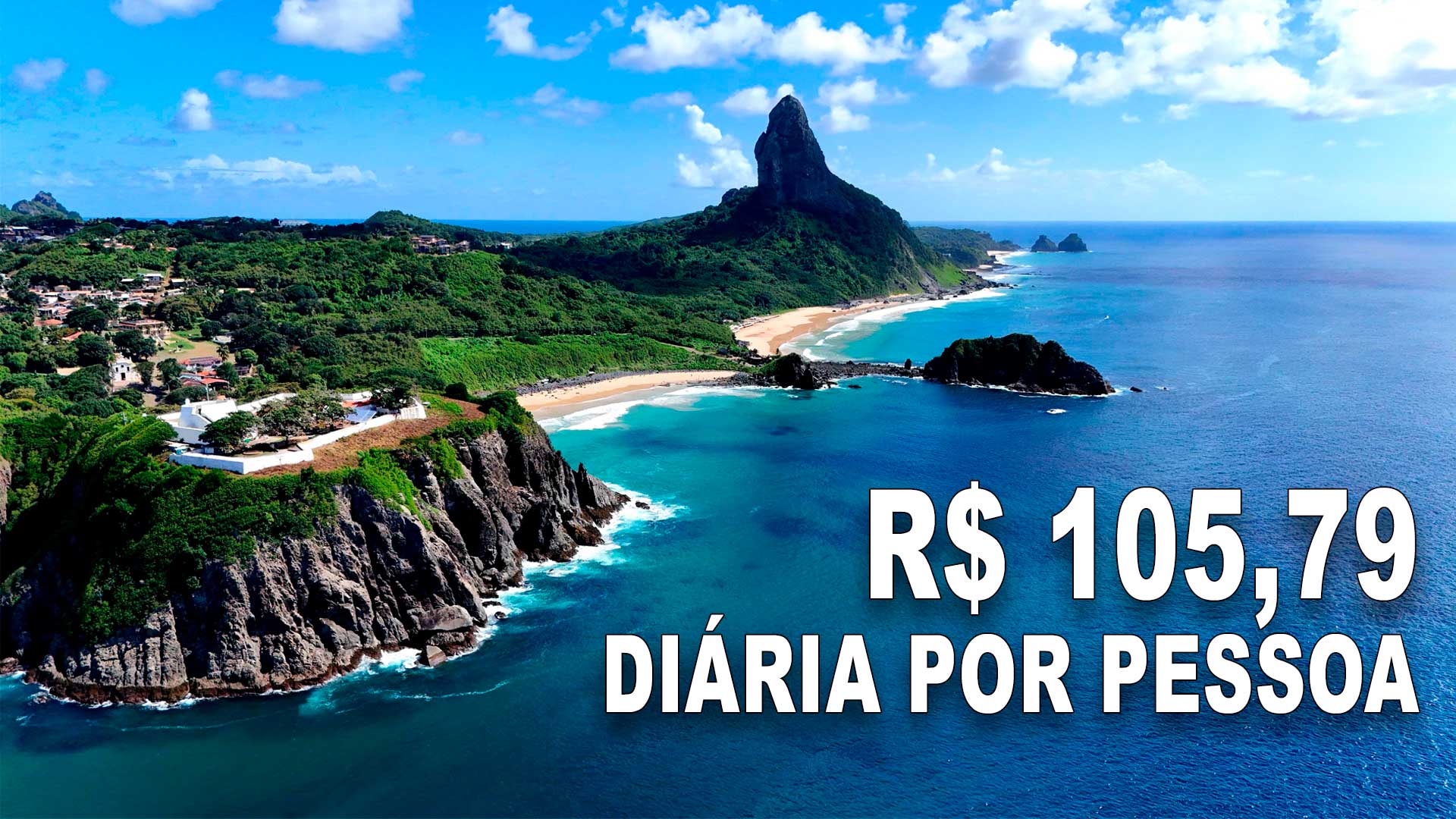


The Environmental Preservation Fee in Fernando de Noronha Was Adjusted by 4.4% and Is Now R$ 105.79 Per Day. The New Amount Came Into Effect on January 1, 2026, and Follows Legal Annual Adjustment Rules Linked to the IPCA.
Fernando de Noronha, one of the most sought-after destinations in Brazilian tourism, started 2026 with higher costs for visitors to the archipelago. The Environmental Preservation Fee, known as TPA, has been updated and now starts at R$ 105.79 per day of stay, an amount charged to non-resident tourists.
The change took effect on Thursday, January 1, 2026, and represents a 4.4% increase from the previous amount of R$ 101.33. According to information released in the local press, the annual adjustment is stipulated in legislation and uses the accumulated variation of the IPCA as a reference.
In practice, the charge does not function as a fixed entry price, but rather as a progressive fee linked to the length of stay. The logic is to discourage very long stays while simultaneously creating a revenue source for maintaining the environmental conditions of the archipelago.
-
Brazilian Job Market Surprises: Unemployment Falls to 5.6%, Hits Record Low for May, Brazilian Incomes Rise, and Underemployment Reaches Lowest Level Ever Recorded by IBGE

-
Chinese E-commerce Giant Predicts Robots Will Replace 700,000 Delivery Workers as Autonomous Vehicles Expand to 200 Cities, Offering Training for Workers to Maintain Their Machines

-
Trump warns Europe with 100% tariff threat on digital tax, potentially impacting wine and trade agreements
-
As Homeownership Becomes Unattainable in Brazil, Japanese Municipalities Offer Abandoned Houses for as Low as $3,000 to Revitalize Aging, Emptying Cities


The topic returns to the center of debate at a time when several tourist cities in Brazil are discussing similar charging models to cope with pressure on beaches, trails, sanitation, and waste. In Noronha, the updated official table is already available on the district’s portal.
Adjustment of the Environmental Fee in Fernando de Noronha Increases the Daily Cost for Tourists
The new amount for TPA has gone up to R$ 105.79 per day, and the update took effect on January 1, 2026. The district’s own public table shows the new base and the total amounts according to the number of days.
The adjustment was 4.4% and replaces the previous fee of R$ 101.33. The automatic annual update based on the IPCA is also cited as a rationale for the change.
As the charge is individual, families and groups feel the impact multiplied, especially during peak season. The difference of a few reais per day can turn into dozens or hundreds of reais in the final budget, depending on the length of the trip and the number of visitors.
How the TPA Works and Why It Has Existed Since 1989
The Environmental Preservation Fee was established by Law No. 10,403 of December 29, 1989 and has since undergone legal updates. The official portal explains that the charge is aimed at non-resident or non-domiciled individuals visiting for tourism and is calculated based on the number of days of stay.
According to the same portal, the goal is to preserve environmental conditions and manage the impact of tourism on a small and sensitive territory. In practice, the fee functions as a management tool, combining revenue collection with a moderating effect on visitor flow.
Progressive Table of the TPA Shows How Much It Costs to Stay 7 or 30 Days and How to Pay Without Headaches
In the official 2026 table, seven days of stay total R$ 672.85. For 30 days, the total comes to R$ 7,460.56, highlighting the weight of progressivity on the final cost.
The district itself informs that the charge can be paid before boarding, online, with a credit card or boleto, or upon disembarking and returning to the mainland in specific situations. It is recommended to pay in advance to expedite entry to the island.
There is an important practical rule for those who change their trip at the last minute. If the visitor extends their stay, they need to renew the period and pay for the additional days on time to avoid issues at the fee counter.
The system also warns about penalties in cases of staying beyond the initially planned period without proper authorization. The official portal mentions that exceeding days may be charged at double in certain situations outlined in the legislation.
Another point mentioned by the district is the payment method for those with cards issued outside Brazil. In such cases, the guidance is to pay the fee directly at the Fernando de Noronha airport counter.
Environmental Fees in Tourism Are Advancing Across Brazil and Generating Debate About Elitism
The charge in Noronha is often compared to models adopted by other tourist cities, with different formats. Ubatuba, on the northern coast of São Paulo, maintains an Environmental Preservation Fee linked to environmental impact management, according to the official municipal portal.
São Sebastião also has a fee initiative related to vehicle entry for tourism purposes and designated for cleaning, waste, and conservation actions, according to the official page of the city hall.
At the same time, the discussion often becomes controversial when the charge arises close to the peak season. In Ilhabela, for example, the implementation of a charge proposed for December 2025 was suspended by order of the Court of Accounts, according to reports published at the time.
Entry to the Maritime National Park Was Also Adjusted and Is in the Visitor’s Account
In addition to the TPA, there is an admission fee to access areas of the Maritime National Park, managed by ICMBio. The official page of the park informs that, based on an ordinance from the institute, the admission fee is R$ 384 for the general public and R$ 192 for Brazilians, with validity of 10 days.
Reports on the subject have noted that the admission fee adjustment was 2.9% and took effect on November 1, 2025, associated with the IGP-M as the indexer used for annual updates.
In practice, travelers need to budget for two different expenses to plan their trip. The TPA is daily and depends on the total time on the island, while the park admission is a one-time fee with a usage period, and combining the two can significantly alter the final budget.


De graça é caro.
Lugar onde tudo é escasso, o preço das coisas é exorbitante. Pelo que se paga pra ficar lá, no meio do nada, prefiro mil vezes o Caribe.
Não tem oportunidade pra trabalhadores brasileiros né só políticos e estrangeiros… #AcordaBrasil