






 Portuguese
  Spanish


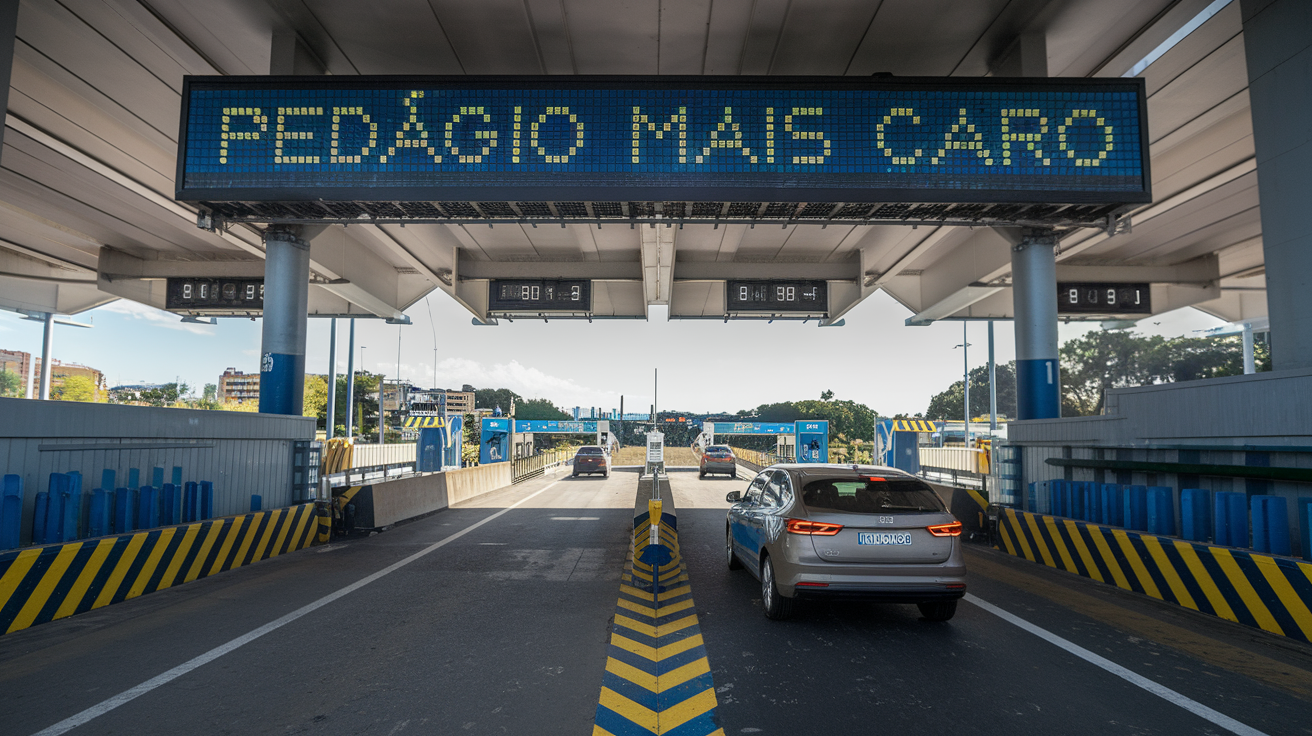


Agency Approves Adjustment of Toll Rates on Highways. As of February 11, the rates for passenger vehicles will be R$ 13.50, while motorcycles will pay R$ 6.75. Nine-axle trucks may pay up to R$ 121.50.
In a country with continental dimensions like Brazil, highways are essential for the mobility of people and the flow of production.
Any change in toll rates has a direct impact on the economy and on drivers’ wallets.
In Mato Grosso do Sul, a new regulatory decision will result in adjustments to the amounts charged on important roads in the state, affecting drivers and carriers who depend on these roads for their daily activities.
-
Brazil’s Federal Revenue Auction: iPhone 13 for $95, PlayStation 4 for $80, and Volkswagen Jetta for $2,600 Among 232 Lots Available

-
Tech Giant Oracle Lays Off 21,000 Employees and Invests $70 Billion in Artificial Intelligence

-
Chilean Giant Acquires St. Marche, Expanding from Discount to Premium Supermarkets in São Paulo’s High-End Retail Market
-
After 60 Years of Selling Cheap Milk, Brazilian Family Invests in $4,000 Equipment to Transform Farm’s Milk into Premium Sweets, Producing 2 Tons Daily and Aiming for $6.4 Million


The State Agency for the Regulation of Public Services of Mato Grosso do Sul (Agems) approved a 4.83% increase in the toll rates on highways managed by the Concessionária das Rodovias do Leste MS S.A., known as Way-112.
As of February 11, 2025, the new rates will take effect, affecting five toll plazas.
For small cars, the rate will increase from R$ 12.91 to R$ 13.50. Motorcyclists will pay R$ 6.75, while trucks with trailers and truck-tractors with semi-trailers with nine axles may pay up to R$ 121.50 per passage.
Highways and Sections Affected
The state concession covers a total of 412.4 kilometers, encompassing three important highways that cross the state:
- MS-112: Extends from the junction with BR-158, in Três Lagoas, to the junction with the same federal highway, in Cassilândia, with a total length of 200.5 kilometers.
- BR-158: The concession covers the section from Way-306 (Cassilândia) to the junction with MS-444 (Selvíria), totaling 193.8 kilometers.
- BR-436: The concession covers from the junction with BR-158, in Aparecida do Taboado, to the end of the interstate bridge, with a length of 18.1 kilometers.
Location of Toll Plazas
The new rates will be applied at five toll plazas spread across the concessioned sections. The charging points are distributed as follows:
- BR-158: Km 78+100, in the municipality of Paranaíba.
- BR-158: Km 118+100, located in Aparecida do Taboado.
- BR-158: Km 174, also in Aparecida do Taboado.
- MS-112: Km 64+200, in Selvíria.
- MS-112: Km 193+300, in the region of Cassilândia.
Justification for the Adjustment
According to Agems, the rate update is a procedure provided for in the concession contract and aims to ensure the economic and financial balance of the service provided by the concessionaire.
The adjustment was published in ordinance no. 288 in the State Gazette, based on the need for maintenance and improvement of the highways.
Way-112 justifies the increase by highlighting that the collected amounts are invested in road safety, the quality of paving, and support services for drivers, such as towing and emergency assistance.
According to the concessionaire, these improvements help reduce the number of accidents and facilitate the transport of goods and passengers.
Impact on Drivers and Carriers
For passenger drivers, the increase may seem small, but for carriers and fleet owners who cross the highways daily, the accumulated cost may represent a significant impact.
The transport sector is already facing challenges with high fuel costs and vehicle maintenance, and the toll adjustment adds to these challenges.
The Federation of Transport and Logistics Companies (Fetransul) expressed concern about the increase, warning that it may lead to adjustments in freight prices, which would also impact the final consumer.
“Transporters are already dealing with a series of financial and tax challenges. Any adjustment in operational costs ends up reflecting in the prices of the transported products”, emphasized a spokesperson for the entity.
Comparison with Other Highways in the Country
The toll adjustment on Way-112 follows a trend observed in other concessions throughout Brazil.
In states like São Paulo and Paraná, rates have also undergone adjustments in recent years, always with the argument of needing maintenance and expansion of infrastructure.
Experts point out that the concession model has advantages, such as better maintenance of roads, but that greater transparency in accountability by concessionaires is needed.
Expectation for Improvements
With the implementation of the new rates, it is expected that the revenue will be redirected to effective improvements in highway infrastructure.
For drivers, it remains to monitor and demand the execution of promised works, ensuring that the toll paid brings a return in safety and comfort on the roads.
According to experts, in light of rising costs, it is essential for drivers to be aware of possible alternative routes, evaluate the impact on the financial planning of trips, and if necessary, seek strategies to minimize the effects of the adjustment, such as carpooling or using alternative routes when feasible.
In any case, the adjustment in Way-112’s rates reignites the debate about the cost of mobility in Brazil and the efficiency of the concession model.
The question remains whether drivers will see, in practice, the promised benefits from the increased revenue.









Isso é um absurdo querem acabar com os autônomos ,estrada ruim, diesel caro, agora mas aumento de pedágio,o brasil tem que se ffffffff,……,,…,
Penso que nada justifica um pedágio tão caro como os nossos, pra mim o maior problema no Brasil somos nós, que ficamos reclamando um para o outro e depois pagamos e vamos para praia, nossos protestos se limitaram a 10 centavos nas passagens de ônibus, o que vemos hoje é uma festa de pedágios, radares e muitas multas e claro a culpa sempre é do cidadão, repito culpa nós temos sim , mas é de não parar o Brasil por tantos desmandos, corrupção e muita gente mamando na teta