






 Portuguese
  Spanish


Announcement Provides for Toll Exemption, Billion-Dollar Investments in Infrastructure, and Implementation of Electronic Toll Technology on Strategic Highways of the São Paulo Coast. Works Include Duplications, Marginals, Bike Lanes, and Traffic Safety Measures.
Residents of the Ana Dias district, located in the municipality of Itariri, in the interior of São Paulo, now have full exemption from paying the electronic toll implemented by the Siga Fácil system.
The announcement, made by Governor Tarcísio de Freitas (Republicans), occurs in the context of the concession of the Litoral Paulista Lot, whose contract provides for significant investments in road infrastructure.
The exemption covers all vehicles registered in Ana Dias, which will not have to pay the toll at the electronic portals when traveling on sections included in the concession.
-
Couple Sold Their Home to Save Business, Now Run Platform Handling $180 Million Monthly and Managing Over 51 Million Listings

-
Brazil’s 2026 Tax Refund: Record 9.58 Million Filers in Largest Payout Ever, But a Key Detail on Priority Recipients Draws Nationwide Attention

-
Itaú Alters Hybrid Work Model, Increasing Office Days from 2028, Prompting Employees to Adjust to New Routine
-
Facing Labor Shortage, Japan Plans to Invest $34 Million to Attract Foreign Workers in Construction, Healthcare, Industry, and Commerce





The state government reported that it is studying alternatives to extend the benefit to residents of the Caruara neighborhood in Santos, expanding the measure to other areas impacted by the new toll model.

Billion-Dollar Investment in Road Infrastructure
The concession contract signed by the Novo Litoral Consortium (CNL) involves the application of R$ 4.3 billion over the established period, focusing on duplications, construction of marginals, bike lanes, walkways, and structural improvements on strategic highways for regional mobility.
The initiative covers approximately 89.8 kilometers of duplication, 108.5 kilometers of illuminated marginals, and 212 kilometers of infrastructure interventions, covering regions such as Baixada Santista, Alto Tietê, and Vale do Ribeira.
The State Partnerships in Investments Secretariat indicates that the works aim to increase road safety, improve traffic flow, and facilitate movement for both residents and visitors in important logistical and tourist corridors of the state.
Emergency Works and Ongoing Improvements
About R$ 134 million are already being employed in emergency actions, including recovery of travel lanes, reinforcement of signage, implementation of lighting in critical sections, as well as structural repairs and installation of bases for 24-hour service to road users.
The state administration emphasizes that, since the start of the concession, nearly 10 million square meters of vegetation have been managed and cleared, which is equivalent to an area larger than a thousand soccer fields.
This measure helps to increase visibility and, consequently, reduce the risk of accidents.
According to the government of São Paulo, these interventions reflect the commitment to delivering modern, safe, and accessible infrastructure to the coastal population and drivers who use the roads daily.
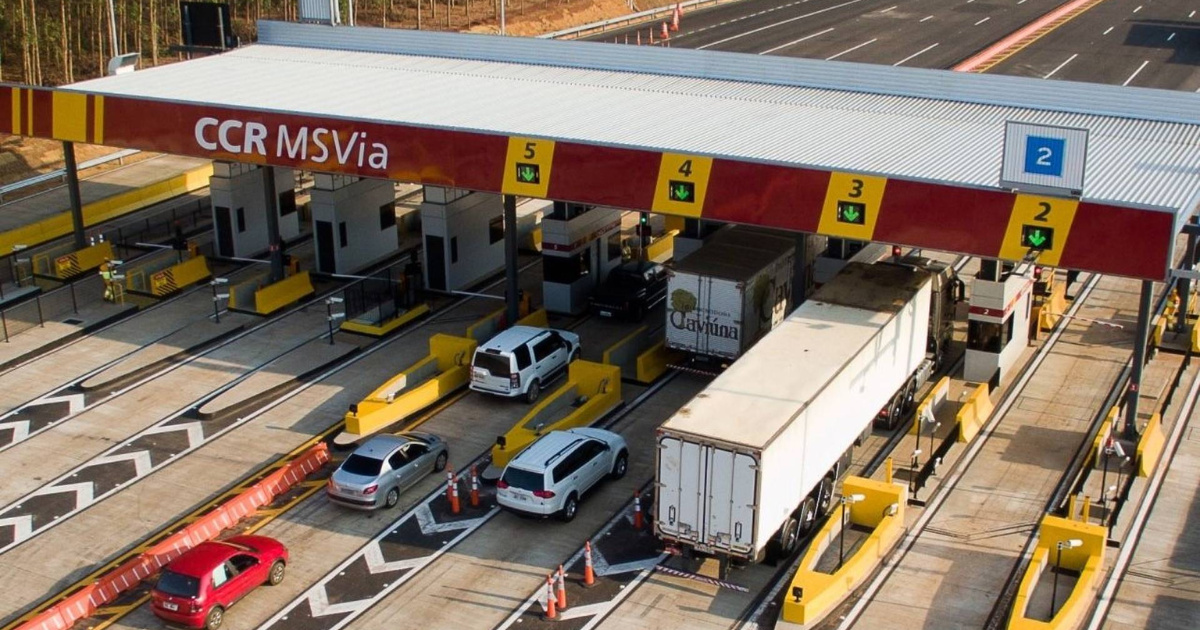
Siga Fácil: Technology and Charging Based on Usage
The Siga Fácil system was developed to replace traditional toll plazas with electronic portals equipped with license plate reading technology and identification via tags.
The proposal ensures that payment is proportional only to the actual section traveled, avoiding disproportionate charges and queues on the roads.
Operated under the supervision of Artesp, the Siga Fácil integrates the modernization program for road concessions in the state.
The implementation will be gradual, covering recent projects such as the Novo Litoral Paulista, Nova Raposo, and Rota Sorocabana, in addition to current contracts.
According to the schedule, the first electronic portals will go into operation in November 2025, covering sections of Arujá, Mogi das Cruzes, Bertioga, Santos, Miracatu, and Itariri.
Other cities, such as Peruíbe, Itanhaém, Mongaguá, and Praia Grande, are expected to receive the technology starting in 2027.
In addition to providing more agility, the system increases transparency in the charging process, as the value is determined by the distance traveled.
Motorcycles will be permanently exempt, while residents and workers using the marginals will have guaranteed free access.
Progressive discounts are also planned for frequent users, encouraging use of the roads and reducing costs for those who rely on these sections daily.
Duplication and Expansion of the Main Highways of the São Paulo Coast
The announced package includes duplications on the Padre Manoel da Nóbrega Highway, as well as the construction of illuminated and paved marginals, installation of walkways and bike lanes, and the creation of underpasses to improve urban connectivity.
The expansion of shoulders and the recovery of sections deemed critical are also planned, aiming to ensure more safety for drivers, cyclists, and pedestrians.
The Novo Litoral Consortium will be responsible for managing the highways SP-055 (Padre Manoel da Nóbrega and Cônego Domenico Rangoni), SP-98 (Mogi-Bertioga), and SP-88 (Mogi-Dutra), which play a fundamental role in the flow of production, tourism, and movement between the municipalities of the São Paulo coast and the interior.
The implementation of the automatic charging model (free flow) can only occur after the completion of mandatory contractual improvements, such as resurfacing, signage, communication reinforcement, and provision of essential services.
The goal is to ensure that residents only start paying tolls after the completion of the planned works, respecting the commitment made in the contract.
In the stretch between Peruíbe and Praia Grande, for example, the charging will be conditioned on the completion of the marginals, ensuring free access via parallel roads for local residents and workers.







O governador Ratinho aqui do Parana fez isso para se reeleger, depois de reeleito o pedágio voltou, mas as estradas estavam destruídas e a nova empresa que assumiu sovtapa buracos, e é um congestionamento atrás do outro, de ponta Grossa à Curitiba, menos de 120 km, chega levar 5 horas. Enfim, nao se iludam….
Pois é quando avisaram para não votar em um **** que veio do RJ, ninguém acreditou, agora estão reclamando, bem feito povo paulista com dedo podre em ter votado neste traste.
Isentar Ana Dias que utiliza a rodovia não pedagiada! Este governador deve estar de brincadeira e quem anuncia isto deve concordar com este absurdo! Por que não cancela o IPVA! Se todo estado de são Paulo e pedagiada!
Estamos aguardando o pedágio “zero” na SP-75 para moradores de Indaiatuba/SP prometido em campanha aqui na cidade Sr. Gov. 🙏🏼 esquece da gente não!!!