






 Portuguese
  Spanish
  4 min of reading
  0 comments


An environmental discovery of great scientific relevance was recently recorded in Argentine Patagonia, attracting international attention
Researchers found forever chemicals, known as PFAS, on the remote coast of southern Argentina, with the help of Magellanic penguins. The study was published in March in the journal Earth: Environmental Sustainability and showed that these birds can help track ocean pollution without invasive methods. More than 90% of the analyzed bands showed persistent chemical compounds, even in a sparsely inhabited region far from large industrial centers. This result indicates that exposure to contaminants already reaches areas considered isolated, which increases concern about the global presence of these substances in the marine environment.
Silicone bracelets reveal contamination in remote area
The investigation was conducted by scientists from the University of California, Davis, and the University of Buffalo and, therefore, brought together wildlife and analytical chemistry specialists. Researchers adapted passive silicone samplers, called SPS, to the penguins’ legs to absorb chemical substances present in water, air, and on surfaces. Ralph Vanstreels, a wildlife veterinarian at the University of California, explained that the team was looking for alternatives to measure pollution in these species. The idea of the bracelets emerged as an adaptation of devices used by humans to measure exposure to contaminants, allowing for less invasive and more suitable collection for the birds’ behavior.
Penguins help map the ocean with less impact
During three breeding seasons, the team collected samples from 55 Magellanic penguins, while 57 birds received the bands throughout the study. The procedure took about three minutes and was performed by specialized wildlife veterinarians, with remote monitoring after placement. Only one bird had the device removed due to suspected discomfort, and only one band disappeared after installation. The method drew attention because traditional ocean monitoring usually requires boats, long expeditions, and specialized teams, while penguins already cover large areas of the sea in search of food.
-
Brazilian promises his children to save a river, creates an eco-barrier in his backyard, has already removed more than 40 tons of trash from the water, and even inspires the idea in other states of the country.

-
How a Brazilian company created a system that transforms broken pallets of any brand into new assets, recycles 80 tons of plastic per month, and found a profitable solution to a problem that challenges industries across the country.

-
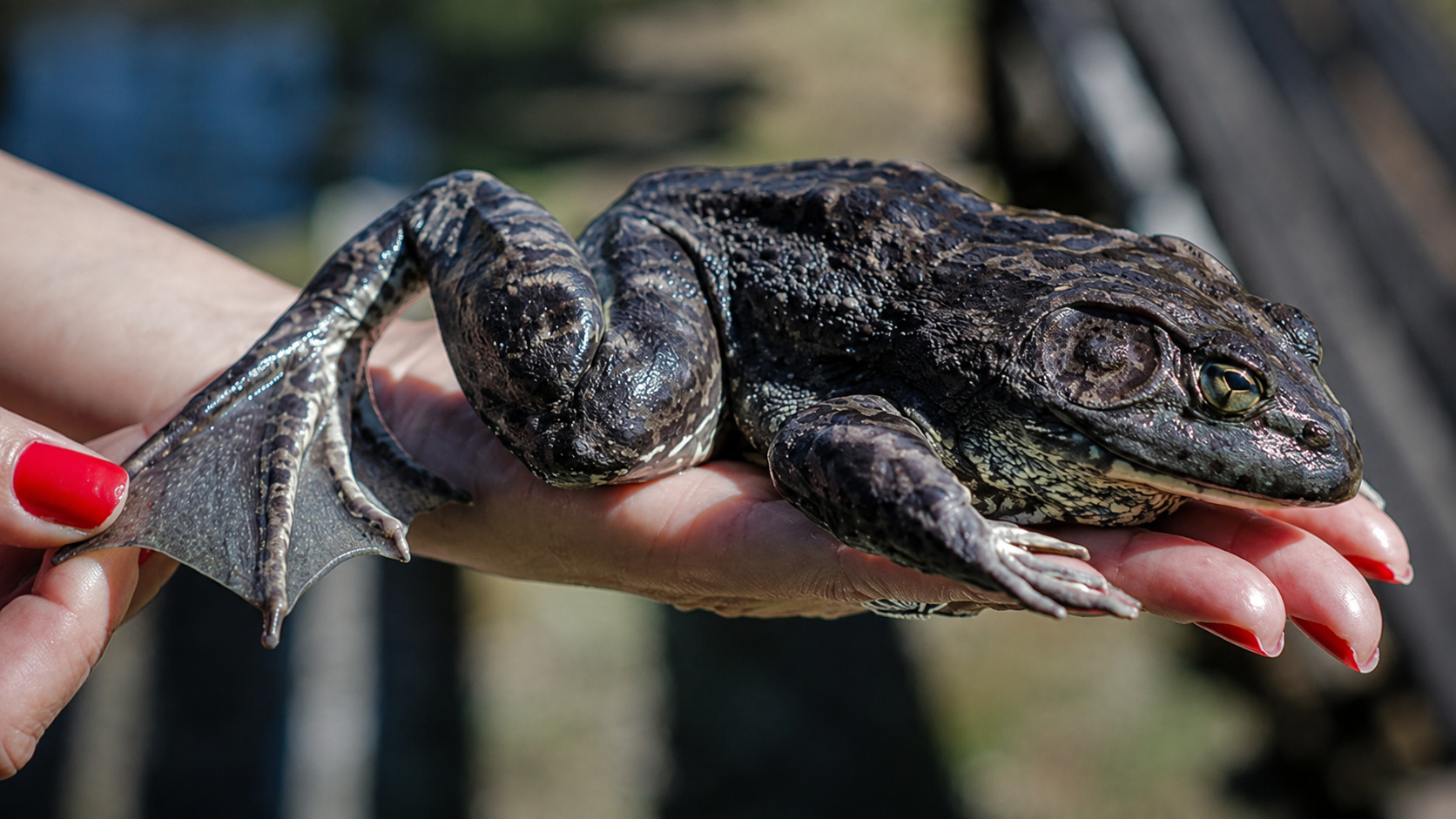
Invasive bullfrog capable of devouring other amphibians and laying up to 20,000 eggs is found in Florianópolis, raising an alert about the threat to native fauna.
-
It looks like a baby, but it’s an adult: meet the Bornean pygmy elephant, the smallest elephant in the world threatened by habitat loss.



Old PFAS and substitutes raise scientific alert
The samples were analyzed in the laboratory of Diana Aga, an analytical chemist at the University of Buffalo, using mass spectrometry. The analysis focused on 24 types of PFAS, including traditional compounds and newer substitute versions. These substances appear in products such as non-stick pans, raincoats, firefighting foams, and medicines, but their resistance to water, fat, heat, and chemicals makes decomposition difficult. Consequently, PFAS accumulate in the environment and in organisms, while decades of research have already linked these compounds to reproductive risks, developmental problems, and cancer. The concentrations found were not high, but the constant presence shows continuous exposure.
Complementary technique could change wildlife research
David Megson, an environmental chemist at Manchester Metropolitan University, did not participate in the study but assessed that the technique represents an important advance for research with wildlife. He highlighted that traditional methods, such as blood or tissue samples, can be invasive and, in some cases, require more aggressive procedures. SPS bracelets do not directly show how much PFAS accumulates in the penguins’ bodies, but they help to better understand the environment where these animals live. According to Megson, the main route of exposure probably occurs through the fish consumed, which reinforces the need to combine bracelets, biological samples, and food analysis.
Research can advance to other species
Although Magellanic penguins are not endangered, **13 of the 18 recognized penguin species** have declining or threatened populations. Vanstreels and Aga hope to test the method on other seabirds, such as cormorants, which dive to depths of over 45 meters. Researchers also intend to monitor penguin exposure during their winter migration to Uruguay and Brazil, expanding understanding of PFAS circulation in the oceans. This advance reinforces that protecting Patagonia requires addressing global problems of pollution, industry, and chemical disposal.
The environmental alert beyond Patagonia
The presence of PFAS on Argentina’s remote coast shows that chemical contamination respects no geographical boundaries. These persistent compounds, called **forever chemicals**, spread through the environment and challenge traditional monitoring methods. The study with Magellanic penguins serves as a proof of concept for future research and shows that marine animals can help reveal invisible environmental risks.
How can remote regions be preserved if chemical pollution already accompanies even the penguins of Patagonia?





Be the first to react!