Portuguese
  Spanish


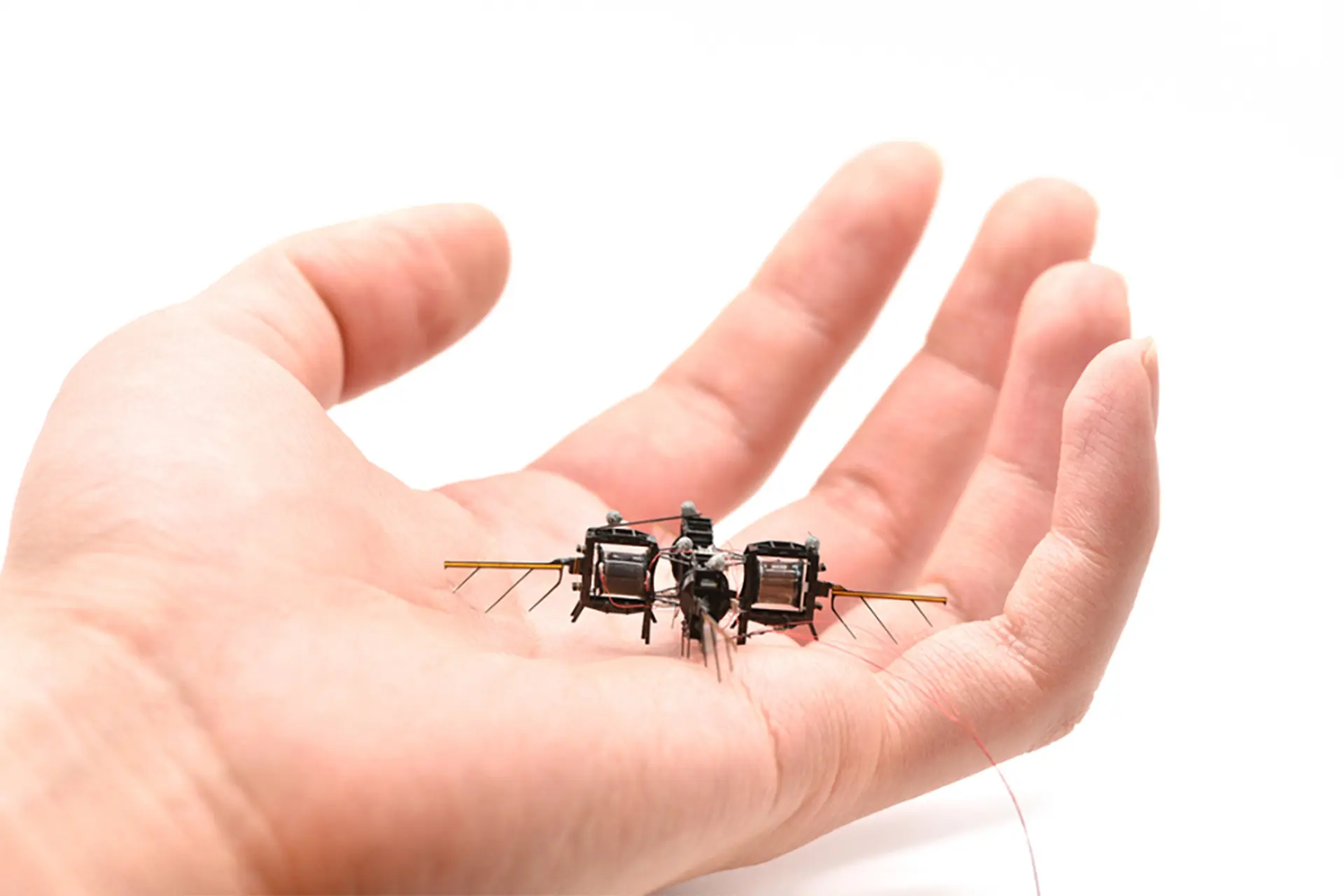

Robots Inspired By Insects, Created By MIT, Can Now Fly 100 Times Faster Thanks To A New Wing Design, Expanding The Potential For Use In Various Technological Areas
Researchers at the Massachusetts Institute of Technology (MIT) have developed insect-sized aerial robots capable of flying for up to 1,000 seconds. This impressive feat represents a significant advancement, as it is 100 times faster than any other similar robot ever produced.
Inspired by the efficiency of bees, these small machines weigh less than one gram and feature flapping wings, ensuring agility and complex maneuvers, such as flips.
Additionally, the robots are surprisingly fast, reaching an average speed of 30 centimeters per second, even surpassing the fruit fly. This combination of speed and maneuverability opens doors for practical applications in agricultural and industrial settings.
-
Pennsylvania Mine Creates Ice in Summer Heat and Melts in Winter, Turning a Mountain Crevice into a Reverse Natural Refrigerator

-
China Accelerates Global Expansion of Robotics: From Smart Vacuums to Industrial and Humanoid Machines, Millions Exported to Over 150 Markets
-
Polar Air Mass to Hit Brazil: Temperatures to Plummet in Nine States, Near Freezing in the South with Frost Risk Until Monday
-
Chinese “dark factories” produce electric cars 24/7 with minimal human intervention, as Zeekr assembles 800 units daily, raising concerns in Brazil.





Potential For Agriculture And Pollination
The primary utility of these robots is artificial pollination. They can operate in planting warehouses, facilitating the cultivation of fruits and vegetables in enclosed environments and reducing the need for large tracts of farmland.
This solution could be crucial given the drastic decline in the global bee population.
Bees, essential for natural pollination, have been dying in alarming numbers in recent years. Causes include pesticide use and habitat loss.
In the United States, a recent survey revealed that over 200 commercial beekeepers reported losses exceeding 50% in their hives, generating a financial impact of more than US$ 139 million.
In light of this situation, aerial robots can complement natural pollination, mitigating losses and ensuring food production.
Innovative Design For Longer Flights
To enhance the performance of these aerial robots, MIT researchers completely redesigned the wing system. Previous models used eight wings in pairs, but this arrangement created interference among them, reducing lift.
The new approach reduced the number of wings to four, which improved stability and flight capability. This modification also freed up space for additional electronic components.
The wings are powered by soft actuators, made of layers of elastomer and carbon nanotube electrodes wrapped in cylinders.
These “artificial muscles” contract and expand rapidly, generating the force needed for the wingbeats. The updated design includes longer hinges, better able to handle the stress caused by intense movement.
More Efficient And Precise Robots
Each robot fits in a space of 4 cm x 4 cm and can fly for up to 17 minutes, performing complex maneuvers efficiently. These microbots cover predetermined flight paths and make precise turns, surpassing previous designs in speed and flight rhythm.
Researchers believe further improvements are possible. The goal is to extend flight time to up to 10,000 seconds and incorporate batteries and sensors in the spaces freed up by the optimized design.
Moreover, enhancing flight precision could allow takeoffs and landings directly from the center of flowers. This would enable applications in vertical farms, expanding the use of these tiny machines beyond labs.
With information from New Atlas.