Portuguese
  Spanish


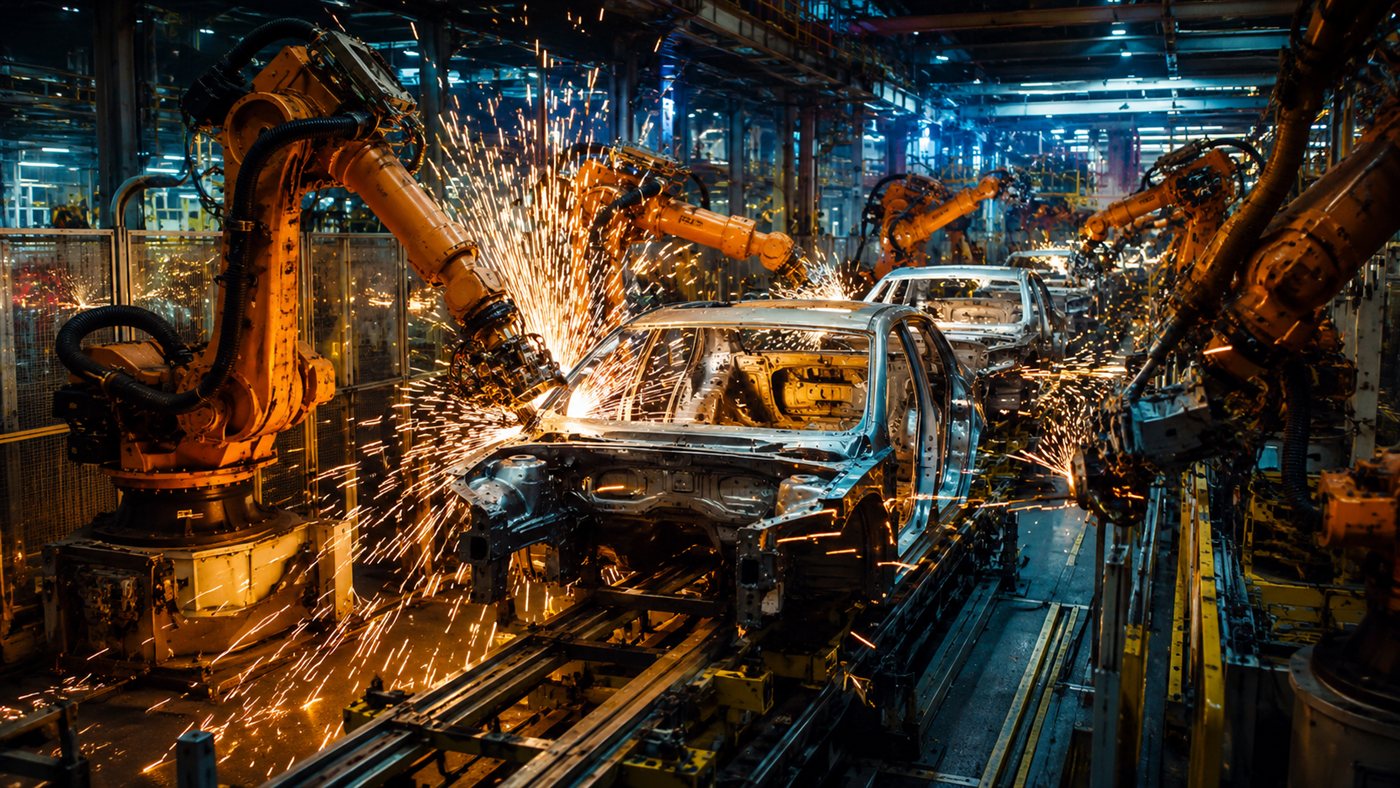

The Wall Street Journal’s report enters Zeekr’s assembly line, shows the robots working with lights off, and explains why the excess of Chinese cars worries markets like Brazil
Lights off, no workers in sight, and dozens of electric cars rolling off the line per hour, 24 hours a day, 7 days a week. China’s dark factories are the new stage of industrial automation, and a report by The Wall Street Journal published in July 2025 shows how they operate from the inside, with a message that directly concerns Brazil, specifically mentioned as one of the markets worried about the flood of Chinese vehicles.
The concept is literal. In dark factories, human presence is so minimal and automation so complete that, in theory, the lights could be turned off for good, with hundreds of robots assembling cars in the dark, as described by The Wall Street Journal. This strategy is part of China’s plan to dominate the global electric vehicle market through hyper-automation.
What are dark factories that operate with lights off
The name originated on the factory floor and became an industrial category. According to The Wall Street Journal, dark factories are sections of automotive plants so automated that they do not require lighting for workers, because robots do not need to see like humans: sensors and programming guide every weld, every paint job, and every assembly.
-
Spectacular Green Aurora Seen from Space Illuminates International Space Station, Captivates French Astronaut

-
In Tasmania, a Beach Features a Natural Stone Mosaic Formed by Earth’s Cracks Millions of Years Ago
-
China’s Artificial Sun Reaches 100 Million Degrees, Six Times Hotter Than the Sun’s Core, Putting Beijing Ahead in the Race for Infinite Energy

-
Steam Machine Converts All Types of Plastic Waste into Durable Building Blocks, Processes Over 90 Tons Monthly, and Is Sold to Municipalities


The economic motivation is straightforward. The cost of Chinese labor has risen for many consecutive years, at a faster pace than the West expected, and automation became the obvious solution for factory owners to cushion the impact, as The Wall Street Journal notes in expert analysis. The country that was the world’s factory floor due to cheap labor is now rushing to replace it with mechanical arms.
Zeekr: 300,000 cars per year from a brand founded in 2021
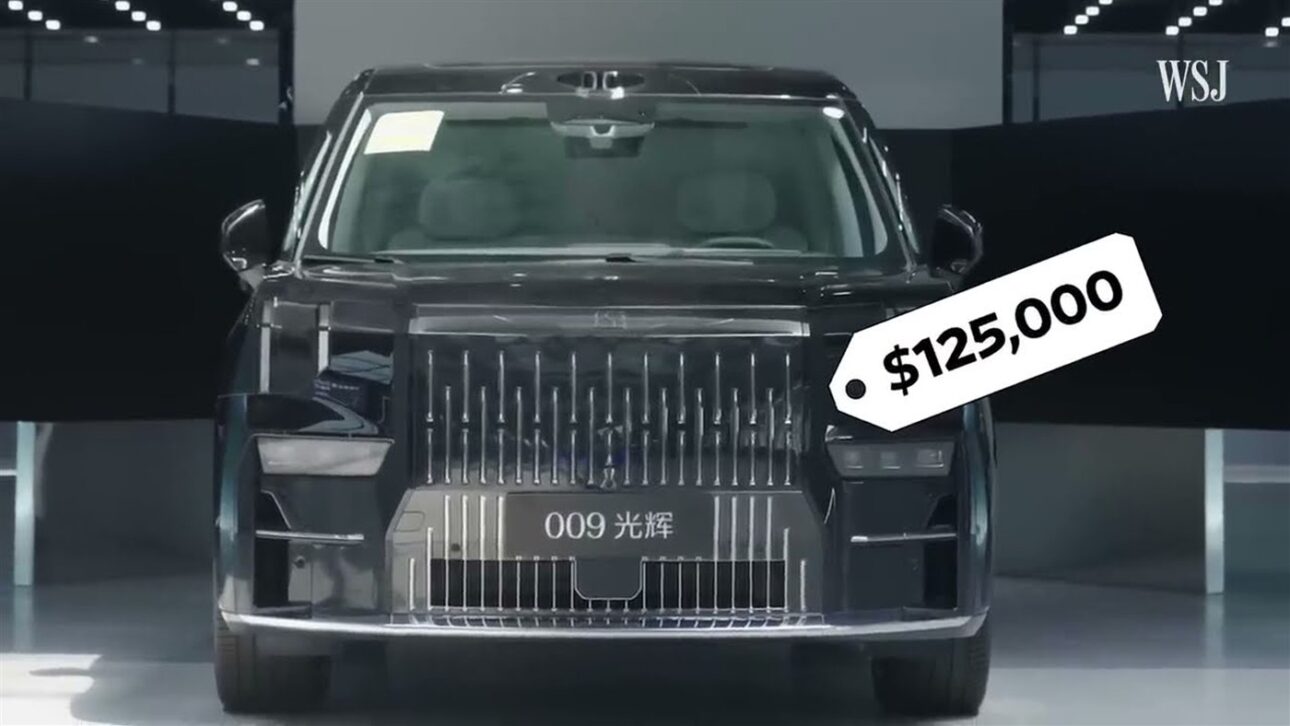
The central example of the report is a luxury brand that has barely left its infancy. According to The Wall Street Journal, Zeekr, a Chinese premium electric vehicle manufacturer founded in 2021, with models reaching up to $125,000, already produces up to 300,000 cars per year at its main factory in northeastern China, equivalent to more than 800 units per day.
The comparison with the industry benchmark is painful. Tesla has similar production levels, but it took more than a decade to reach this volume, while Zeekr got there in just a few years, as The Wall Street Journal compares. For the Chinese brand, robotization has a double advantage, and the declared ambition is to further automate to deliver cars to customers even faster.
1 in every 2 robots in the world ended up in China
The case of Zeekr is not an exception; it is state policy. According to the The Wall Street Journal channel on YouTube, data from the International Federation of Robotics shows that in 2023, half of the industrial robots installed worldwide ended up in China, and the country’s level of robotization has grown 7 times since 2015.
The starting point of this race has a name and a signature. It was in 2015 that Xi Jinping launched the Made in China 2025 initiative, to transform the country’s image from the world’s factory to an innovative manufacturing powerhouse, as The Wall Street Journal contextualizes. The plan includes producing internally what China needs, minimizing dependence on American and Western inputs, and still having the capacity to export.
The rising salary and the non-existent union
The Chinese advantage is not only in technology, but also in the rules of the game. According to The Wall Street Journal, China has much less labor regulation than Western countries and does not have unions operating in the Western model, which removes the barriers to automating an entire line.
On the other side of the Pacific, the standard is different. Personnel costs and labor laws are pointed out in the report as structural disadvantages of the United States in the automation race, as The Wall Street Journal exposes. The result is an uncomfortable asymmetry: while a Chinese plant replaces shifts with robots without resistance, the American competitor negotiates each change with organized workers.
Ford and GM retreat while dark factories accelerate
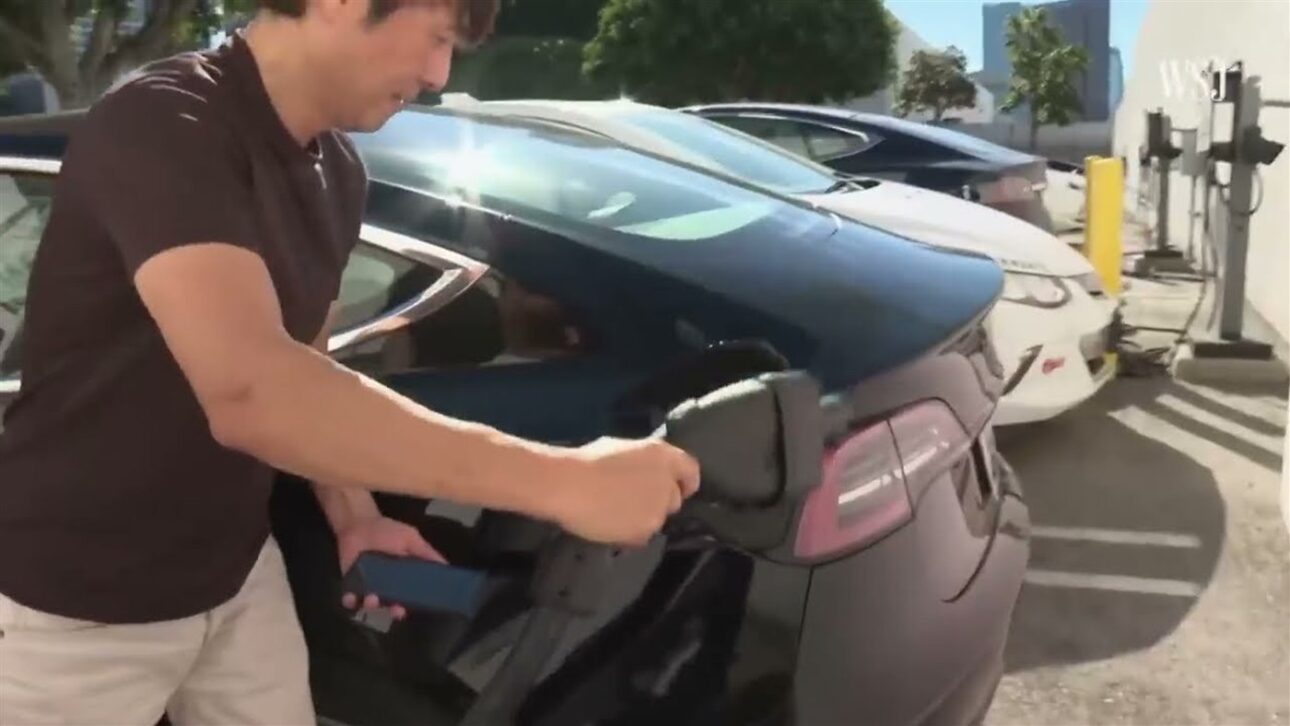
The contrast in strategies has turned into a chasm. According to The Wall Street Journal, Ford and GM have scaled back their ambitious electric expansion plans, hindered by the high cost of batteries and the slow installation of chargers, while Chinese automakers are already producing more EVs than all other manufacturers in the world combined.
For part of the American industry, the threat is existential. With much of the Chinese automotive industry increasingly automated, the production limit is the sky, and a flood of vehicles in global markets would drive down prices and hurt Western automakers, as The Wall Street Journal records in analysts’ statements. Chinese leadership is further boosted by cheap state loans and subsidies.
The warning that mentions Brazil by name
This is where the report ceases to be a distant matter. According to The Wall Street Journal, countries with more amicable relations with China, such as Brazil, in addition to nations in the Middle East, Africa, and Southeast Asia, are concerned about their own domestic industries and do not want to see a flood of Chinese products undermining these sectors.
The calculation is simple and uncomfortable. If automation allows China to produce even more and even faster, the political problem of the oversupply of Chinese cars becomes even greater for the countries that receive them, as The Wall Street Journal summarizes. For the Brazilian automotive industry, which is experiencing the accelerated arrival of Chinese electric brands, the message from the dark factories is a long-term warning about competitiveness.
The excess capacity that haunts the sector
The paradox of the perfect machine is having no one to sell to. According to The Wall Street Journal, Western concerns about Chinese expansion have kept the country’s brands mostly out of the U.S. and European markets, and most of these cars end up being sold within China itself.
The result has a name in economic jargon. Overcapacity has become a giant problem for the Chinese electric industry, in a domestic market crowded with competitors where accelerated robotization further tightens competition, as The Wall Street Journal analyzes. Even this, the report notes, does not shake Zeekr’s confidence in China’s consumption capacity.
What still needs human hands


Not everything in dark factories dispenses with people. According to The Wall Street Journal, some tasks still require a human touch, such as the meticulous assembly of wiring harnesses that run throughout the car, and workers enter the plants for functions like maintaining the robots themselves.
The final photograph is of transition, not complete extinction. The assembly line worker has given way to the technician who repairs the machine that makes the car, a rearrangement that sums up the Chinese industrial decade. The question the report leaves in the air is the same as at the beginning: with so much installed capacity and external markets closing their doors, who will buy all these cars?
The report shows the Zeekr line in operation, the numbers of Chinese robotization, and the analyses of the trade war between Washington and Beijing.
The dark factories condense the new phase of the industrial dispute: China has replaced the cheap worker with the tireless robot, and the world, including Brazil, is trying to decide what to do with the cars that come off this endless line. Tell us in the comments: would you buy a car assembled entirely in the dark?