Portuguese
  Spanish


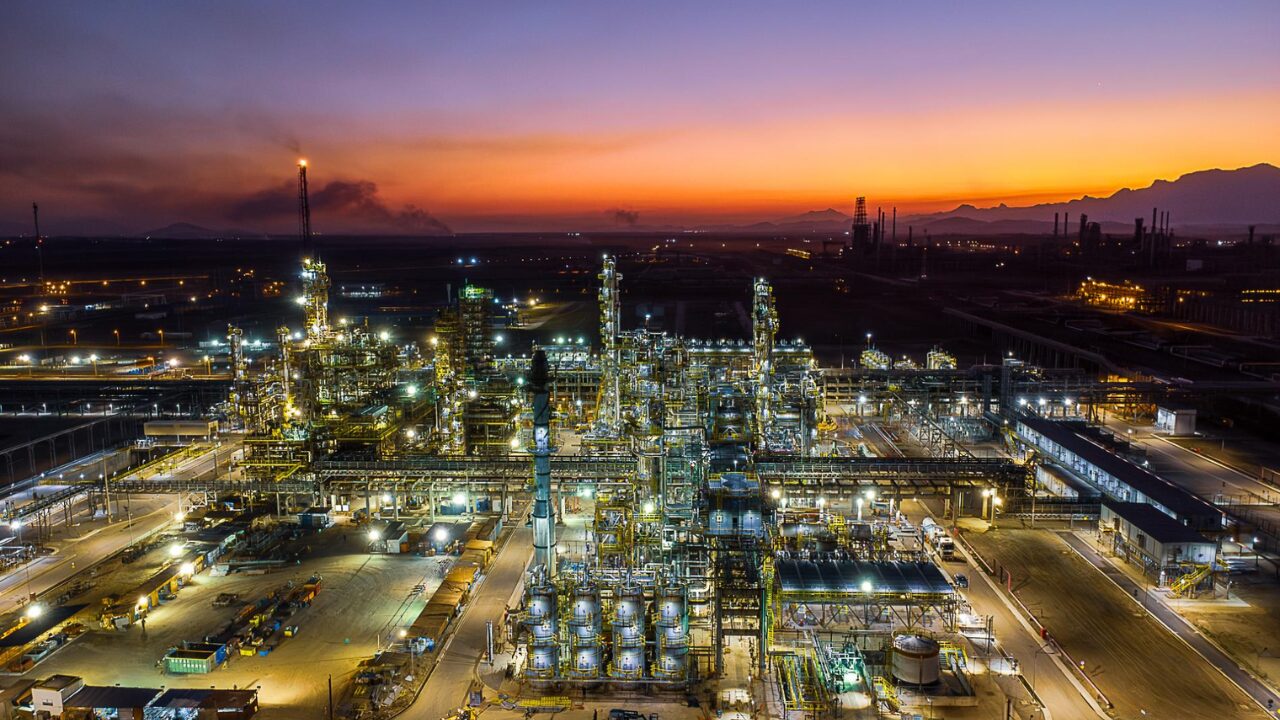

Second Module of the UPGN, in the Municipality of Itaboraí (RJ), Increases the Plant Capacity and Strengthens Petrobras’ Presence in the National Natural Gas Market.
Petrobras has begun the commercial operation of the second module of the Natural Gas Processing Unit (UPGN) located in the Boaventura Energy Complex, in Itaboraí, in the state of Rio de Janeiro. With the expansion, the plant can process up to 21 million cubic meters per day, in addition to the first module, which has been operational since the end of 2024.
The advancement represents another step in strengthening Brazil’s energy infrastructure, with a direct impact on reducing dependence on imported gas and increasing supply for industries, distributors, and residential consumers.
Natural Gas from the Pre-Salt and Derivative Production
The UPGN is part of the Rota 3 Project, developed to enable the flow of gas extracted from important pre-salt fields, such as Búzios, Tupi, and Sapinhoá.
-
Oil production grows in Rio, but reserve replacement raises a warning sign

-
Petrobras is expected to complete the drilling of the Morpho well in the Foz do Amazonas in August 2026, the first well in the Equatorial Margin, an oil frontier that the ANP estimates at more than 30 billion barrels and could redraw the map of Brazil.

-
Oil returns to the center of concerns with tension between the US and Iran

-
IEA reduces forecast for global oil demand in 2026 after impacts of the Middle East crisis



The processing of the raw material generates three main products: Natural Gas (GN), LPG (cooking gas), and C5+, used as a base in the petrochemical industry and in the production of liquid fuels.
According to the management of Petrobras, the start of operations for the second module is strategic to consolidate the company in the new competitive environment of the gas sector in Brazil.
“Petrobras is committed to providing even more supply reliability to industrial clients and distributors committed to sustainable and competitive solutions. The commercial operation of module 2 of the UPGN is also fundamental to increasing Petrobras’ competitiveness in the new dynamic and competitive environment of the national gas market,” stated Maurício Tolmasquim, Director of Energy Transition and Sustainability.
Boaventura Complex Consolidates as an Integrated Energy Hub
The Boaventura Energy Complex has been structured to concentrate multiple production and energy generation fronts.
In addition to the UPGN, Petrobras is already planning two gas-fired thermoelectric plants at the site, with a forecast to participate in the electricity sector auction in 2025, as well as new refining units for the production of fuels and lubricants.
These initiatives are part of a coordinated effort to ensure energy security, promote regional industrialization, and generate skilled jobs.
Petrobras Strategy Aligned with Energy Transition
The company emphasizes that the development of infrastructure in Itaboraí is directly linked to its long-term vision, which combines economic viability and environmental commitment.
“The Integrated Rota 3 Project provides robustness to the flow of gas from production fields in the pre-salt, ensuring that it can be processed in different Petrobras units. The commercial operation at the UPGN is yet another demonstration of Petrobras’ ability to deliver gas to the market,” explained Renata Baruzzi, Director of Engineering, Technology, and Innovation of the state-owned company.
With this, Petrobras continues to advance in the modernization plan for its gas chain, aligning efficient production, value generation, and support for the national energy transition.