Portuguese
  Spanish


Initiative Seeks to Strengthen Food Sovereignty with Internal Production and Innovative Projects from Embrapa and the Private Sector
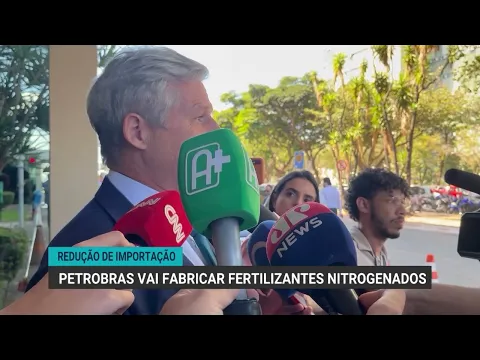
Petrobras has launched a strategic offensive to reverse Brazil’s dependence on imported fertilizers, especially those produced with urea.
During the 5th Ordinary Meeting of the National Fertilizer Council (Confert), held on July 22, 2025, at the Ministry of Development, Industry, Commerce and Services (MDIC), the company’s president, Magda Chambriard, highlighted that the state-owned company will invest R$ 900 million between 2025 and 2029.
The industrial units are located in Paraná, Bahia, Espírito Santo, and Mato Grosso do Sul.
Currently, approximately 85% of the urea used in Brazilian agriculture is imported.
This makes the country vulnerable to external fluctuations.
However, according to Chambriard, these new factories should meet up to 35% of national demand by 2028.
This advance represents a significant turning point in the quest for productive independence.
The units in Araucária (PR), Fafen (BA and ES), and UFN-III in Três Lagoas (MS) are the main focuses of this recovery.
Additionally, the projects are expected to create between 13,000 and 15,000 jobs.
The socioeconomic impact will be amplified as the projects evolve.
-
Brazilian Agribusiness Sets Record with $169 Billion in Exports in 2025

-
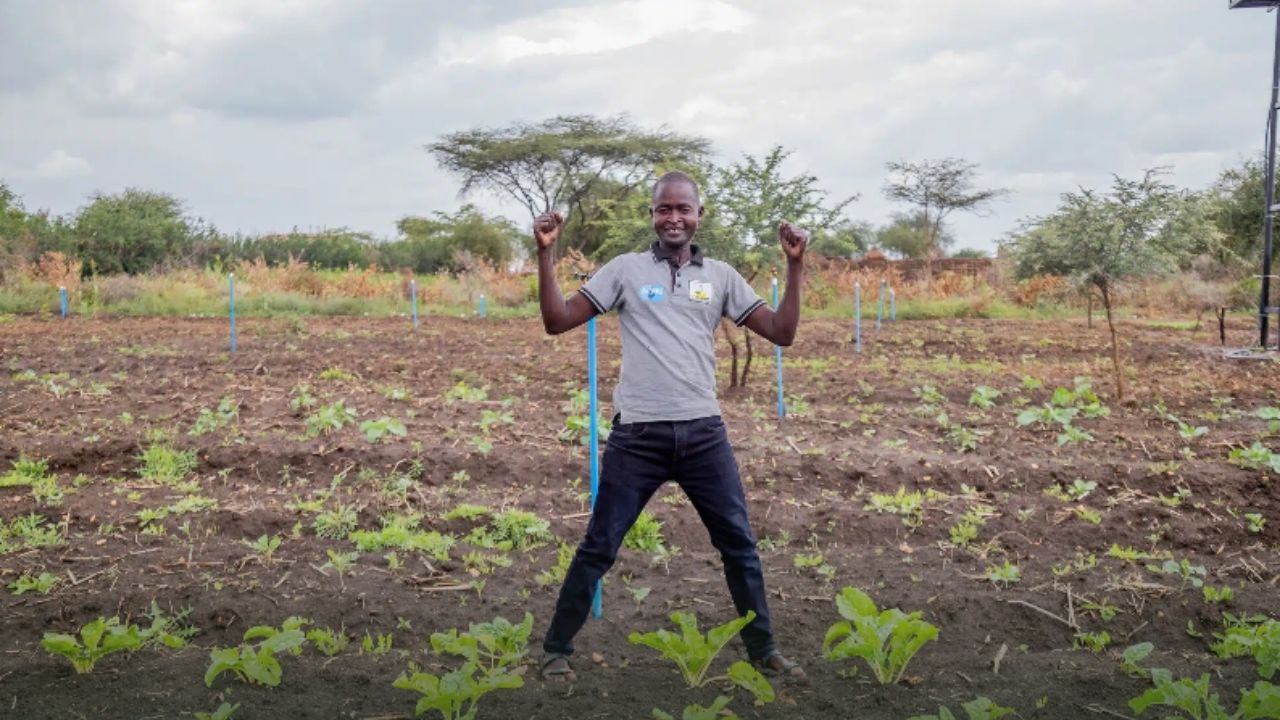
Solar-powered irrigation transforms agriculture, boosts family income, and enhances food security in Uganda.

-
Brazil Supplies 70% of the World’s Orange Juice, Prices Double Due to Pest Outbreak

-
Brazilian Scientists Develop World’s First Tropical Wheat for Biscuit Production, Yielding Up to 150 Bags per Hectare and Highly Resistant to Common Crop Disease




As the president explained, the focus is not limited to traditional production.
There is a strategic partnership with Embrapa to develop high-efficiency fertilizers.
These products include ammonia, urea, and urea.
The initiative promotes a more competitive and sustainable market.
Agriculture, Oil, and Gas Join in a Plan for Productive Transformation
During the event, Vice President and Minister Geraldo Alckmin emphasized that Brazil is experiencing a significant growth phase in agricultural production.
The estimate for 2025 indicates a 10% larger harvest than in 2024.
This increase significantly amplifies the demand for inputs.
In this scenario, intensive use of fertilizers becomes inevitable.
By reducing imports and using local energy resources, such as natural gas, Petrobras transforms the challenge into an opportunity.
The state-owned company integrates the agricultural sector with the energy sector.
This convergence creates a more sustainable and competitive production cycle.
Chambriard stated that national gas becomes more viable with increasing demand.
Urea is produced from ammonia, which directly depends on natural gas.
The strengthening of the fertilizer chain boosts the entire Brazilian energy matrix.

Bioinputs Gain Space and Receive Strategic Attention from the Government
Confert approved, during the meeting, 16 new projects for the Strategic Projects Portfolio.
Of this total, 14 are from Embrapa, one from the Ministry of Agriculture and Livestock (Mapa), and another from the private initiative.
Of the Embrapa projects, 11 involve research and development in biofertilizers, bioinputs, biostimulants, and bioinoculants.
One of the highlights is the creation of growth-promoting bacteria for forest seedlings aimed at the cellulose sector.
These advances are aligned with the Bioinput Law, enacted in December 2024.
The regulation governs everything from production to the use of these natural inputs.
It also addresses packaging, advertising, inspection, transportation, and waste disposal.
Additionally, the law encourages the production of bioinputs for own use by rural producers.
The legislation applies to the agricultural, livestock, aquaculture, and forestry sectors.
The Private Sector Advances with Low-Carbon Hydrogen Projects
Prumo Logística, a private sector company, obtained approval for the structuring of a Low-Carbon Hydrogen Hub at the Port of Açu (RJ).
The project aims to create a sustainable industrial ecosystem.
The focus is on the production of green hydrogen, ammonia, and methanol.
This initiative is connected to Petrobras’ investments in fertilizers.
Both ammonia and urea are essential agricultural inputs.
The integration of these hubs strengthens national infrastructure.
This enhances the country’s competitiveness in the clean energy market.
Furthermore, by investing in low-emission technologies, Brazil aligns with global climate goals.
The Port of Açu could establish itself as a Latin American reference in sustainable energy.
The Path to Agricultural Autonomy Passes Through National Industrialization
The movements of Petrobras, the federal government, and the private sector show that Brazil is therefore seeking autonomy in fertilizer production with strategic priority.
This goal will be achieved through accelerated industrialization and continuous encouragement of technological innovation.
Moreover, with expanding factories, modern regulation, and support for research, the country is moving to reduce its external dependence on agricultural inputs.
Consequently, these actions increase productivity while ensuring a stable supply of essential inputs for the field.
For this reason, the adopted strategy strengthens sectors such as energy, logistics, environment, and agriculture in an integrated manner.
Thus, the impacts are expected to be significant in the long run, especially regarding security and economic competitiveness.
By integrating technology, investment, and sustainability, Brazil positions itself as a global reference in agricultural innovation.
In doing so, the country expands its productive sovereignty in one of the world’s most strategic markets.