Portuguese
  Spanish


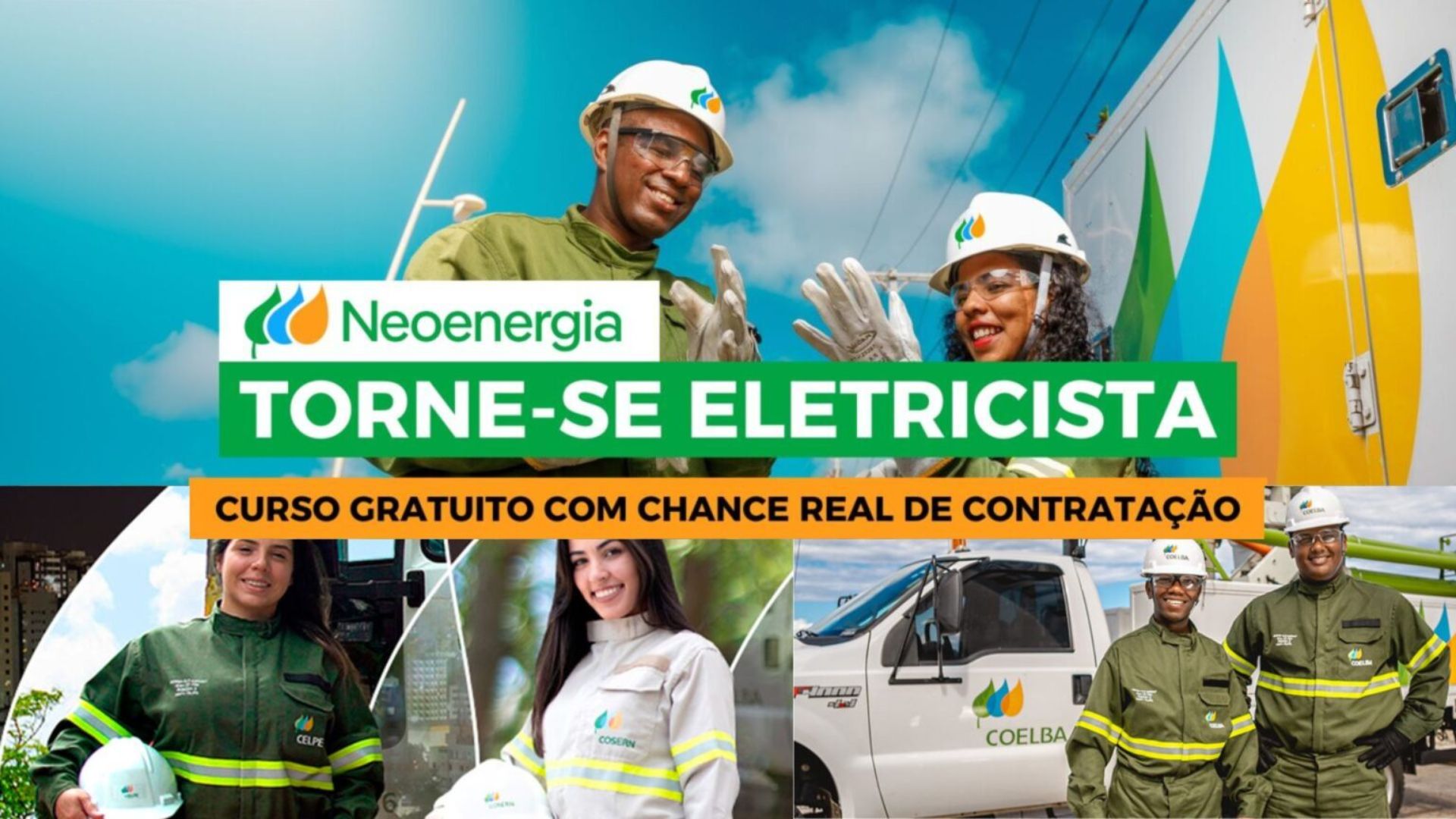

Free and intensive training aimed at the electrical sector expands opportunities for those seeking technical qualification and entry into one of the areas with the highest demand for specialized professionals, with practical training, focus on operational safety, and learning aligned with the real demands of the energy market.
Neoenergia Coelba, in partnership with SENAI/BA, has opened new slots for the Electrician School, a free qualification program aimed at training professionals to work in energy distribution networks.
The initiative offers intensive training with a workload that can reach up to 800 hours and seeks to meet the growing demand for specialized labor in the electrical sector.
Registrations have been extended, increasing the available period for candidates interested in entering one of the technical areas with the greatest need for qualified professionals in the country.
-
Surprising opportunity in the railway sector: MRS offers a free course for assistant train driver and shunter in Juiz de Fora with a R$ 1,600 scholarship, specialized training, and the chance to join one of the largest railway operators in Brazil.

-
It’s official: IFMS opens spots in free courses on artificial intelligence, drones, and app creation, expanding technological education in 2026 and preparing students for areas with high professional demand and accelerated digital transformation.
-
Senai launches an unprecedented program with Petrobras and opens 2,000 spots in free courses with recognized certification, a monthly allowance of R$ 600, and training for industrial professions that continue hiring across the country.

-
Petrobras and SENAI open 480 spots in free technical courses with a scholarship of up to R$ 858, meal allowance, and training in Mechanics, Welding, Metallurgy, and Industrial Automation to meet the growing demand of the industry and the oil and gas sector.


In total, the training provides dozens of free slots, distributed among classes in day and night shifts.
Free electrician course offers practical training for the energy market
The course was structured to train workers in practical and operational activities related to the distribution of electric energy.
During the training, students receive technical training aimed at performing field services, network maintenance, system expansion, and safety procedures.
The proposal of the Electrician School is to combine theory and practice in a learning model aligned with the real demands of the market.
In addition to technical content, participants also have contact with safety standards, equipment operation, and service in external services.
According to Neoenergia Coelba, the qualification caters to both people who wish to enter the segment for the first time and professionals seeking re-entry into the job market.
Intensive training with up to 800 hours includes supervised classes
The training has a workload between 540 and 800 hours, distributed among theoretical activities, laboratory practices, and supervised exercises.
The curriculum structure includes content related to the fundamentals of electricity, reading technical projects, and safe operation of electrical networks.
Participants also undergo specific training in working at heights, correct use of personal protective equipment, and application of technical standards used in the electrical sector.
Another differential of the program is the practical activities carried out in controlled environments, developed to simulate real situations encountered in field operations.
This methodology allows students to develop operational skills before working directly on energized networks.
In addition, students receive guidance on safety procedures considered essential for the routine of distribution electricians, including risk analysis, area signaling, and preventive accident protocols.
Partnership between Neoenergia and SENAI strengthens technical qualification
The collaboration with SENAI/BA expands the pedagogical structure of the course and ensures access to specialized laboratories, training equipment, and instructors with experience in the industrial area.
The teaching model prioritizes activities compatible with the practices adopted by the Brazilian electrical sector, reinforcing operational standards and safety norms required by energy distribution companies.
During the training, students also learn about reading electrical instruments, measuring voltages and currents, as well as techniques related to the operation and maintenance of distribution networks.
Part of the training also involves procedures for locking, tagging, and executing controlled maneuvers, content considered fundamental for the training of professionals capable of working in the field.
Electric sector increases demand for qualified professionals
The advancement of electrical network modernization works, urban expansion, and increased operational demands have increased the need for skilled electricians in various regions of the country.
In this scenario, professional courses focused on the electrical area have gained relevance among workers seeking stability and opportunities in technical sectors.
Although the training does not guarantee automatic hiring, specialists in the segment assess that programs conducted by energy sector companies in partnership with recognized technical institutions usually increase the employability chances of participants.
Among the functions most associated with the training are network electrician, external maintenance electrician, and operational technician, activities that require mastery of standardized procedures and specific technical knowledge.
Requirements to participate in the free electrician course
To participate in the selection, candidates need to have completed high school and possess a definitive National Driver’s License in category B or higher.
The requirement for the driver’s license is related to the operational profile of the function, as electricians frequently travel for inspections, maintenance, and emergency services at different points of the network.
It is also necessary to present personal documents, proof of residence, and a high school completion certificate.
Depending on the regulatory requirements, other proof may be requested during the selection process.
Work safety is a priority in electrical training
The intensive nature of the course reflects the complexity of the activities performed by professionals in the electrical sector.
Procedures related to occupational safety occupy a significant part of the training precisely due to the risks involved in field operations.
Participants learn techniques for temporary grounding, height rescue, identification of operational risks, and preventive measures for working in energized areas.
The aim is to ensure that future electricians develop technical knowledge combined with awareness of safe work practices, reducing the likelihood of accidents during the execution of activities.
In addition to laboratory classes, students participate in simulated exercises that reproduce operational conditions similar to those found in the routine of energy distribution teams.
Registrations for the Electricians School are done online
Interested parties must register exclusively on the official Neoenergia website.
The online form gathers information about mandatory documentation, participation criteria, and details related to available shifts.
The recommendation is that candidates follow the company’s official announcements to check for possible updates on the selection process stages, result announcements, and enrollment instructions.