






 Portuguese
  Spanish


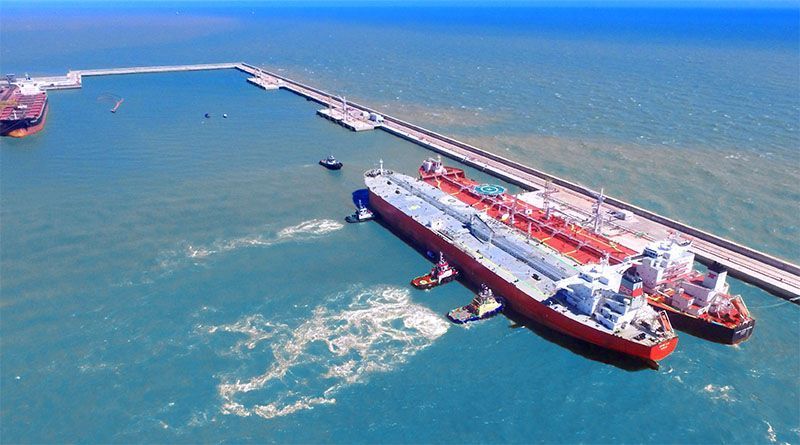

Petrobras and Açú Petróleo signed an agreement aimed at increasing the volume of oil barrels transported through the state-owned company’s private terminal at the Port of Açú. The initial deadline will be maintained, meaning until 2021 for up to 100 million barrels.
- Historic Action on Oil Royalties Favors Santa Catarina and May Generate Reimbursement to the State
- Civil Construction Fears Measures May Reduce Investment Capacity in the Sector
- Oil and Gas Company Plans to Invest US$ 200 Million in Onshore Fields in Rio Grande do Norte
This cooperation began in 2019 and has already set records for both companies. Nowadays, Petrobras has its own terminals to operate the logistics of its exports. During the same period, only the Port of Açú operated 15% of the state-owned oil company’s exports.
-
OPEC+ Boosts Oil Supply by 188,000 Barrels per Day in July 2026, Leading to Price Drop from $112 to $89 per Barrel in Under Two Months

-
TotalEnergies Signs 20-Year Deal to Purchase 2 Million Tons of LNG from Alaska, Boosting Project Viability
-
Turkey Deploys Çağrı Bey Drilling Ship to Explore New Oil Frontier Off Somalia’s Coast
-
Golden Pass LNG Ships First Liquefied Gas Cargo from the U.S., Completing $10 Billion QatarEnergy and ExxonMobil Investment



In April 2020, despite the pandemic, a record volume 23% higher was recorded in oil export movements.
“This contract with Petrobras reinforces the fact that the Açu Petróleo Terminal is today one of the best options for oil export in Brazil. This is due to two reasons: the strategic location of Açu, close to the Santos and Campos basins, and the safety provided by the terminal for oil transfer operations, as they are conducted in a sheltered environment, ensuring greater predictability and efficiency. We have one of the best port infrastructures in the national market,” says Victor Snabaitis Bomfim, CEO of Açú Petróleo.
Surprisingly, 25% of all Brazilian oil exported is handled through the Port of Açú under solid contracts with major operators, including Rapsol, Equinor, Total, Petrogal, and Shell, including Petrobras itself. Since starting its activities, Açú Petróleo has carried out more than 170 transshipment operations, approaching 170 million barrels to date.
Exponential growth of operations is expected in the coming years. There are plans to build a storage park and two 40 km pipelines that will connect the Barra de Furado terminal in the city of Quissamã, RJ, as well as other Petrobras pipeline networks to Açú, providing raw materials (crude oil) for the Reduc and Regap refineries.
About Açú Petróleo
In partnership with Prumo Logística and the German Oiltanking, the Açú Petróleo terminal at the Port of Açú in São João da Barra (RJ) performs oil transshipment operations in a sheltered area protected by a breakwater. It is the only private terminal in Brazil with the capacity to receive VLCC (Very Large Crude Carrier) class vessels, which can store up to 2 million barrels of crude oil. With a depth of 25 meters and modern infrastructure, it is designed and licensed to handle up to 1.2 million barrels of oil per day.








