






 Portuguese
  Spanish


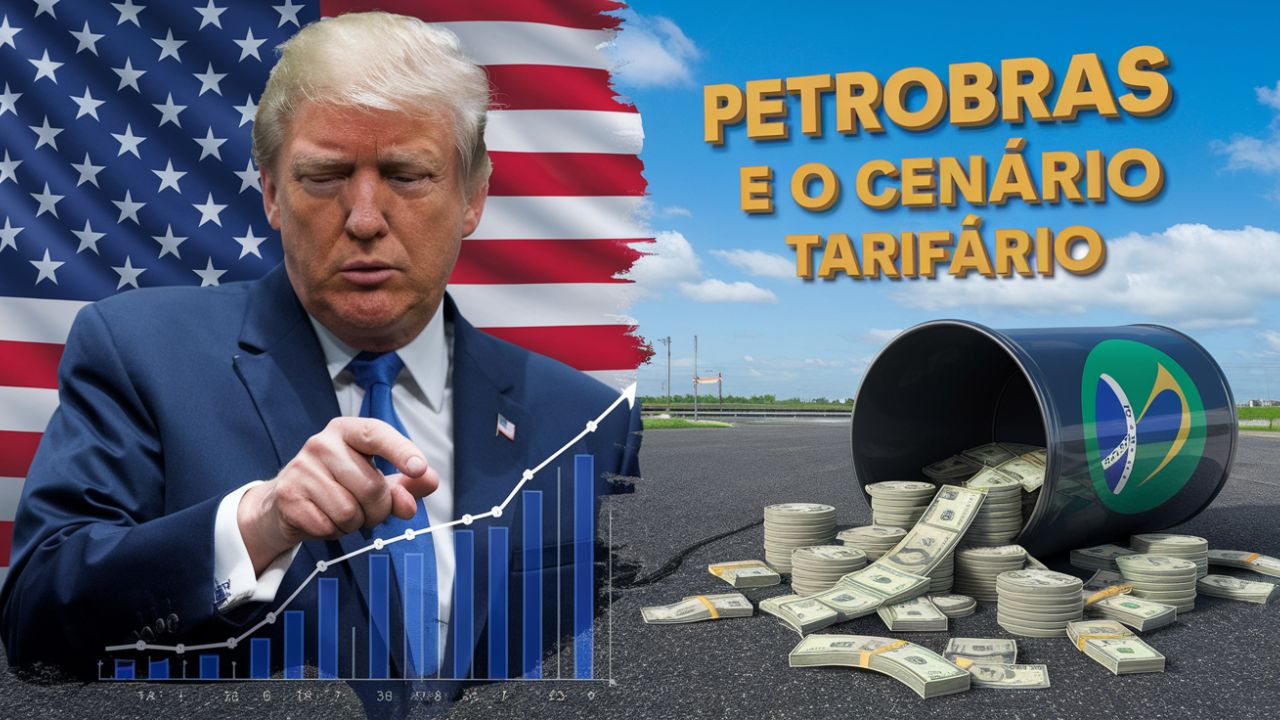


Petrobras Could Lose Up to US$ 350 Million Per Year If Trump Taxes Brazilian Oil, But Industry Giant Has Cards Up Its Sleeve to Dodge the U.S. Move and Maintain Its Billion-Dollar Profits!
If there’s one thing that has become clear about Donald Trump, it’s that he loves to use tariffs as a negotiating weapon. It happened with steel, it happened with aluminum… and now people are starting to wonder: what if he decides to impose tariffs on Brazilian oil and its derivatives? Would Petrobras feel the pinch? The answer might be less frightening than it seems.
The History of Tariffs and Trump’s Strategy
Since his first term, Trump has been playing the same game: impose tariffs here, threaten there, and wait for countries to rush to the negotiating table. It worked (more or less) with Mexico, Canada, and even China. In some cases, it got ugly, with tariffs of 25% on certain products and 10% on the energy sector, just to give you an idea.
His reasoning is simple: make foreign goods more expensive to give a boost to American industry. But would this have a huge impact on Petrobras?
-
Petrobras Sets Record with 2.66 Million Barrels Per Day in Brazil’s Pre-Salt Oil Production

-
Petrobras to Double Natural Gas Supply in Northeastern Brazil with New Investment
-
Petrobras Approves $1.2 Billion Refinery in Brazil to Produce Aviation Fuel and Diesel from Plants
-
Petrobras Secures $2.2 Billion Contract to Build and Operate Four Support Vessels for Brazil’s Offshore Oil Fields


The Real Impact on Petrobras

Well, now comes the part that might surprise many: the impact would be small. Petrobras sells only 2.5% of its production to the U.S., which means that even if Trump decides to tax Brazilian oil, the company wouldn’t feel that much of a pinch.
Let’s talk numbers: depending on the tariff, Petrobras could lose anywhere from US$ 250 to 350 million per year. Sounds like a lot, right? Of course. But when you put that next to the expected EBITDA of R$ 240 billion for 2025, it’s clear that this impact doesn’t even reach 1% of the operation.
How Petrobras Could React?
Now, let’s say Brazilian oil becomes less competitive in the U.S. What can Petrobras do? Well, the options are plentiful.
The first and most obvious is to redirect sales to other markets. Europe and Asia are always on the lookout for reliable suppliers, and Brazil already has good trading relationships with countries like China and India. If the U.S. closes one door, the rest of the world has plenty of windows open.
Another alternative is to adjust the commercial strategy, focusing on buyers who pay a better price or have lower logistical costs. At the end of the day, those with quality oil always find a way to sell.
Most Affected Sectors Within the Company
According to InfoMoney, Petrobras works in three major areas:
- Exploration and Production – the company’s golden goose.
- Refining, Transport, and Derivatives – which handles processing and distribution.
- Energy – a smaller sector, but still significant.
If the taxation comes, the part that may feel the pinch the most is exploration and production, as exports are part of that sector. But overall, Petrobras doesn’t depend on the U.S. to make profits. And that’s a significant differentiator.



Os EUA nunca foram confiáveis. O restante do mundo é visto como serviçal, fornecedor de mão de obra barata. O Brasil que analise, o que acho que já está fazendo, todos os negócios com os EUA e trate de procurar outros parceiros para negócios. E nós brasileiros, patriotas, façamos que nem o cidadão Canadense: Não vamos consumir produto nenhum norte-americano.