Portuguese
  Spanish


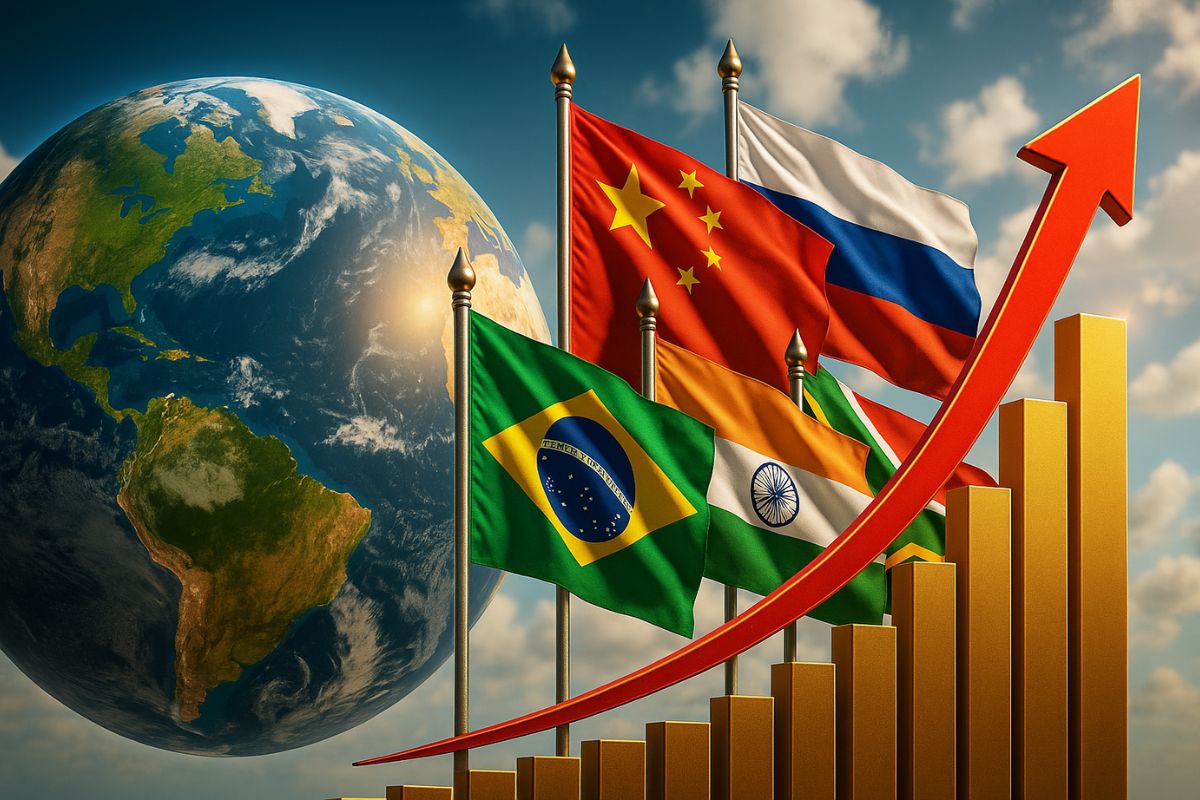


Brics GDP Remains Above Global Average and Represents 40% of the Global Economy. IMF Data Shows That Brics GDP Grew Above the Global Average in 2024 and Is Expected to Maintain Advantage in 2025, Driven by the Diversity of Member Countries.
The Brics GDP has once again drawn attention in international reports. According to the International Monetary Fund (IMF), the bloc of eleven emerging countries achieved an average of 3.4% in 2025, while the global average was 2.8%. In the previous year, performance was already superior: 4% against 3.3% in the global scenario.
The study also points out that the Brics GDP already represents 40% of the global economy based on purchasing power parity (PPP), surpassing the G7’s share, which is around 28%. This trend reinforces the group’s weight as an economic and political alternative to the major Western powers.
Who Are the Countries Driving Growth
Among the eleven members, China and India are the central engines. In 2025, China is expected to account for 19.6% of the global economy, while India represents 8.5%. Other countries also have notable performances, such as Ethiopia (6.6%) and Indonesia (4.7%).
-
Brazil to Issue “Panda Bonds” in China, Aiming to Raise Up to 5 Billion Yuan at Lower Interest Rates Than Dollar Debt
-
NATO Faces Internal Tensions as U.S. Pushes for Increased Defense Spending, Targeting 5% of GDP by 2035, with Warnings for Countries Near 2% Level

-
Brazil to Introduce B16 Diesel with Increased Soybean Oil Content for Trucks by 2026
-
Brazil’s July Bolsa Família Payments May Include Extra $150 and $50 for Families with Children, Pregnant Women, and Updated CadÚnico Registration


Experts remind us that the bloc is heterogeneous. While some nations face low growth, others compensate with above-average results, ensuring that the group maintains a more robust performance than the world economy.
How Much Does Brics Represent in the Global Economy
According to the IMF, Brics countries account for over 40% of the global population and play a decisive role in the supply of energy, food, and strategic minerals. This population and production weight explains why the group has a greater capacity to dictate global prices and absorb external shocks.
In comparison with developed economies, the difference is clear. The G7 grew only 1.7% in 2024 and is expected to advance 1.2% in 2025, against averages of 4% and 3.4% for Brics, respectively.
Where Are the Strategic Opportunities
Rodrigo Cezar’s analysis, a professor of International Relations at FGV, highlights that countries like Brazil and India gain an advantage by being away from conflict areas, attracting new trade flows, especially in food and grains.
In contrast, nations more exposed to geopolitical tensions like Russia and Iran tend to boost their growth through internal investments in infrastructure and industry, seeking domestic stability. This movement, although defensive, helps maintain the overall performance of the bloc.
Why Does Brics GDP Grow More Than the Average
In addition to economic diversity, structural factors support the advance. China maintains heavy investments to stimulate domestic demand, while India solidifies itself as a technological and demographic center. African and Middle Eastern countries, such as Ethiopia and the United Arab Emirates, are increasing their participation with infrastructure projects and energy production.
This combination makes the bloc a political and economic force capable of countering the hegemony of the United States and the G7, influencing global commodity markets and geopolitical decisions.
IMF data indicates that the prominence of Brics is likely to expand, whether due to the size of its population, the diversity of strategic sectors, or the speed of growth compared to traditional economies. With 40% of the global economy and an upward trend, the bloc is no longer just an alternative but a central player in redefining the global economic order.
Do you believe that Brics GDP can surpass developed countries even further in the coming years? Does this advancement strengthen or threaten the Brazilian economy? Leave your opinion in the comments.