Portuguese
  Spanish


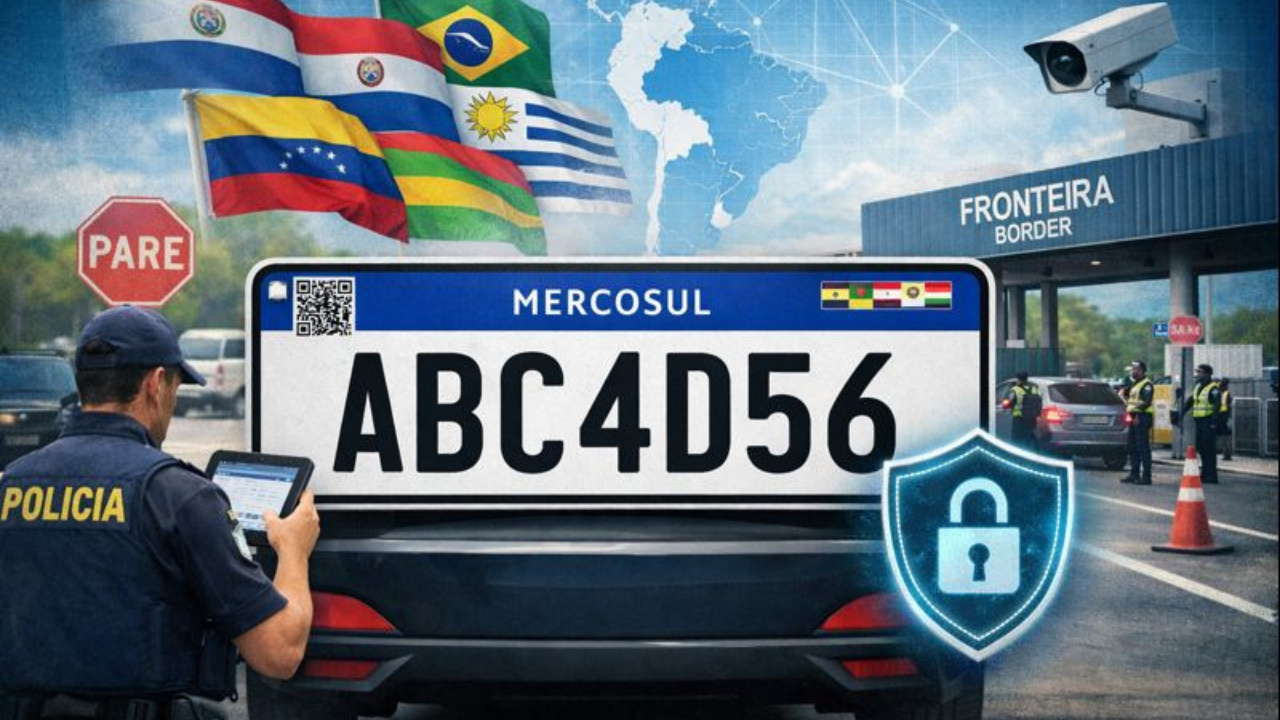


Mercosur Plate Standardizes Registration, Strengthens Vehicle Security, and Enhances Traffic Enforcement in Mercosur Countries.
The Mercosur Plate transformed the vehicle identification system in the member countries by establishing a new registration standard.
The measure was jointly implemented to promote regional integration, increase vehicle security, and improve traffic enforcement, using technology and automotive standardization as central tools.
Thus, the countries began to share a unique identification model, facilitating the control and circulation of vehicles across borders.
-
Nikola, once valued at $29 billion for its hydrogen truck promise, files for bankruptcy after prototype scandal.

-
Volkswagen to Invest Up to $5.8 Billion in Rivian, the American Electric Car Startup, Securing Software Expertise for Future Vehicles
-
End of the Affordable Car Era: Fiat Argo 1.0 2026 Offers 14.7 km/l Efficiency and Easy Maintenance, but $18,000 Price Raises Cost-Benefit Concerns

-
Honda XR 300L Tornado Special Edition 2026: Off-Road Focused Motorcycle with 293.5cc Engine, 24.3 HP, Priced at $6,200


Why the Mercosur Plate Was Created
According to Mercosur, the creation of the Mercosur Plate meets a long-standing demand for greater integration among member countries.
Additionally, the standardization aims to combat recurring crimes such as vehicle theft and cloning, which exploited differences between national systems.
By unifying the model, regional integration gains strength, allowing for a more efficient and interoperable database.
As a result, traffic authorities and security forces can exchange information more quickly, which enhances traffic enforcement on highways and border areas.
Mercosur Plate and the New Automotive Standardization
The automotive standardization is one of the pillars of the Mercosur Plate.
The new model abandoned the old system that visually identified the municipality and state of the vehicle.
Now, all plates follow the same visual format across all member countries.
The layout now includes seven alphanumeric characters, with four letters and three numbers arranged randomly.
This change reduces predictability and makes attempts at fraud more difficult, strengthening vehicle security on a regional scale.
Technology as an Ally of Vehicle Security
To reinforce vehicle security, the Mercosur Plate incorporated technological resources.
One of the main features is the QR Code, located in the upper left corner of the plate. This code allows quick access to vehicle data during inspections and check-ups.
Moreover, the engraving in relief makes the cloning process more complex.
More Efficient Traffic Enforcement at Borders
Traffic enforcement has been directly impacted by the arrival of the Mercosur Plate.
This integration strengthens cooperation between police and traffic authorities, especially in border areas.
Thus, transnational crimes involving vehicles become more difficult to occur without detection, increasing the sense of security for drivers and authorities.
Regional Integration and Shared Database
The regional integration provided by the Mercosur Plate goes beyond the visual aspect.
The countries now operate with a harmonized database, which concentrates information on registration, legal status, and vehicle history.
As a result, identification no longer depends solely on the physical plate.
The digital system ensures greater reliability, reduces human errors, and streamlines administrative and operational processes related to automotive standardization.
How to Check Vehicle Data with Mercosur Plate
Access requires login with registration on Gov.br.
After entering the plate number, users can check relevant information about the vehicle’s status.
This tool is useful for both citizens and authorities, contributing to vehicle security and traffic enforcement in daily life.
Impacts for Drivers and Authorities
For drivers, the Mercosur Plate represents greater protection against fraud and theft. For governments, the change means increased operational efficiency and strengthened regional integration.
Meanwhile, automotive standardization creates a more organized and predictable environment for international traffic.
Thus, the Mercosur Plate consolidates itself as one of the main structural changes in traffic in South America in recent years.