






 Portuguese
  Spanish
  4 min of reading
  0 comments


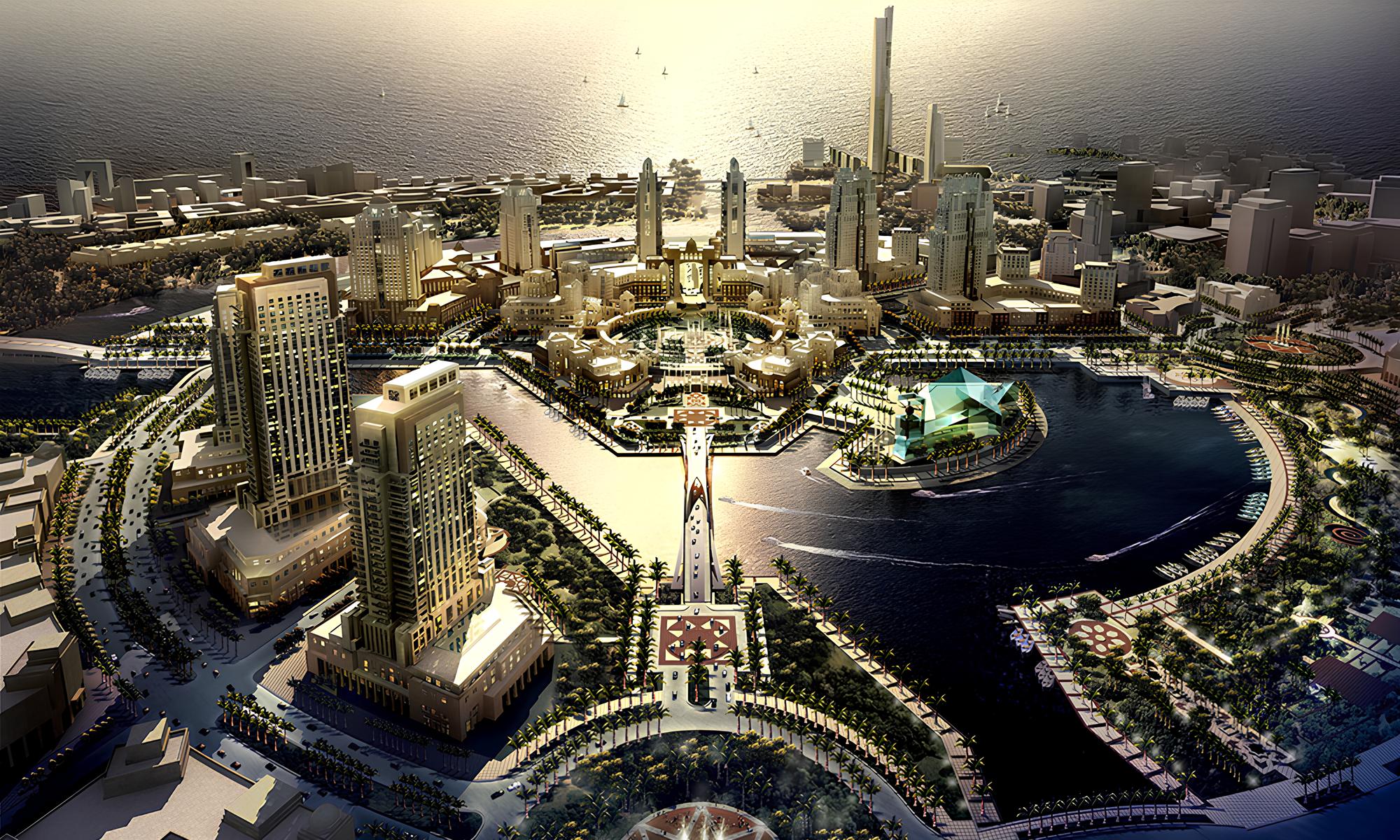
Planned to House 2 Million People, the Billion-Dollar King Abdullah Economic City Cost Over US$ 25 Billion and Is Today One of the Largest Ghost Cities on the Planet.
Amid the dunes of the Red Sea, one of the most ambitious projects in the recent history of the Middle East has become a symbol of silence and waste. Intended to be the “new Dubai,” the King Abdullah Economic City (KAEC) emerged in 2005, driven by King Abdullah bin Abdulaziz Al Saud as part of the Saudi plan for economic diversification — a megaproject that promised to revolutionize the urban future of the country with technology, sustainability, and luxury. Valued at over US$ 25 billion, the city was to cover 181 square kilometers, with cutting-edge infrastructure, the second largest port in the Kingdom, and an industrial park that would generate thousands of jobs. Yet, nearly twenty years later, what stands is an impeccably built metropolis that is almost uninhabited.
The Dream of a New Urban Era That Promised to Be the “New Dubai”
The initial proposal was bold: to create a model city, modern, global, and free from dependence on oil. The KAEC was to be home to 2 million people, with 250 residential towers, international universities, a giant golf course, and avenues comparable to the major world capitals.
Its port — the King Abdullah Port — was designed to be one of the largest and most technologically advanced in the world, capable of handling 20 million containers per year, connecting Saudi Arabia to the main markets in Asia, Europe, and Africa.
-
How much does it cost to build a sidewalk with interlocking pavement in 2026? See the average construction prices and the most common extra expenses that can increase the final budget.

-
Blocks made of salt challenge traditional construction, emerging from salt flats and salt pans like translucent stone, shining in hotels and pavilions in the desert, and transforming a material that melts in humidity into an extreme symbol of an impossible mineral architecture.

-
Young architect decides to renovate his grandfather’s 1960s kitchen, avoids erasing a lifetime of memories, and transforms the space while preserving 85 years of family history.

-
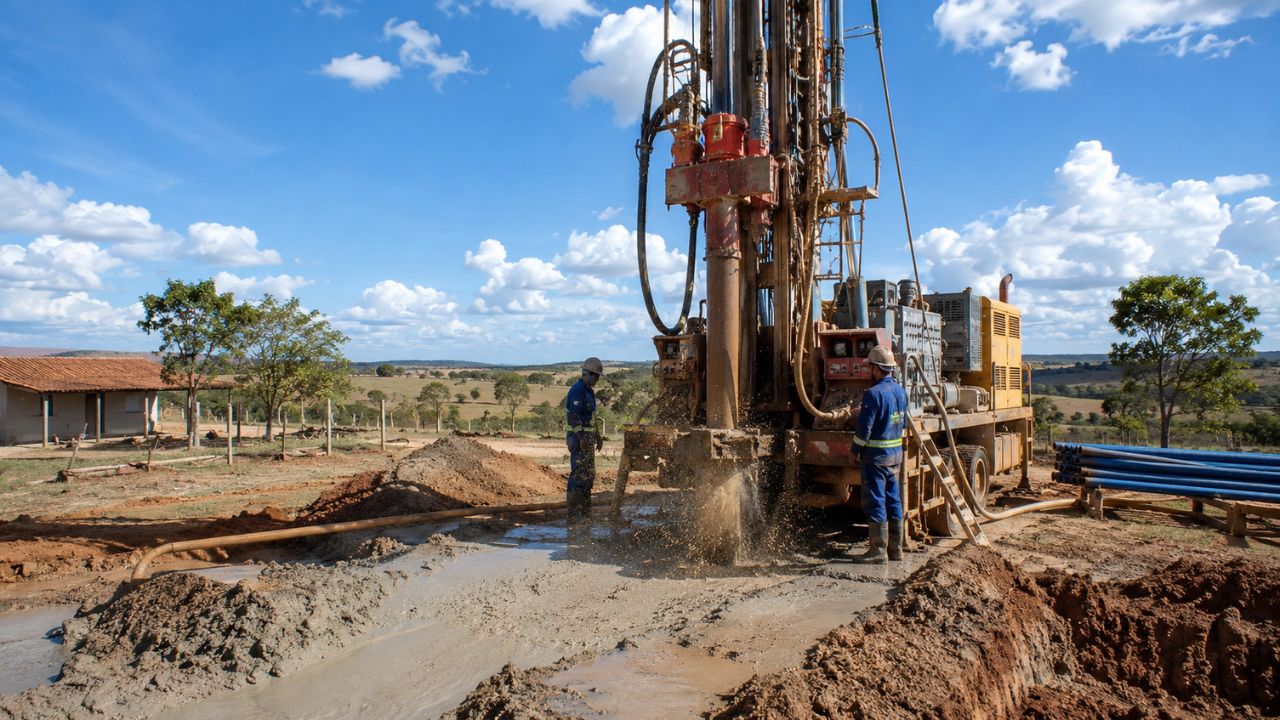
How much does it cost to build a well in 2026? See the average drilling values, regularization costs, and the most common extra expenses that may arise throughout the project.


On paper, the project brought together everything the Middle East was seeking: luxury, modernity, and innovation. The city would be powered by clean energy, have smart districts, and house the headquarters of multinational companies. In addition, it would feature high-speed rail connections to Mecca, Medina, and Jeddah, strengthening its role as a logistical and economic hub.
The Silent Collapse of the Billion-Dollar Dream
The reality, however, took a different path. According to reports from the BBC, Bloomberg, and The Guardian, King Abdullah Economic City currently houses less than 10,000 residents — less than 1% of the planned population.
The wide, well-paved avenues rarely see traffic; shopping malls and hotels operate at minimal occupancy; and much of the residential and commercial buildings remain empty.
The city, designed to symbolize the future, is now internationally known as one of the largest modern ghost cities.
Among the causes of the failure are the lack of real demand, restrictions on property ownership for foreigners, and the drop in oil prices in 2014, which reduced investments. Many analysts point out that the city was built from the top down — erected before there was a local population or economy capable of sustaining it.
The speculative model led to hundreds of completed buildings but without residents, transforming the urban landscape into a scene of silence and vastness.
Life in an Almost Empty City – King Abdullah Economic City
In a recent visit, reporters from Bloomberg described clean streets, immaculate gardens, and modern facades, but “a silence that echoes.” Residents report that at night, the lights in the buildings turn on automatically — not due to human occupancy but through sensors programmed to give the appearance of life. Many of the apartments belong to foreign investors who have never moved in. The cost of living, combined with the distance from urban centers, has pushed away everyday citizens.
Despite this, the King Abdullah Port operates fully and is one of the most efficient in the Middle East, moving millions of tons annually. The contrast is striking: world-class industrial infrastructure surrounded by almost deserted neighborhoods.
The Portrait of a Future That Never Arrived
For many, the KAEC is the perfect symbol of the Saudi transition, the country that tries to reinvent itself beyond oil but runs into the limitations of a planning-driven urban model lacking a social base.
The Saudi government has not yet given up on the project: there are tax incentives to attract companies and revitalization plans under Vision 2030, the national modernization program. But the pace is slow, and the challenge is gigantic.
Even with top-notch infrastructure, artificial beaches, and luxury condos, the city remains sparsely populated and carries an almost post-apocalyptic air. The “city of the future” in the desert has become an empty mirror, where engineering triumphed, but life did not arrive.
Today, the King Abdullah Economic City represents both the ambition of a new era and the dangers of dreaming too big. Like other megaprojects in the Gulf, it shows that engineering can move mountains or seas but cannot, on its own, create the human fabric that gives meaning to cities.
The monumental landscape of towers, squares, and avenues remains standing, reflecting the desert sun and the contrast between the possible and the real.
A modern monument to the idea that not every city is born to be inhabited — some are born only to remind us how far humanity can go when it decides to challenge its own limits.




Be the first to react!