






 Portuguese
  Spanish


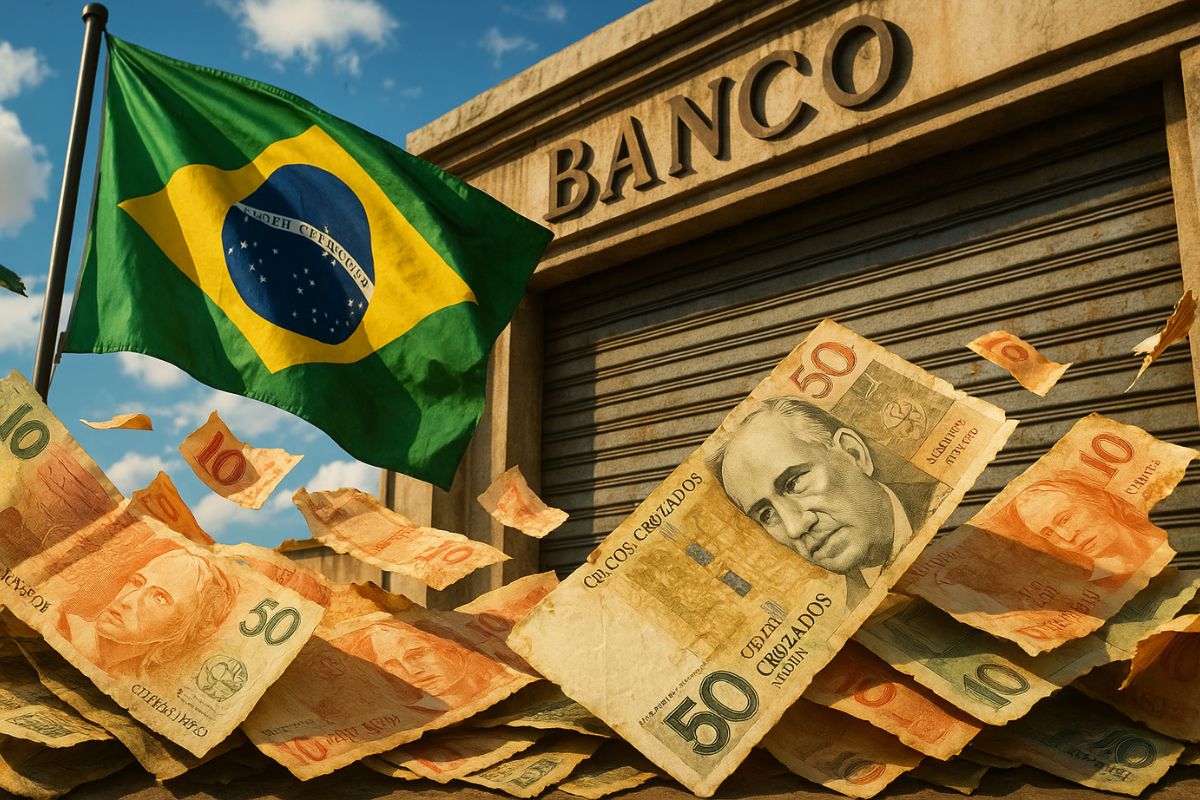
Measure Announced By Fernando Collor In 1990 Blocked Deposits Above 50 Thousand New Cruzados And Undermined Confidence In The Financial System
In March 1990, the Collor Plan surprised Brazil by determining the immediate blocking of bank accounts and financial investments above 50 thousand new cruzados, about R$ 300 in updated values. The goal was to contain hyperinflation that exceeded 80% per month, but the measure generated panic, recession, and mass unemployment.
In addition to the confiscation, the government froze prices and wages for up to 45 days and promoted drastic changes in economic policy. Even with an initial drop in inflation, the strategy eroded confidence in the currency, affected companies, reduced GDP by 4.3%, and left deep marks in the relationship between Brazilians and banks.
The Origin Of The Collor Plan
The Collor Plan was designed by the Minister of Finance Zélia Cardoso de Mello, the first woman to hold the position. Inspired by heterodox economic theories, Zélia advocated for trade opening, privatizations, and strong state intervention to combat inflation.
-
Controversial 6-day Workweek Elimination in Brazil Faces Economic Criticism Over Productivity Claims

-
Itaú to Refund Customers After 14 Years of Unauthorized Credit Card Charges; Agreement Includes No Interest or Adjustments, Deadline by 2028, with Potential Impact of Up to $6.5 Billion

-
Brazilian Company Grows from Bartering Soap for Food to Producing 30 Million Units Monthly, Challenges Global Giants with $100 Million Revenue and Expands into Premium Cosmetics
-
Petrobras and Engeko’s New Investment Plan Promises Billions and Thousands of Jobs, Capturing Market Attention


Brazil was coming off a series of monetary changes: Cruzeiro, Cruzado, New Cruzado, and was facing a scenario of productive stagnation and inefficiency of state-owned companies.
At the time, the State was the largest employer in the country, and the accumulated inflation of 1989 reached 1,764% per year. The government diagnosed that “inertial inflation” needed to be broken with radical measures, including the blocking of deposits, currency replacement, and de-indexing of contracts.
How The Confiscation Worked
The plan determined that all balances above 50 thousand new cruzados would be retained by the Central Bank, released only after 18 months in installments adjusted by government bonds. In practice, the returned amounts lost purchasing power as inflation continued to erode the currency.
Companies saw their working capital frozen, resulting in mass layoffs and the paralysis of production chains. Families lost access to savings and emergency reserves, increasing delinquency and suppressed consumption.
Immediate Economic Effects
- GDP: decrease of 4.3% in 1990
- Inflation: temporary decline, but resumed in the following months
- Unemployment: increase due to the paralysis of companies
- Confidence: rupture between savers and the financial system, with an impact that persists to this day
The country plunged into a scenario of stagflation – a combination of high inflation, declining economic activity, and high unemployment.
The Social Impact
Without social assistance programs like Bolsa Família (created only in 2003), the plan mainly affected the poorest layers. At the time, more than 30% of the population was living in poverty and about 20% lived in extreme poverty.
The measure increased inequality – the Gini index was 0.60 – and stimulated informality, with thousands resorting to temporary jobs and street vending to survive.
The Political Wear And Renunciation
Being elected as the “hunter of marajás” with strong media support, Collor quickly lost popularity and support in Congress.
Scandals of corruption and the economic crisis paved the way for an impeachment process. In 1992, the president resigned before the final vote in the Senate, becoming ineligible for eight years.
Did The Money Return?
The blocked amount was gradually returned, but with correction below inflation. For many, the amount received no longer had the same purchasing power, which solidified the trauma. To this day, part of the population keeps reserves outside the banking system, fearing new confiscations.
The Collor Plan remains one of the most controversial episodes in the Brazilian economy. It exposed structural fragilities, tested the limits of trust between the State and society, and left lessons on the social cost of radical measures.
Did you or your family live through this time? What do you remember about the confiscation and its effects? Share your experience in the comments to help understand how economic decisions affect real life.





Be the first to react!