






 Portuguese
  Spanish


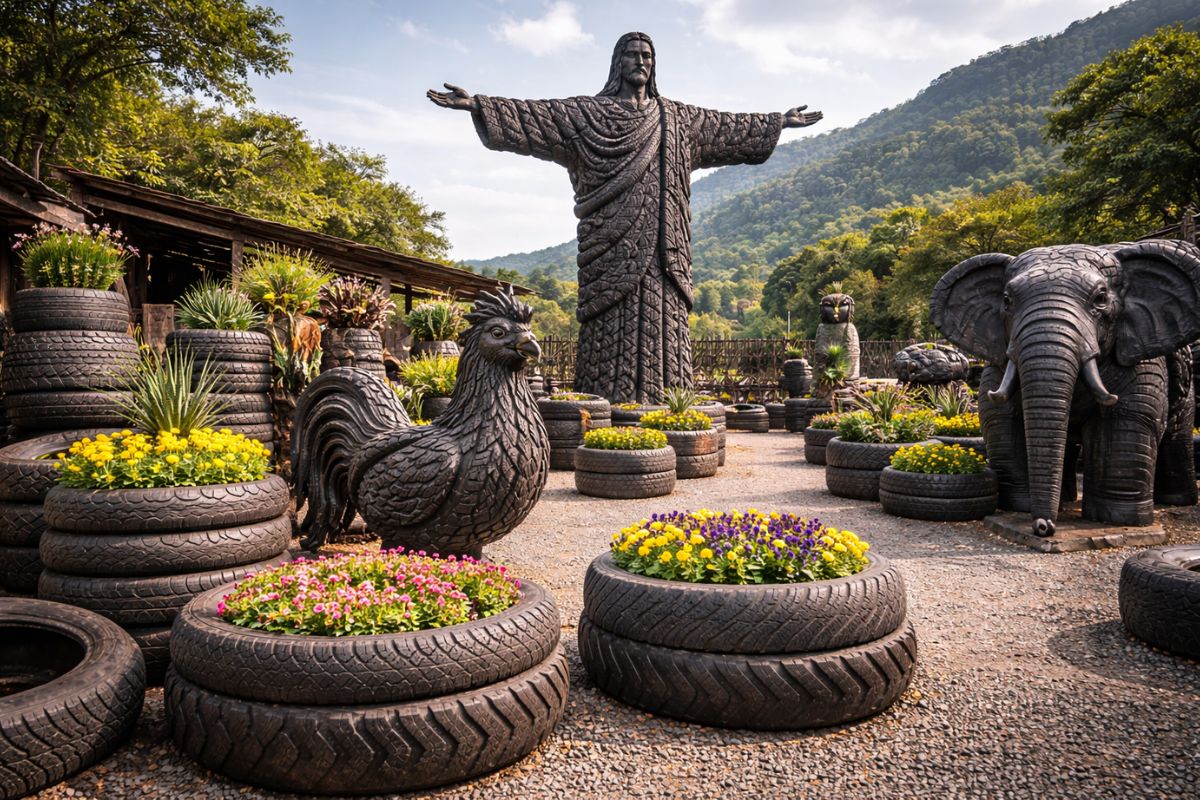


Old Tires That Used to Be Thrown Away in Nature Have Become Impact Crafts in the Midwest of Santa Catarina, with Pieces That Attract Drivers and Sustain a Family After Unemployment
This story shows how old tires can stop being a problem and become sustenance, creativity, and an open-air showcase. In the Midwest of Santa Catarina, an artisan transforms what was on the roadside into pots, benches, and sculptures that catch the attention of passersby.
And it all started in a tough way. Lauvir, at 55, loses his job on Christmas Eve, experiences the shock of unemployment, and needs to find a quick way to support his family. That’s when old tires come in as raw material and as a real opportunity.
The Crafts Made From Old Tires That Change the Landscape of the Road

On the access road between Joaçaba and Luzerna, drivers slow down when they see a different color by the roadside. From afar, it looks like a garden of sculptures.
-
Bruno Guimarães, 28, Misses Crucial Penalty Against Norway in World Cup After Replacing Vinicius Jr.

-
Inspired by a school lesson on Africa’s water crisis, a young boy raised money through chores to fund a well that transformed a Ugandan community.

-
Brazilian Construction Worker Moves to France, Earns Up to €2,500 Monthly with Home Renovations, Gains Social Media Attention

-
US Navy Sinks USS Oriskany with 230 kg of C-4, Creating World’s Largest Artificial Reef in 37 Minutes





Up close, the surprise comes: almost everything is made from old tires, many of which were collected from nature.
The creator is Lauvir. He himself says he never imagined living this until recently. What was waste becomes a finished piece to display, sell, and order, with details that make the public stop, look, and take pictures.
The Shock of Unemployment and the Turnaround with Old Tires
Lauvir worked for a company and became unemployed right on Christmas Eve. He describes the impact and fear of the future, especially since age weighs on the job search. The feeling is of freezing, not knowing what to do.
The turnaround comes at home. He had already made a swan out of a tire, and his wife encourages him: if he can make one piece, why not try others?
From there, old tires stop being just rubber and become a life plan, with sculptures and pots appearing as a concrete possibility.
The Mosquito and the Showcase by the Roadside
One of the works that catches attention is a mosquito that transmits dengue. The sculpture may not have sold immediately, but it fulfills a decisive role: it becomes a showcase. Many people see, comment, and understand that there is a different kind of work there.
With that, the “animal kingdom” starts to grow. Frogs, horses, zebras, insects, and other forms appear. With each new piece, more curious people stop, and the crafts made with old tires gain strength as a business.
How He Transforms Old Tires Into Pots and Ready-to-Plant Pieces
The process mixes strength, tools, and care. To cut the rubber, he uses a knife. To handle the tire wire, he needs tools like a Makita and a sander.
The piece that leaves strongly, according to him, is a model that many people buy for planting, such as lettuce.
After cutting, he flips the tire, nails the bottom, and finishes with attention to one essential point: the pot needs to be well washed and well drilled to avoid holding water.
He says that, at first, the focus was on dengue, so drilling the old tires well was also a way to avoid water accumulation.
Christ of 4 Meters Made with 130 Old Tires
The largest sculpture is a Christ statue four meters tall. It is a piece that takes more than a month to finish and requires a significant volume of material and patience. The Christ statue uses 60 car tires, 40 motorcycle tires, and 30 bicycle tires, totaling 130 used tires.
The method starts simple and becomes complex. He draws on the ground with chalk, bends the iron over it, and builds the structure as if the piece is “lifting” from the ground.
Old tires enter as covering and shape, while the iron provides support for the whole structure to withstand its size and use.
Why Some Old Tires Are Suitable for Benches and Others for Pots
Not every tire works the same way. For benches, he explains that it needs to be a tougher and stronger tire because it will support the weight of people sitting. For pots, the ideal is a softer tire, as it makes it easier to flip upside down and shape better.
This kind of choice shows that crafts with old tires are not improvised. There is technique, trial, adjustment, and learning until finding the right material for each function.
Dinosaurs, Tractors, Motorcycles, and the Leap in Orders
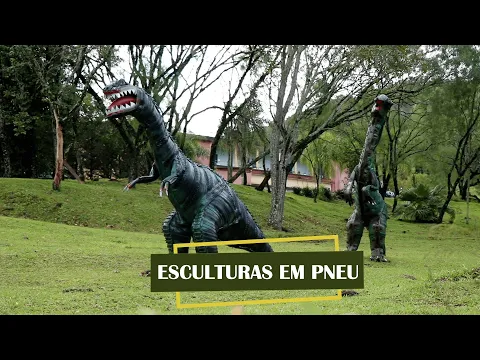
Over time, the portfolio grows. Tractors with and without buckets appear, motorcycles reminiscent of famous movie models, and a popular item among children: dinosaurs displayed even in a city park.
These pieces combine iron, tires, screws, and automotive paint. Lauvir says the iron is particularly important for the larger sculptures because kids jump on them without fear. For crafts made with old tires to last, they need a solid structure, not just a pretty appearance.
Characters, Rural Hotel, and New Projects in Old Tires

The majority of the work becomes commissioned. Besides the Christ statue, there are requests for Shrek, a woodpecker specifically for a rural hotel, and new projects that he refers to as challenging.
He mentions a commission for a pirate, two different airplanes, and even a helicopter. The logic is clear: the more people see, the more people order, and old tires become raw material for an expanding catalog.
Durability and Environmental Impact of Removing Old Tires from Nature
There is a benefit that goes beyond income. A tire takes many years to decompose in nature, so collecting and repurposing means reducing waste that often appears in the wrong places, including near rivers and in fishing areas.
Lauvir says he enjoys fishing and is bothered when he sees a tire thrown away. When he finds one, he takes it away. And he concludes with a phrase that explains the energy behind the work: he does what he loves, takes care of what he builds, and that keeps him working, even when it would be easier to give up.
What piece made from old tires would you have in your home, a pot for planting, a bench, or a giant sculpture?





