Portuguese
  Spanish


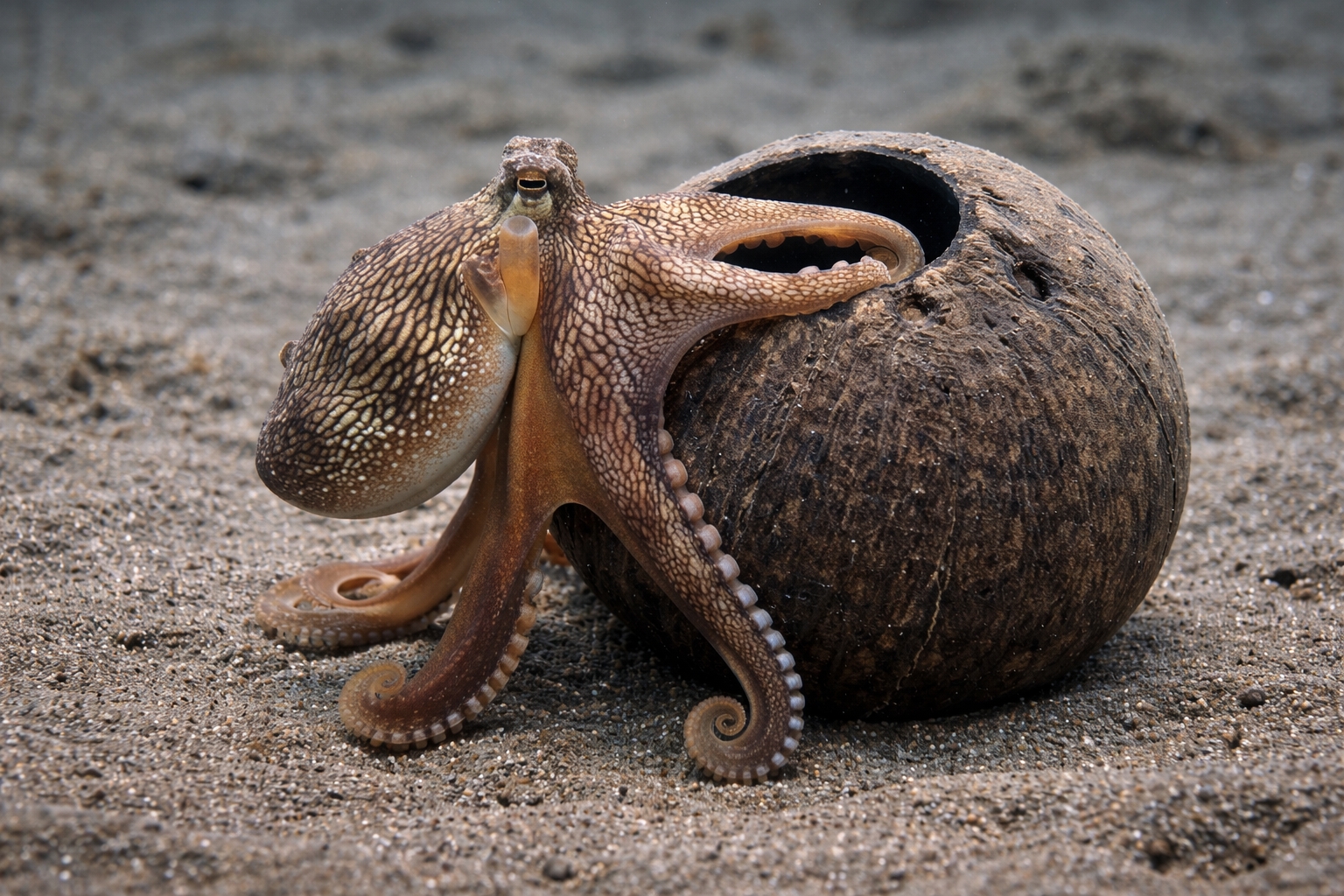

In The Waters Of Indonesia, Octopuses Of The Species Amphioctopus Marginatus Were Seen Carrying And Assembling Coconut Shells For Protection When The Risk Increases.
Biologists recorded a remarkable behavior in octopuses of the species Amphioctopus marginatus, known as veined octopuses, in the waters of Indonesia. They began to use halves of coconut shells as temporary armor.
The scene draws attention for involving the transport and manipulation of an object for a specific purpose, something associated with tool use. The strongest point is the strategy of keeping the material close even when there is no immediate threat.

What Happened And Why It Caught Attention
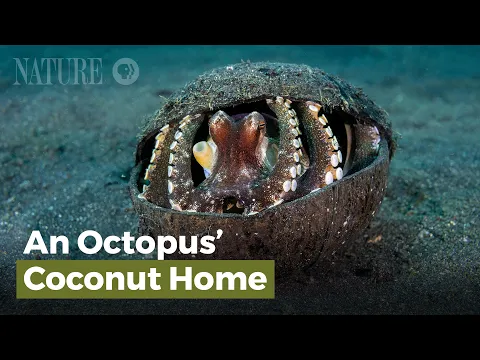
The octopuses were observed using halves of coconut shells as protection. They carried the pieces and assembled them when they needed to take cover.
-
Brazilian Engineer Who Grew Up Without Electricity Develops Software, Expands AltoQi to 67,000 Clients, Aiming for $21 Million by Digitizing Brazil’s Construction Industry

-
Spain Launches World’s Largest Floating Dry Dock: 56-Meter Giant Produces Massive Concrete Structures in A Coruña Using Technology Proven in Brazil

-
AI-powered toys that talk, recognize faces, and collect data face scrutiny from Brazilian government over children’s privacy concerns

-
4,000-Year-Old Child’s Skull Unveils Ancient Burial in 7,500-Year-Old Norwegian Rock Shelter, Impressing Archaeologists



The movement was not random. The tentacles were used to transport the material and position it carefully under the body.
In exposed areas or when facing a threat, the two halves were joined together, forming a temporary armor. The result was a quick shelter in places without natural protection.
How The Octopuses Carry And Assemble Protection
The behavior involves clear steps. First, the octopus picks up the halves of the shells and carries them along the seabed.
Then, it adjusts the position of the shells, keeping the parts close to the body. The manipulation requires fine control of the tentacles and reading the environment.
When the situation calls for it, the two halves are joined to create a shield. This fitting generates a cover that can be used as immediate refuge.
What This Behavior Reveals About Tool Use
The act of carrying and using an object as protection places the species among those that demonstrate tool use. This type of record is uncommon among invertebrates.
The coconut shell serves not just as an ornament or fixed shelter. It is treated as a resource that gains value at specific moments.
This logic indicates a choice based on utility and opportunity. The octopus keeps the material close because it understands that it can make a difference when exposure increases.
Why The Strategy Is Different From What Is Seen In Other Animals
There is a clear distinction compared to hermit crabs, which use shells permanently. In the case of the veined octopus, the protection is not assembled all the time.
The animal carries the halves even when it will not use them immediately. This characterizes a planned use, with delayed benefit.
This decision comes at a cost. By moving with the shells, the octopus becomes slower and may become more vulnerable for a time.
What Changes In Practice For Survival On The Seabed
Even with extra effort, the strategy provides an essential advantage. The presence of the shells allows the octopus to create shelter quickly in unprotected locations.
This increases adaptability to open areas, where the risk can arise suddenly. The immediate protection reduces the need to constantly find natural hiding spots.
The behavior also reinforces the image of underwater intelligence. Decision-making involves anticipation and adjustment of what to do according to the environment.
What May Happen From Now On
The observation of this pattern opens up new analyses on cognition and behavior in octopuses. The combination of transport, assembly, and timely use of the shell draws attention for the level of planning involved.
This type of record also strengthens the discussion about how marine animals solve problems in their daily lives. The topic is likely to grow as more records are made in different environments.
The main message is straightforward: coconut shells as armor are not by chance; they are a survival strategy that requires choice and precise execution.
The scene of octopuses carrying and assembling shells reinforces that nature creates practical solutions, even in species not commonly associated with tools. The emphasis is on the decision to keep a useful resource nearby.
By turning coconut halves into temporary protection, the Amphioctopus marginatus increases its chances in exposed areas and shows how adaptation can arise from simple but well-planned actions.