Portuguese
  Spanish


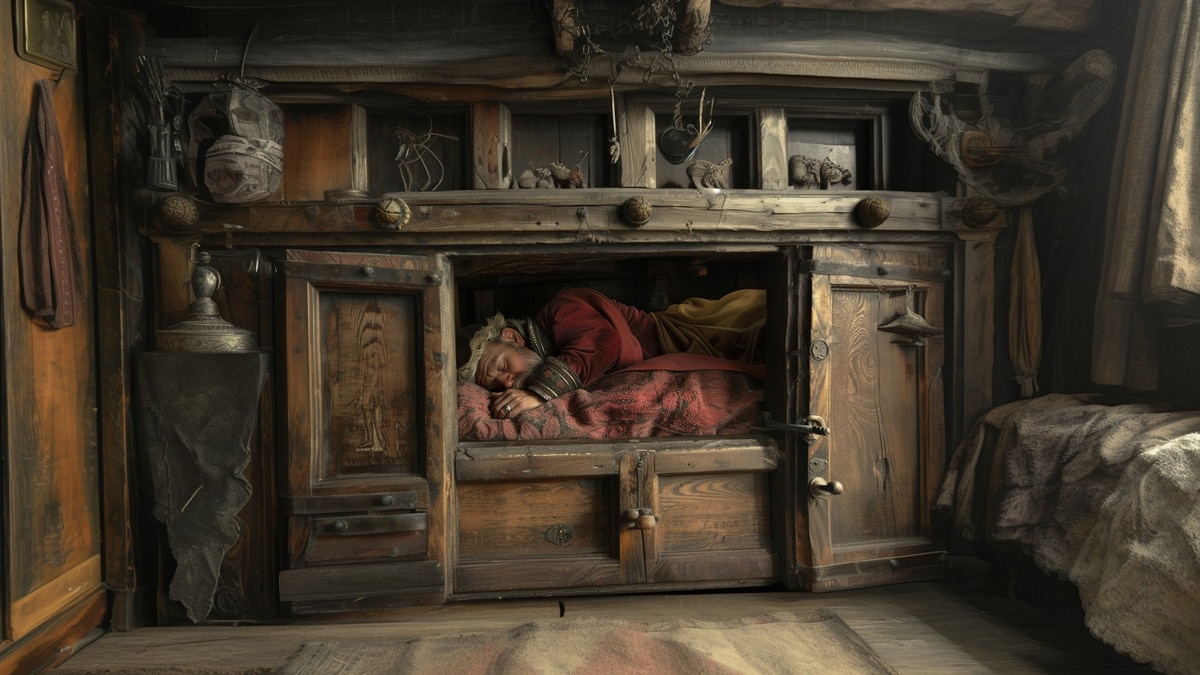


The Medieval Custom of Sleeping in Wooden Cupboards Intrigued Historians; Discover the Reasons Behind This Practice and the Reasons That Led to Its Abandonment
In the Middle Ages, houses were simple structures, often just a single room with little insulation. To face the harsh winters, a practical solution emerged: the bed cupboards.
These wooden structures protected from the cold, drafts, and helped retain body heat, creating a cozier environment for sleeping.
These pieces of furniture were not just a thermal solution. During the day, they could be closed to free up space in small, cramped houses. Some versions came with compartments and drawers, also functioning as wardrobes or dressers.
-
Largest Mechanical Dredger in the Western Hemisphere Removes Nearly 80 Cubic Meters of Mud Per Cycle, Measures 77 Meters, and Operates Day and Night to Prevent Giant Ships from Getting Stuck in the Houston Ship Channel

-
California Opens Floodgates to Restore Wetlands and Create Natural Flood Protection in the Central Valley

-
US Mayor Goes Undercover as Homeless for a Week to Understand Rising Homelessness, Sparking Debate in His City

-
Teen from Brazil Turns School Snack Sales into Million-Dollar Confectionery Business Projected to Earn Nearly $1.9 Million in 2024


For families sharing a single space in the Middle Ages, the bed cupboard offered a rare moment of privacy. Some could even be locked, serving as a safe place for personal belongings.
The Decline of the Bed Cupboard
With technological advancements, the bed cupboards of the Middle Ages began to lose ground. The introduction of central heating and more efficient fireplaces reduced the need for thermal protection.
Additionally, cultural shifts made sleeping in a closed space seem outdated and uncomfortable.
During the 20th century, the idea of open, well-ventilated rooms became the standard. Hygiene and a sense of spaciousness became valued, making bed cupboards an increasingly less used option.
The evolution of mattresses also influenced this transition. With more comfortable and bulkier models, the old bed cupboard was no longer suitable.
The Return of Compact Solutions
Interestingly, what was once considered outdated is making a comeback in a revamped form. The growth of cities and the reduction of livable space drive the search for smart housing solutions.
Capsule hotels, popular in Japan, follow this logic. These small units offer individual resting spaces without occupying large areas, being an affordable alternative for travelers.
The idea of space optimization has also been applied in modern apartments, with multifunctional furniture, such as built-in beds, sofas that turn into bunk beds, and retractable structures.
Besides the economic factor, sustainability plays an important role in this trend. The American Institute of Architects points to a growing interest in projects that prioritize smaller but efficient spaces. The goal is to reduce waste and make environments more functional.