






 Portuguese
  Spanish


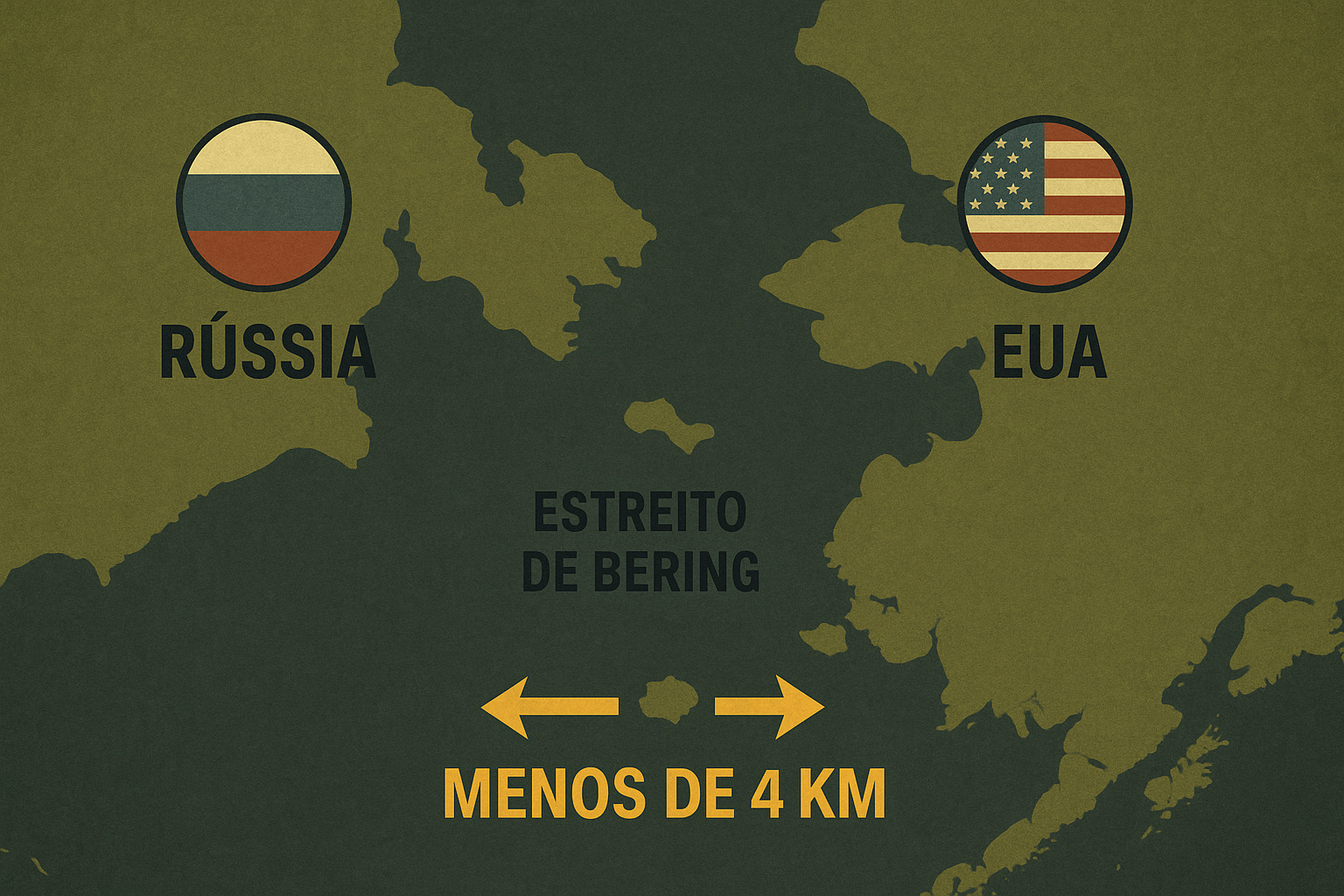


The Curious Proximity Between Two Global Giants Reveals a Rare Scenario in Global Geography, Where Just a Few Kilometers of Distance, Unstable Ice, and Military Surveillance Make It Impossible to Cross What Nature Would Allow, but Politics Absolutely Prohibits
Traveling on Foot Between Two Countries Separated by Oceans Often Sounds Like Science Fiction. However, at the Extreme Point Between Alaska and Siberia, This Idea Strangely Approaches Reality. The Bering Strait, Located Between the Arctic Ocean and the Bering Sea, Separates the United States and Russia by Just 85 Kilometers of Land Area and, Even More Surprisingly, by Less Than 4 Kilometers Between the Diomede Islands. During Some Harsh Winters, This Stretch Even Freezes, Creating a Natural Ice Bridge That Has Captivated Human Imagination for Centuries.

As Reported in Several Historical Articles and Specialized Documentaries — This Information Was Publicized by International Outlets Studying the Arctic Region — This Crossing Has Not Only Been Made Before but Also Played a Fundamental Role in Humanity’s Migratory Cycles. Despite This, Today It Is Absolutely Prohibited to Cross the Border Between the USA and Russia on Foot, Even Though It Is Technically Possible.
From Beringia to Modern Rivalries: How an Ancient Human Passage Became an Impossible Border
To Understand Why the Crossing Is Prohibited, We Must Go Back Thousands of Years. Archaeological Studies Indicate That Between 12,000 and 30,000 Years Ago, the Bering Strait Was Not a Frozen Sea, but Rather a Vast Land Bridge Called Beringia, Connecting Asia to the American Continent. This Corridor Allowed the First Humans to Migrate to the Americas, Leaving Evidence of Similar Physical Characteristics Among Native Peoples, Such as Slanted Eyes and Straight Hair.
-
Australian Space Agency Investigates Six Mysterious Metal Spheres Found on Queensland Beach, Isolating Area Over Possible Space Debris Risk

-
Transform Your Kitchen in a Day: New Flooring Solution Offers Quick Renovation Without the Mess or Noise

-
DNA Test Suggests Boy May Have Two Biological Fathers After Rodeo Rider’s Death, Case Heads to Court

-
3D-Printed Micro Homes Offer Innovative Solution to California’s Housing Crisis: Village with 40 Permanent and 14 Temporary Units Built in 10 Months Provides Facilities and Social Services to Help Residents Transition from Camps



With the End of the Ice Ages, Ocean Levels Rose and Beringia Disappeared, Leaving Only Two Pieces of Land: Big Diomede Island (Russian, Measuring 27 km²) and Little Diomede Island (American, Measuring 7 km²). There, for Centuries, Indigenous Peoples Moved Freely Between Both Sides, Maintaining Family, Cultural, and Religious Ties.
The Situation Began to Change Drastically After the 19th Century. In 1867, Fearing to Lose Alaska to the United Kingdom in a Conflict, the Russian Empire Decided to Sell the Region to the United States. The Agreement Established That the Diomede Islands Would Mark the New Border Between Both Countries. For Decades, This Delimitation Had Little Impact on Native Life Until One of the Most Tense Moments in Modern History Would Change the Human Landscape of the Strait Forever.
The “Ice Curtain”: Cold War, Expulsions, Total Surveillance, and the End of the Traditional Crossing
After World War II, the Rivalry Between the United States and the Soviet Union Redefined Borders Around the World. In the Bering Strait, the Division — Previously Relatively Informal — Turned Into a True “Ice Curtain”, a Term Inspired by the Famous European Iron Curtain.
The Soviet Union Completely Evacuated Big Diomede, Relocating Its Inhabitants to the Continent. Today, the Island Is Occupied Only by Military and Meteorological Installations, Heavily Patrolled. Meanwhile, Little Diomede Remains with About 140 Inhabitants, Mostly Natives. Still, No One Can Cross Between the Two Islands — Even in Winters When the Ice Freezes and Forms a Natural Bridge.
The Reason Is Simple: There Is No Immigration Checkpoint at Any Point in the Strait, and Any Attempt to Cross Results in Immediate Detention.
History Records Notable Episodes. In 1987, American Swimmer Lynne Cox Swam from the American Island to the Russian One to Symbolize a Gesture of Peace. The Feat Was Praised by Ronald Reagan and Mikhail Gorbachev, Becoming a Milestone of Diplomatic Détente.
Another Famous Case Involves Adventurers Carl Bushby and Dmitri Kiefer, Who, During a Circumnavigation of the Globe, Crossed the Strait in 14 Days, Jumping Between Ice Floes and Swimming Through Icy Sections. Upon Reaching the Russian Side, They Were Immediately Arrested and Deported.
Why Is It Prohibited to Cross on Foot? Unstable Ice, Extreme Risk, Strict Laws, and Constant Military Surveillance
Although the Proximity Between Continents Is Tempting, Four Factors Make the Crossing Practically Impossible:
1. Extremely Strict Immigration Laws
Despite the Ice, the Border Is Official. Russia Considers Any Unauthorized Entry a Federal Crime, Resulting in Detention, Interrogation, Deportation, and Even Permanent Bans on Entry.
2. Strong Russian Military Presence
Soldiers Monitor the Entire Area of Big Diomede. Unusual Movements Are Quickly Identified Due to the Clear View of the American Island.
3. Unstable Ice and Dangerous Currents
Despite Freezing, the Strait Has Violent Currents. The Ice Layer Frequently Breaks, Creating Cracks, Moving Blocks, and Deadly Abysses.
4. Absence of Any Infrastructure
There Are No Ships, Bridges, or Support Facilities. In Case of an Accident, Rescue Is Virtually Impossible.
Even So, Visionaries Have Imagined a Gigantic Engineering Project: An 85 km Bridge Connecting America and Asia, Passing Through the Diomedes. The Project Would Require Tens of Billions of Dollars and a Diplomatic Agreement Currently Unimaginable.
Despite Being Fascinating, It Remains in the Realm of Fiction.
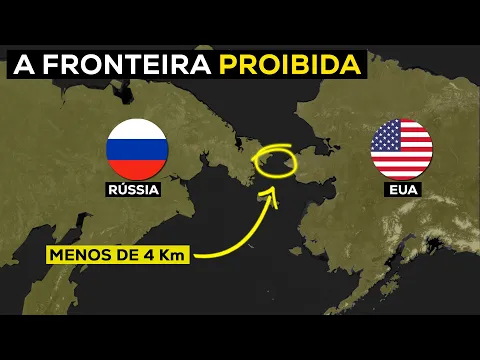

Crossing Between the USA and Russia on Foot Is Possible for Nature, but Prohibited for Humanity
The Short Distance Between the Two Countries Contrasts with the Vast Political Divide That Separates Them. Even Though Isolated Adventures Have Challenged the Strait, Any Modern Attempt Results in Imprisonment and Deportation. In Other Words, Walking from One Continent to the Other Would Turn an Epic Achievement into a Gigantic Diplomatic Problem.
And, In the End, That’s What Keeps the Region Enshrouded in Mystery: Nature Allows, History Explains, and Politics Prohibits.


A travessia que o texto menciona pelos povos indígenas continua sendo feita até hoje pelos aleutas e pelos yupik. Para eles, não é proibido. É apenas um passeio pela sua vizinhança, o mar de gelo.