Portuguese
  Spanish


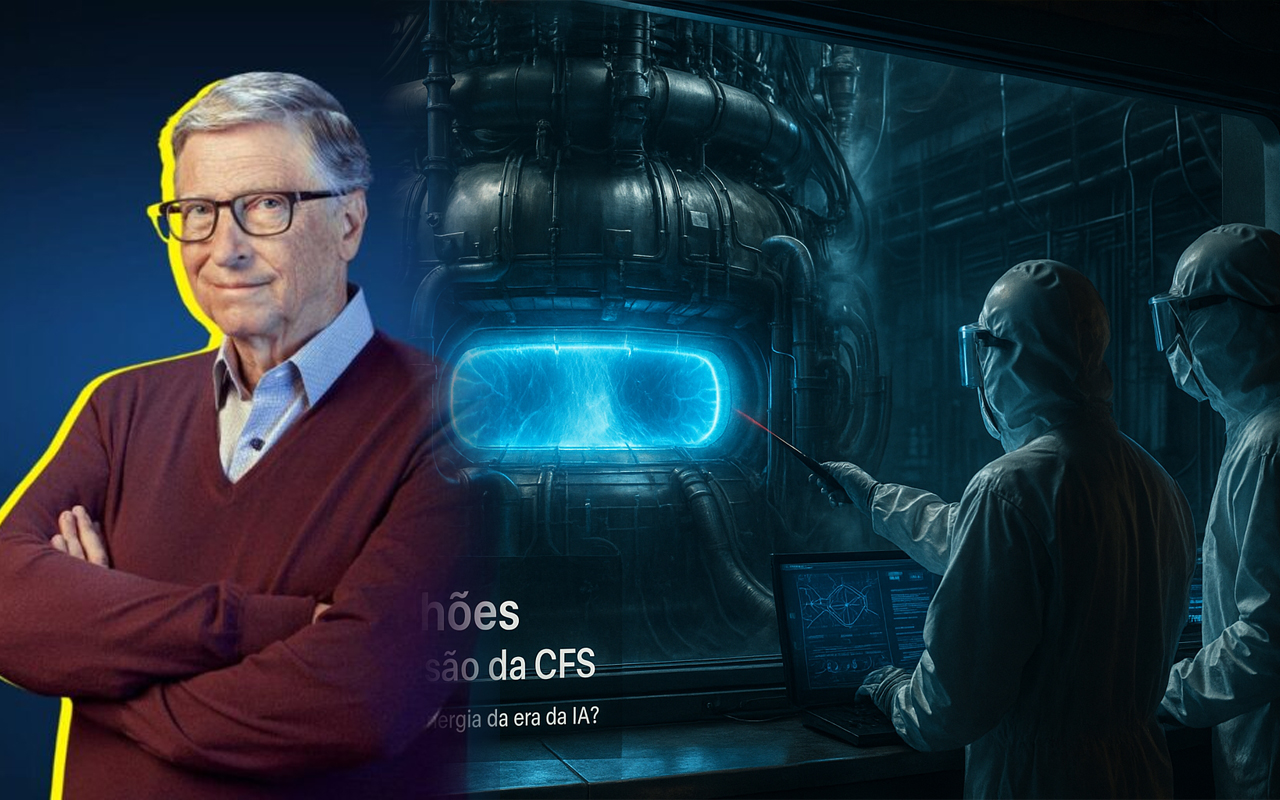


CFS Received US$ 863 Million from Giants like Nvidia, Google, and Funds Linked to Bill Gates. The Money Focuses on Completing SPARC and Enabling ARC in Virginia, with 200 MW Already Contracted by Google for the Early 2030s.
The Commonwealth Fusion Systems (CFS), a spin-off from MIT, announced a new funding round of US$ 863 million. The round includes NVentures (Nvidia), Google, funds associated with Bill Gates (Breakthrough Energy Ventures and Gates Frontier), as well as a Japanese consortium led by Mitsui and Mitsubishi. With this, the total raised since 2018 is approaching US$ 3 billion. The stated goal is to transform nuclear fusion from a promising concept into a commercial venture.
According to the company, the immediate priority is to finalize SPARC, a demonstration machine in Massachusetts that paves the commercial route for the technology. In parallel, CFS advances the project for the first grid-scale power plant, ARC, in Virginia, where there is a strong concentration of data centers and a growing demand for firm, clean energy.
The move comes in the wake of energy pressure from AI and cloud computing. On June 30, 2025, Google signed a contract to acquire 200 megawatts (MW) from the future ARC, a groundbreaking achievement for fusion in the corporate PPA market, with delivery expected in the early 2030s.
-
Brazilian Researcher Develops Protein Supplement from Tilapia Waste, Combining Innovation and Sustainability with Economic Potential

-
Women in São Paulo Unknowingly Tracked by Coin-Sized Tags Hidden in Cars and Belongings, Raising Stalking Concerns
-
Near a $750 million AI data center in Brazil, a resident’s well runs dry, leaving her unable to afford the $25,000 needed for repairs.

-
16-Year-Old from Brazil’s Sertão Wins Young Scientist Award for AI Predicting Rainfall with 94.5% Accuracy to Aid Farmers


Gates, Nvidia, and Google are investing in CFS because Artificial Intelligence is driving electricity demand, and companies need firm, 24/7 low-carbon energy near data centers. Nuclear fusion promises high energy density, reduced land use, intrinsic safety, and near-zero emissions in operation, surpassing the intermittency of solar and wind without relying on large batteries.
Why the US$ 863 Million Changes the Fusion Energy Game
The B2 Series round strengthens CFS’s position among the most capitalized fusion startups in the world. In addition to Nvidia and Google, funds associated with Bill Gates and a group of Japanese investors participated, signaling global ambition and interest from the industrial chain. The package raises total capital close to US$ 3 billion, crucial for shortening engineering and supply timelines.
For the clean energy sector, the investment highlights that tech players are willing to finance solutions with high energy density and zero emissions in operation. The appetite is directly related to the forecast that electricity consumption from data centers in the U.S. will more than double by 2035, driving the search for firm low-emission sources.
In the short term, the capital serves as a bridge between the demonstration phase and the first commercial arrangements. In terms of credibility, the presence of strategic and institutional investors reduces uncertainties about the project’s bancability and helps unlock critical suppliers of superconducting magnets and tokamak cooling systems.
SPARC: How CFS Aims to Prove Q>1 in 2027 and Open Commercial Pathways
The SPARC is the machine set to prove, in 2027, that fusion can generate more energy than it consumes in the process, the famous Q>1. CFS classifies this milestone as “commercially relevant,” as it validates the physics and engineering necessary for electricity generation at scale. Q>1 in 2027 is the technical trigger that the industry is waiting for.
The disclosed timeline foresees first plasma in 2026, followed by a testing campaign that culminates in the net energy milestone the following year. Although fusion goals are challenging, the 2026–2027 timeline appears consistently in public materials and technical profiles of SPARC.
Part of the US$ 863 million will be used to complete SPARC and engineering activities that connect the demonstration machine to the design of ARC. In simple terms, SPARC tests the technological core that will later scale to the commercial plant.
ARC in Virginia: 400 MW Planned and 200 MW Already Sold to Google
The ARC is planned for Chesterfield County, Virginia, a logistics hub and data center area. The plant is designed to provide about 400 MW of firm, zero-carbon energy to the grid, with expected arrival in the early 2030s. The location choice has regulatory support in progress and regional economic echoes.
On June 30, 2025, Google signed a 200 MW PPA with CFS, half of the planned capacity for the first ARC. For the market, this contract serves as a demand anchor, increasing revenue predictability and facilitating negotiations with suppliers and financiers.
Locally, the Chesterfield Planning Commission granted a permit endorsement on August 21, 2025, a step that brings the project closer to the final licensing and construction phases. The estimated investment exceeds US$ 2.5 billion, which requires a tightly coordinated financial and industrial timeline.
Risks, Costs, and the Next 24 Months That Define the Future of Fusion Energy
Even with the boost of US$ 863 million, CFS admits it will need additional capital to build ARC, whose cost is in the billions of dollars. The current round provides momentum to finish SPARC and advance the plant engineering, but the commercial construction phase requires new sources of funding.
On the technical side, fusion still faces challenges of continuous plasma operation, materials under extreme conditions, and thermal integration at commercial scale. Analysts remind that transforming scientific milestones into plant economics is a separate step, subject to timeline and cost risks.
To keep track of this topic, note the milestones: mechanical completion of SPARC, first plasma in 2026, validation of Q>1 in 2027, advancement of permits in Virginia, and announcements from critical suppliers. If these steps are confirmed on schedule, ARC is on track to deliver power in the early 2030s, with 200 MW already contracted.