






 Portuguese
  Spanish
  3 min of reading
  0 comments


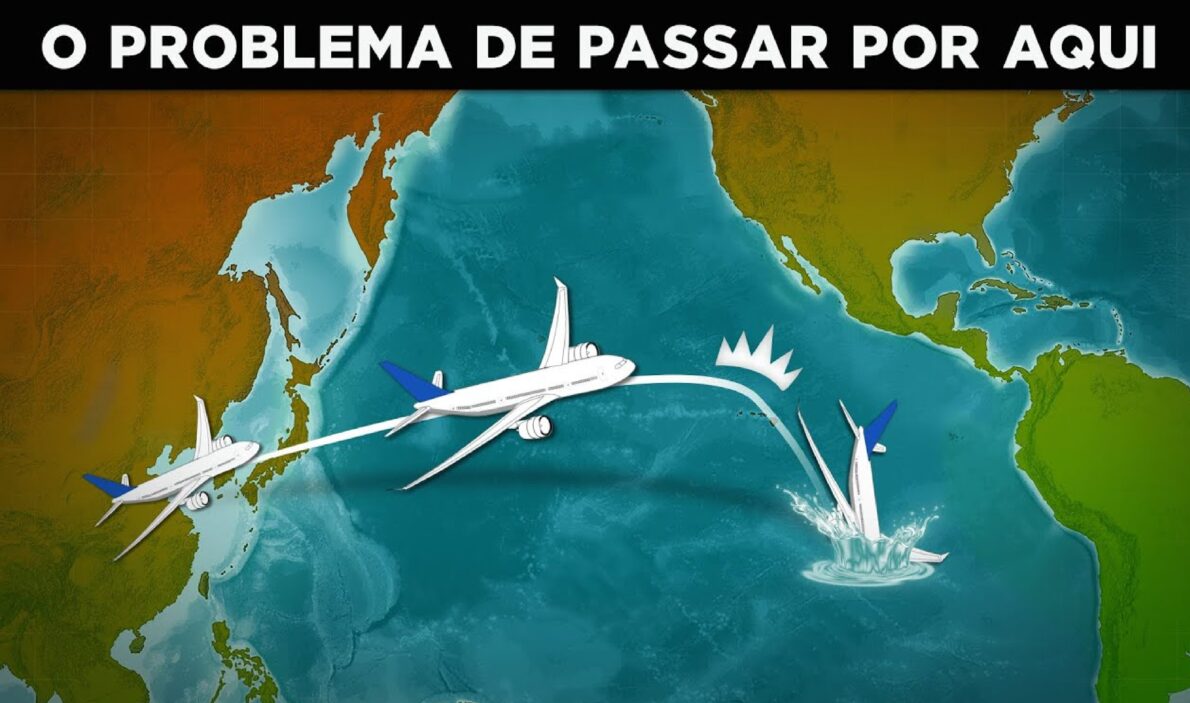
Distance, Technology, and Demand Are Factors That Make Direct Air Connectivity Between These Regions Unfeasible, Despite the Economic Importance of Both
South America is a subcontinent with important air routes, according to the video from Capital Finance, such as those connecting São Paulo to New York or Buenos Aires to Madrid. However, one region remains disconnected by direct flights: East Asia. Despite connections to Oceania and even Antarctica, the lack of direct flights between South America and East Asia, crossing the Pacific Ocean, raises questions.
Nonexistent Air Connections
East Asia is one of the main centers of the global air market. It’s no surprise that eight of the world’s top ten airlines are Asian, and four of the five busiest flight routes have destinations or departures in Asia. However, there are no direct flights between East Asia and South America, even though the Asian continent leads the global air market. In Latin America, the only direct flights to Asia depart from Mexico, operated by airlines such as Aeroméxico and All Nippon Airways (ANA), headed to Tokyo.
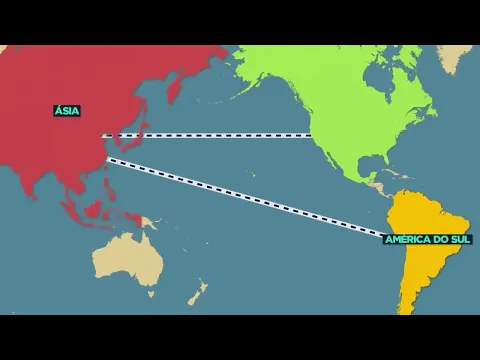

For those departing from South America and wishing to reach Asia, the only option is to connect through North America or Central America.
-
While many ports want to grow, Barcelona has decided to do the opposite and will cut cruise terminals from 7 to 5 after pressure from residents, protests, and crowds.

-
The United States wants to tighten control over submarine cables that carry 99% of international internet, silently cross oceans, total more than 400 routes worldwide, and have become a strategic piece in the competition for data, technology, and suppliers.
-
European Union looks again at Brazilian seafood after a nearly 8-year ban and may unlock a coveted market for lobster, tuna, tilapia, and shrimp.
-
Voltalia secures 322 MW of electrical connection in Pecém and targets data centers with renewable energy, robust network, and dedicated wind projects in Ceará.



Technical and Geographical Challenges
The main challenge for the existence of direct flights between South America and East Asia is distance. The longest flight in the world currently connects New York to Singapore, with a distance of about 15,000 kilometers and a duration of 18 hours. However, for a direct route between South America and Asia, the distance would be even greater, requiring aircraft with greater range.

The most commonly used aircraft models today, such as the Airbus A320 and the Boeing 787, do not have the capacity to cover such long distances without stops. For example, the range of the Airbus A320 is about 7,000 kilometers, while the Boeing 787 can fly up to 5,700 kilometers. To cover the distance between South America and East Asia, an aircraft capable of flying over 17,000 kilometers would be necessary. So far, only the Airbus A350-900 XWB Ultra Long Range has the range to cover distances of up to 18,000 kilometers, but the adoption of this technology on a large scale is not advantageous for airlines.
Economic and Commercial Issues
Another factor that prevents the operation of direct flights between these regions is the low demand. Although Asia and South America have important trading partners, such as China, Japan, and South Korea, the demand for passenger flights between these regions is low. The main flight routes in the Asia-Pacific market, such as Hong Kong to Taipei and Jakarta to Singapore, are much busier and more profitable for airlines.
Furthermore, flying directly between South America and East Asia would be more expensive, both in terms of investment in aircraft with greater range and the additional cost of fuel. Therefore, airlines prefer to make stops in other regions, such as Europe or North America, where the distance to Asia is about 42% shorter.







-

1 person reacted to this.