






 Portuguese
  Spanish


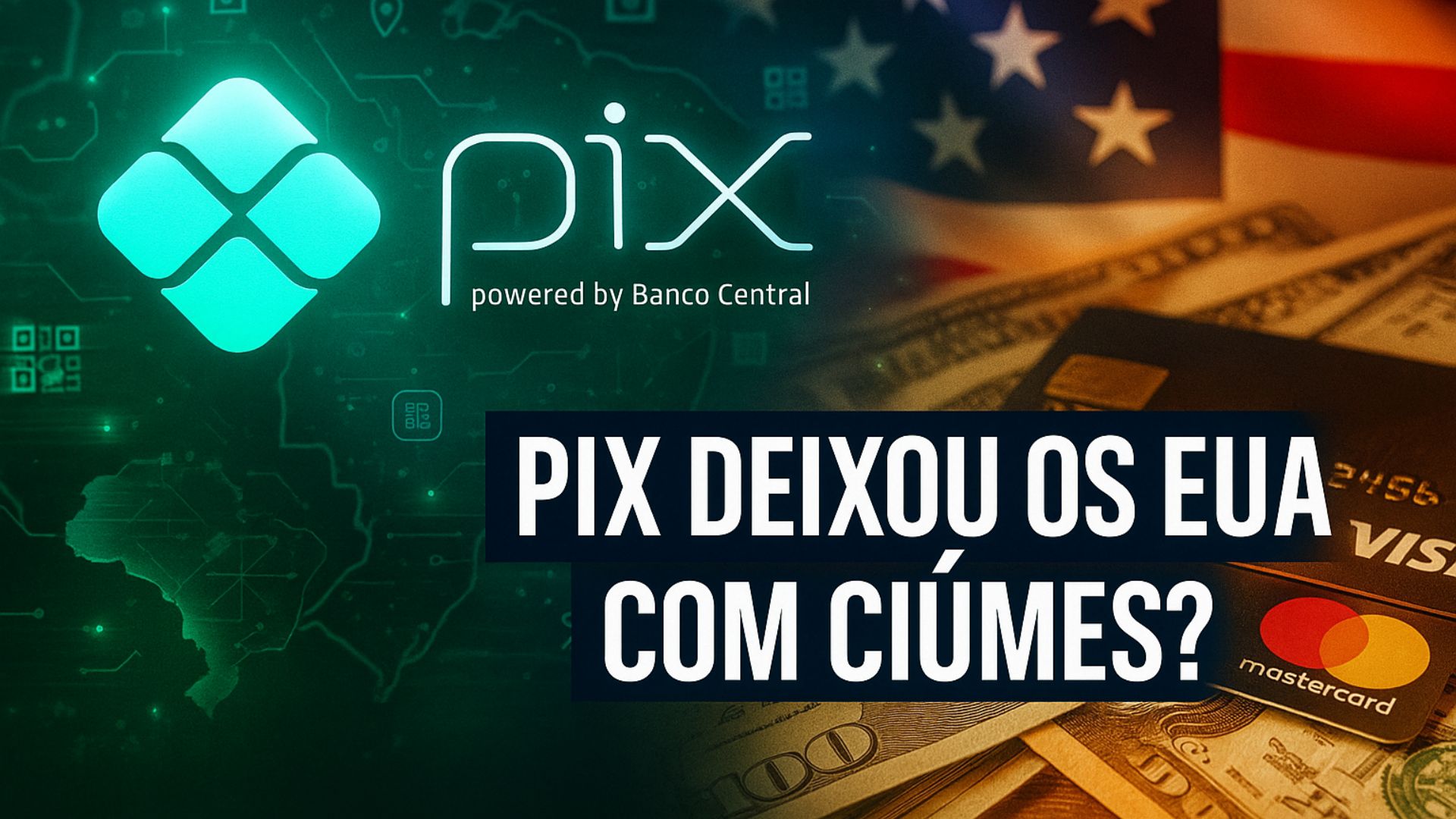

Instant Payment System Created by the Central Bank Transformed the Use of Money in Brazil and Became an International Model, While the United States Faces Delays and Political Disputes Over Digital Innovations.
Brazil exports a rare case of digital public policy that became a standard: Pix.
Created and operated by the Central Bank, the instant payment system has consolidated itself as the most used payment method in the country, with settlement in seconds and zero cost for individuals.
Meanwhile, the United States is progressing more slowly with FedNow and discussing restrictions on a central bank digital currency.
-
Brazil’s Federal Revenue Auction: iPhone 13 for $95, PlayStation 4 for $80, and Volkswagen Jetta for $2,600 Among 232 Lots Available

-
Tech Giant Oracle Lays Off 21,000 Employees and Invests $70 Billion in Artificial Intelligence

-
Chilean Giant Acquires St. Marche, Expanding from Discount to Premium Supermarkets in São Paulo’s High-End Retail Market
-
After 60 Years of Selling Cheap Milk, Brazilian Family Invests in $4,000 Equipment to Transform Farm’s Milk into Premium Sweets, Producing 2 Tons Daily and Aiming for $6.4 Million


The contrast has reignited the regulatory dispute: in July 2025, the U.S. government opened a trade investigation that cites the Brazilian payment environment — including Pix — among the focuses of the inquiry.
As Atila Iamarino stated in a video published on the Atila Iamarino channel on YouTube, the efficiency of Pix helps explain why it has become a “worldwide example,” by combining public infrastructure, massive adoption, and low cost for the end user.
According to him, the success illustrates how a public interest solution can organize a market previously fragmented by fees and frictions typical of cards and traditional transfers.
How Pix Gained Scale and Became a Reference
Launched in November 2020 after two years of formal design, Pix unified rules, keys, and messages in a centrally managed neutral infrastructure by the Central Bank, operating 24 hours a day.
The result was a leap in volume and reach.
In 2025, the system hit new daily transaction records, consolidating itself as the standard payment for retail in the country.
According to the International Monetary Fund (IMF), Pix combines design characteristics that favor rapid adoption: openness to banks and fintechs, immediate settlement and low costs.
In 2023, an IMF study described Pix as a success story in instant payments, highlighting interoperability and the role of pro-competition regulation.
As Atila Iamarino emphasized, this architecture allowed millions of Brazilians to pay small amounts digitally, something that traditional cards and transfers do not always make convenient.
He also noted that Pix enhanced financial inclusion by “bringing the cellphone to the center” of everyday banking use, a movement also recognized by the IMF and the Central Bank.


USA: FedNow Advances, But Without the Same Adoption
In the United States, FedNow — the instant payment service from the Federal Reserve — was launched in July 2023, with gradual adoption by financial institutions.
Two years later, adoption was still expanding, but far below Pix’s penetration in Brazil.
While Pix quickly gained popularity in retail, FedNow is progressing more slowly, partly due to relying on voluntary adoption by banks and coexisting with other private networks.
As Atila Iamarino highlighted, the American regulatory context also weighs in.
In 2025, the House of Representatives approved the Anti-CBDC Surveillance State Act, a bill that seeks to prohibit the Federal Reserve from issuing a retail digital currency, even restricting studies and testing.
The proceedings reflect a heated political debate about privacy and the role of the state in digital payment methods.
The Commercial Friction: From Brasília to Washington
In July 2025, the USTR (U.S. Trade Representative’s Office) opened an investigation under Section 301 to examine Brazilian practices deemed disadvantageous to American trade.
Among the listed topics are electronic payment services and digital policies.
The Brazilian government responded in August with a 91-page document defending the neutrality of the Pix model and challenging allegations of discrimination.
The Central Bank publicly reinforced that it does not compete with the market, but offers open public infrastructure, which, in the official assessment, increases competition.
According to Atila Iamarino, the American inquiry is a sign of the global relevance of Pix — and how a public, free, and ubiquitous system pressures fee-based models.
He further commented that the success of Pix exposed the efficiency of a well-designed public infrastructure, in contrast to more expensive and less interoperable private arrangements.
Economic and Social Impact in Brazil
The adoption of Pix changed the payment mix in retail and everyday life.
Research and official reports indicate that it surpassed cards and cash as the preferred method in various situations.
In 2025, the Central Bank advanced in offering recurring payments, known as automatic Pix, paving the way for installments and direct subscriptions.
As Atila Iamarino observed, mass adoption brings challenges: scams and frauds require continuous responses from banks, regulators, and users.
Even so, the net gain for inclusion, convenience, and cost remains significant, with public perception favoring security and usability.
Beyond Borders: Where Pix is Already Seen
Outside Brazil, Pix does not operate as an international transfer between accounts, but merchants in Portugal and France already accept payments via Pix through local acquirers.
In these cases, the consumer pays in reais, the merchant receives in euros, and there is automatic conversion.
On the geopolitical front, the BRICS are discussing alternatives for payments between countries, reducing dependence on the dollar.
For now, there are initiatives for interoperability among national systems and use of local currencies, still without a single platform.
What Explains the “American Envy”
For Atila Iamarino, the “envy” arises from the contrast: Brazil created an efficient public infrastructure, while the U.S. maintains private networks with unequal adoption and political barriers.
He highlighted that Pix lowers transaction costs, attracts new users, and stimulates competition among banks and fintechs.
In conclusion, the American investigation is likely to keep the topic on the international radar.
If it leads to unilateral measures, the dispute should migrate to the WTO.
Regardless, Pix has already crystallized a lesson: open and interoperable public infrastructure can accelerate digitization and improve user experience without undermining private innovation.
It remains to be seen how many countries — and which ones — will choose to follow this path in the coming years, including the United States.
If you could change one rule in your preferred payment method today, what would be the priority: reducing fees, increasing interoperability, or strengthening fraud protection?


