





 Portuguese
  English
  Spanish
 3 min of reading


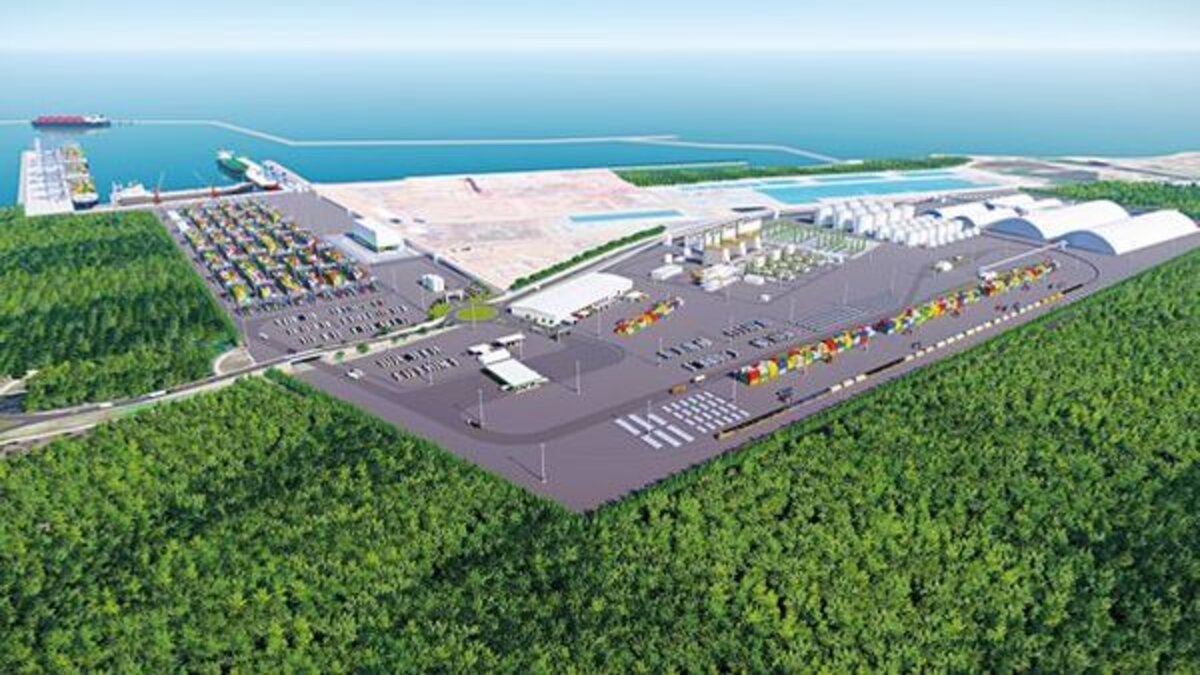
The Brazilian Economy Is Going to Gain a Great Contribution with the Imetame Port, Since Larger Ships Will Be Able to Sail the Coast Thanks to the High Investments Received
The Imetame Port, despite still being under construction, has everything to be a milestone in the history of Brazilian ports. This is because the high investment being made in the new project should allow the circulation of increasingly larger ships that could not yet be in operation in Brazil. However, with this new possibility, as of this Tuesday (31/05), the expectations are that the economy will enter into an even greater movement, especially when we talk about agribusiness.
Essa foi a última reunião após uma longa jornada para a aprovação do Porto da Imetame, no Espírito Santo! Agora quem comemora é o cidadão capixaba! (Eu como Superintendente ainda nessa foto!) 🇧🇷🤜🤛 pic.twitter.com/nSk1jlnCOs
— Marcio Furtado (@supermarcio_1) May 25, 2022
ARTICLE CONTINUES BELOWSee also
Brazil will deactivate more than 35 oil platforms by 2030 in a market estimated at R$ 306 billion, but it has no qualified shipyard, no approved law, and no defined tax regime to do the work domestically.

Instead of demolishing old coal warehouses, London doubled their roofs until they met in the center and created one of the most curious renovations in King’s Cross.

Fungi transform engineered wood that is impossible to recycle into low-carbon insulation panels, reduce construction waste, save energy, and create a sustainable alternative for walls, floors, and roofs.
Bottle caps and pine sawdust replace discarded wood in concrete molds, reduce waste, reuse household residues, and create sustainable solutions in Brazilian construction projects.



The Million-Dollar Investment in the Imetame Port Marks Direct Competition with the Port of Santos Which Until Now Holds the Largest Inflow of Ships and High Economic Movement Capacity
The Port of Santos was revolutionary in its early years of operation in Brazil, around the year 2000, as it had the capacity to receive larger ships with more competitive costs. Thus, agribusiness, which benefits the most from this scenario, felt the impact of this new moment. This is how the Port Complex of Santos ended up becoming the main choice for several farmers who previously exported through the Port of Paranaguá, located in Paraná.
To this day, the Port of Santos is still a major reference when it comes to economic movement through maritime routes, especially due to its legacy in agribusiness and reliability among more experienced farmers, but the scenario is expected to change with the operation of the Aracruz Port, also known as the Imetame Port.
The Port Complex of Santos Receives Ships That Transport Up to 90 Thousand Tons, but the New Port Will Have Capacity to Receive Ships That Transport Up to 150 Thousand Tons Thanks to Million-Dollar Investment
While the Port of Santos, which is currently one of the largest references in capacity for large ships, is only able to receive ships that transport up to 90 thousand tons, the Imetame Port project aims to reach the capacity of receiving ships that transport up to 150 thousand tons. In other words, a significant advancement in the current maritime routes scenario in Brazil, allowing the reception of ships that are not yet in circulation in the country.
On a more technical note, receiving larger ships is closely related to the depth of the port’s waters, which varies from place to place, since the larger the ship, the more of it is submerged — known as “draft.” For comparative purposes, it is valid to analyze the Port of Santos and the Imetame Port project: while the former has the capacity to receive ships with a draft of up to 14.5 m, the latter aims to allow the entry of ships with a draft of up to 16 m, which helps to provide a sense of scale.
The impact of this new scenario on the Brazilian economy is enormous, especially for the agribusiness sector. According to estimates, the Imetame Port could handle around 9 to 11.5 million tons of soybeans per year, assuming a parameter of US$ 6 per ton.
The vision of the CEO of Aracruz Port, Cristiane Marsillac, is quite positive regarding the reach of the new investment: “Looking at the more conservative scenario, our coverage area would include soy produced in Minas Gerais, Goiás, eastern Mato Grosso, and part of Bahia. In a more optimistic perspective, we could receive soy from even more distant areas.” In other words, in both scenarios, the Imetame Port would already be very successful.





Be the first to react!