Portuguese
  Spanish


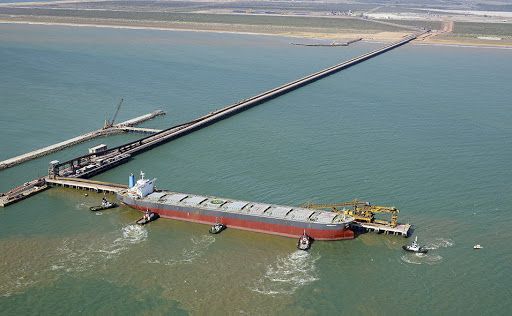

Multicargo Terminal Handled 25 Thousand Tons of Potassium Chloride for the First Time at the Port of Açu
São João da Barra, September 30, 2020 – The Port of Açu placed Rio de Janeiro on the map of the fertilizer market in Brazil. The state was the only one on the national coast from Rio Grande do Sul to Bahia that did not carry out this type of bulk shipping. The first operation was carried out via the Multicargo Terminal (T-MULT) and imported 25 thousand tons of potassium chloride (KCL) to the interior of the state of Minas Gerais.
Originating from St. Petersburg, Russia, the MV PALEKH vessel docked at Açu on September 23. The operation was made possible due to the recent expansion of T-MULT, with the installation of a new covered warehouse. Only in the first year of the contract, the expectation is that 150 thousand tons of fertilizers will be handled by this terminal, which will enable global connection of the state of Rio with the producers of these inputs, mainly for the states that do not have access to the sea, such as Minas Gerais.
Other Recent News
- Urgency for Cloud in the Oil and Gas Sector
- Bram Offshore Opens New Maritime Positions for Technical and Higher-Level Professionals to Work in São Gonçalo and Porto do Açu in Rio de Janeiro
- More Petrobras Disinvestments: State-Owned Company Advances in Selling a Set of Five Oil Field Concessions in ES
“Outside of the fertilizer import season, there is also the possibility of storing and handling other types of products, such as bulk agricultural and mineral solids. We set up two tent warehouses with an area of 6 thousand square meters and a capacity to store 25 thousand tons of inputs per month,” explains João Braz, Director of Terminals and Logistics at the Port of Açu.
-
France Revamps 530 Social Housing Units with Large Balconies and Glass Facades Without Demolishing Existing Buildings

-
10-Year-Old Max Makes History with Paris Fashion Show, Launches Own Brand, Hires Staff, and Sets World Record as Youngest Runway Designer

-
Bolivian Female Construction Workers Form Association to Combat Discrimination and 38% Pay Gap in the Industry
-
Near Amsterdam, residents buy land and discover they must also build streets, manage drainage, handle waste, and grow food on half their plot.




Brazil imports about 80% of the fertilizers it consumes locally. With this service in its portfolio, the Port of Açu aims to meet local demand, particularly in the Minas Gerais market, in the eastern, southern, and central regions of the state, where there is a large base of installed distributors.
This project is considered the embryo for the industrialization phase of the Port of Açu in the petrochemical sector, which will be consolidated with the attraction of industries to this fertile business environment in Northern Fluminense. The expansion plan for T-MULT, expected over the next five years, includes increasing the dock and the yard for bulk materials, constructing a yard dedicated to general cargo and containers, and new warehouses for storage.
About the Port of Açu
With activities starting in 2014, the private port has a strong vocation for the O&G segment due to its strategic location near the country’s main offshore basins and handles oil, iron ore, coal, coke, bauxite, general and project cargo, among others. Covering an area of 130 km², including 40 km² of environmental reserve, the venture currently houses 14 installed companies: Açu Port Operations, Açu Petroleum, BP Prumo, B-Port (a company of the Edison Chouest Group), InterMoor, NOV, TechnipFMC, Oceanpact, Ferroport, Anglo American, Dome, GNA, Açu Station, and Northern Fluminense Aerodrome.