Portuguese
  Spanish


Amphibious foundation adapts wooden houses to rise during floods, return to the base when the water recedes, and expand the debate on civil construction, insurance, and urban regulations.
After Katrina, a flood engineering solution began to change the logic of protection for wooden houses in New Orleans. Instead of permanently raising the residence, the amphibious foundation keeps the construction close to the ground on dry days and allows it to rise when water invades the land.
A structure of steel, flotation blocks, and guide posts form the set that allows this movement. The technique adapts the house’s base to respond to flooding without requiring the property to remain permanently elevated.
The information was released by University of Waterloo, a Canadian university that publishes research in architecture. Professor and researcher Elizabeth English began studies on amphibious architecture in 2006, after Katrina, and created the Buoyant Foundation Project in 2007 to develop adaptations in existing houses.
-
1910 Sailing Ship Restored After Seven Years Sets Sail for the UK

-
Narrow Canal Boat Transformed into a Floating Home After Eight-Month Renovation to Combat Rust and Leaks
-
Man with no naval experience builds 11-meter boat from trees on his property, complete with engine and tanks, and launches it into the sea
-
U.S. Approves First Floating LNG Terminal, Awards $2.9 Billion Contract to Samsung Heavy for Delfin FLNG 1 Construction




Amphibious foundation changes the logic of flood protection
Permanent elevation keeps the house away from water all the time. This alternative can protect the property in certain cases but requires a fixed change in the structure and entry of the residence.
The amphibious foundation works differently. In periods without flooding, the dwelling remains supported on the base. When the flood arrives, the flotation elements help the house rise temporarily.
The principle is simple: water is no longer treated solely as a force to be blocked. The construction begins to have a base capable of accompanying the rise in flood levels under specific conditions.
Steel structure, floating blocks, and guide posts adapt existing houses
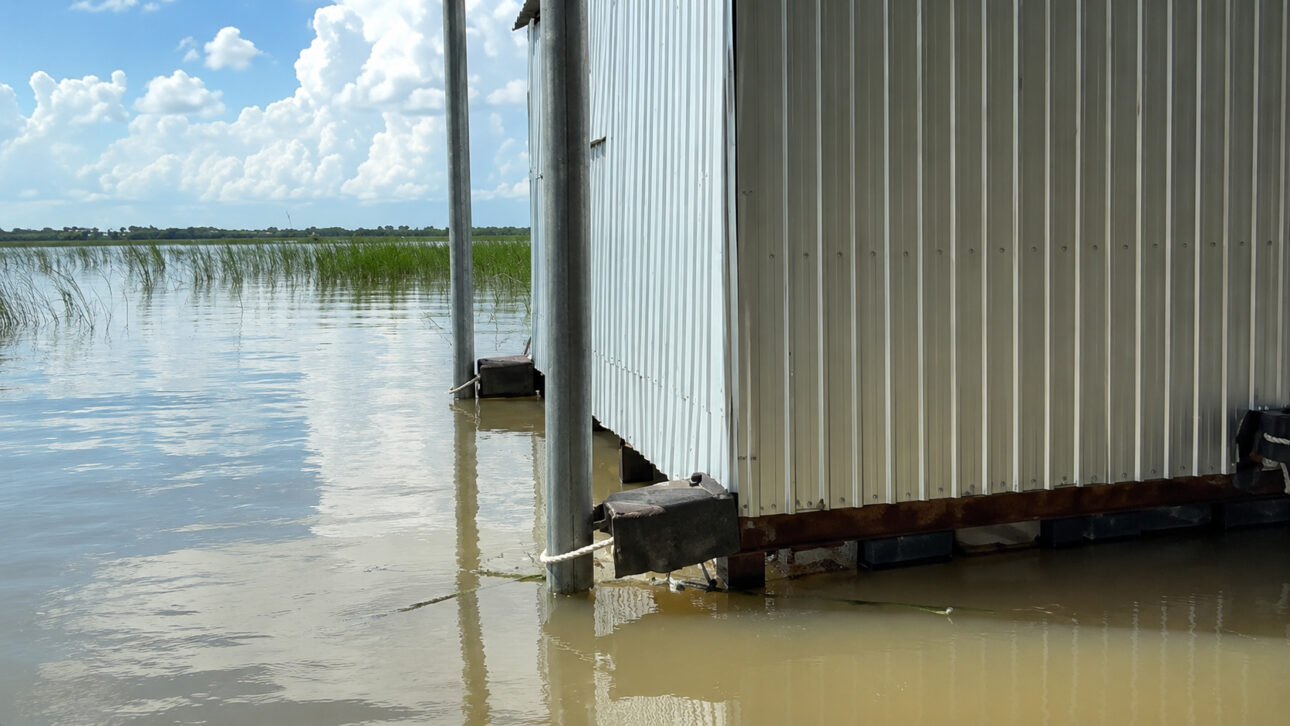
The adaptation begins with a steel frame structure fixed to the bottom of the residence. This structure receives the flotation blocks, pieces that help support the house when the water rises.
The guide posts are installed around the construction. They guide the rise and fall of the house, preventing the structure from moving from the point where it was assembled during the flood.
This combination transforms the residence into an amphibious construction, that is, a house that functions on the ground on regular days and floats only when the flood requires this behavior. The proposal is directly related to house renovation in flood-prone areas and the protection of already constructed properties.
Real-scale test put the technology before a simulated flood
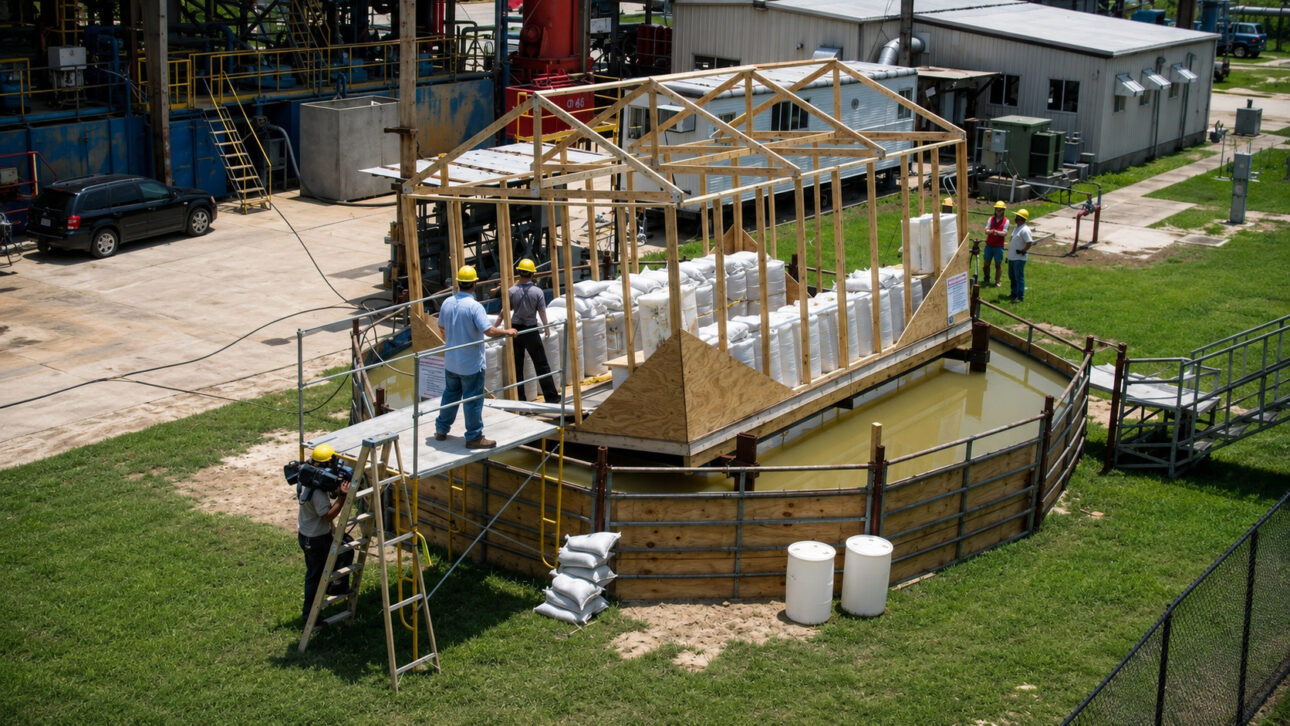
Elizabeth English and students built a full-size prototype to verify the functioning of the amphibious foundation. The test took place in the summer of 2007, inside a temporary structure prepared to simulate a flood.
Water was placed around the house until the structure began to rise. The experiment showed that the lower frame, flotation blocks, and guide posts could work together during the elevation of the property.
University of Waterloo, a Canadian university that publishes research in architecture, records that the Buoyant Foundation Project developed amphibious strategies in Bangladesh, Nicaragua, Jamaica, northern Canada, and southern Louisiana, with special attention to adapting existing homes.
Insurance and regulation limited the adoption of amphibious houses in the United States
The technology does not depend solely on materials and tests. To reach more properties, it needs to meet flood insurance requirements, building rules, and safety criteria.
In 2018, properties with amphibious foundations were not accepted in policies with public financial support from the United States National Flood Insurance Program. The situation showed that a technically viable solution can encounter financial and regulatory barriers.
The debate involves engineering, risk management, urban norms, and emergency response. Without clear rules for project, approval, and property coverage, the expansion of this type of adaptation is limited.
Flood technology requires integration with civil construction and urban planning
The experience of New Orleans should not be treated as a ready-made model for Brazilian cities. Each region has a different type of soil, construction pattern, water behavior, and its own rules for works in flood-prone areas.
The main point is the need to combine civil construction, climate adaptation, and urban planning. Houses in flood areas need solutions that consider the structure of the property, the speed of the water, and the safety limits of each location.
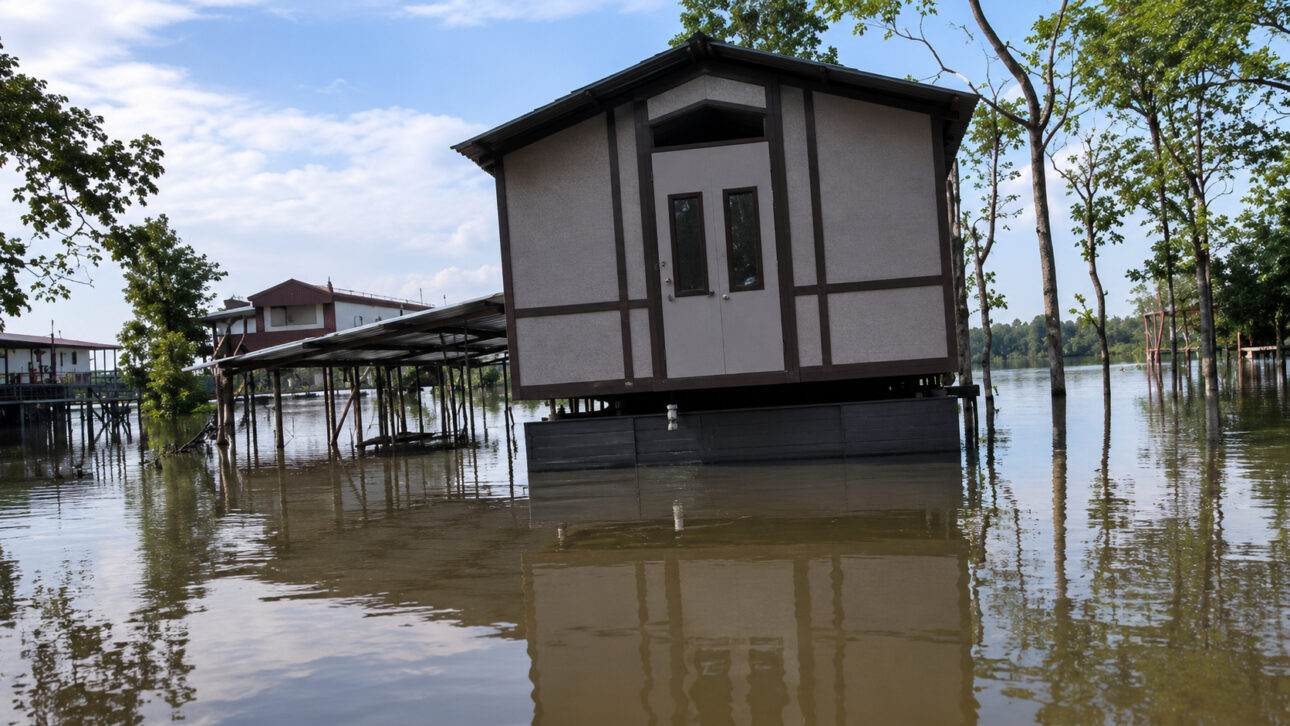
The amphibious foundation does not handle high-speed waves and is not suitable for every flood. The project itself was developed for specific scenarios, with technical evaluation before application in any residence.
The system created after Katrina is not just a floating house. It represents an adaptation technology for existing properties, with a steel structure, floating blocks, and guide posts that allow temporary elevation during a flood.
The discussion goes beyond curiosity. It involves foundation engineering, damage reduction, insurance rules, and decisions on how cities and residents can prepare constructions to coexist with floods.
In a city that floods, where should investment arrive first: urban drainage, house adaptation, or flood insurance? Leave your opinion in the comments and share the publication.