






 Portuguese
  Spanish
  5 min of reading
  0 comments


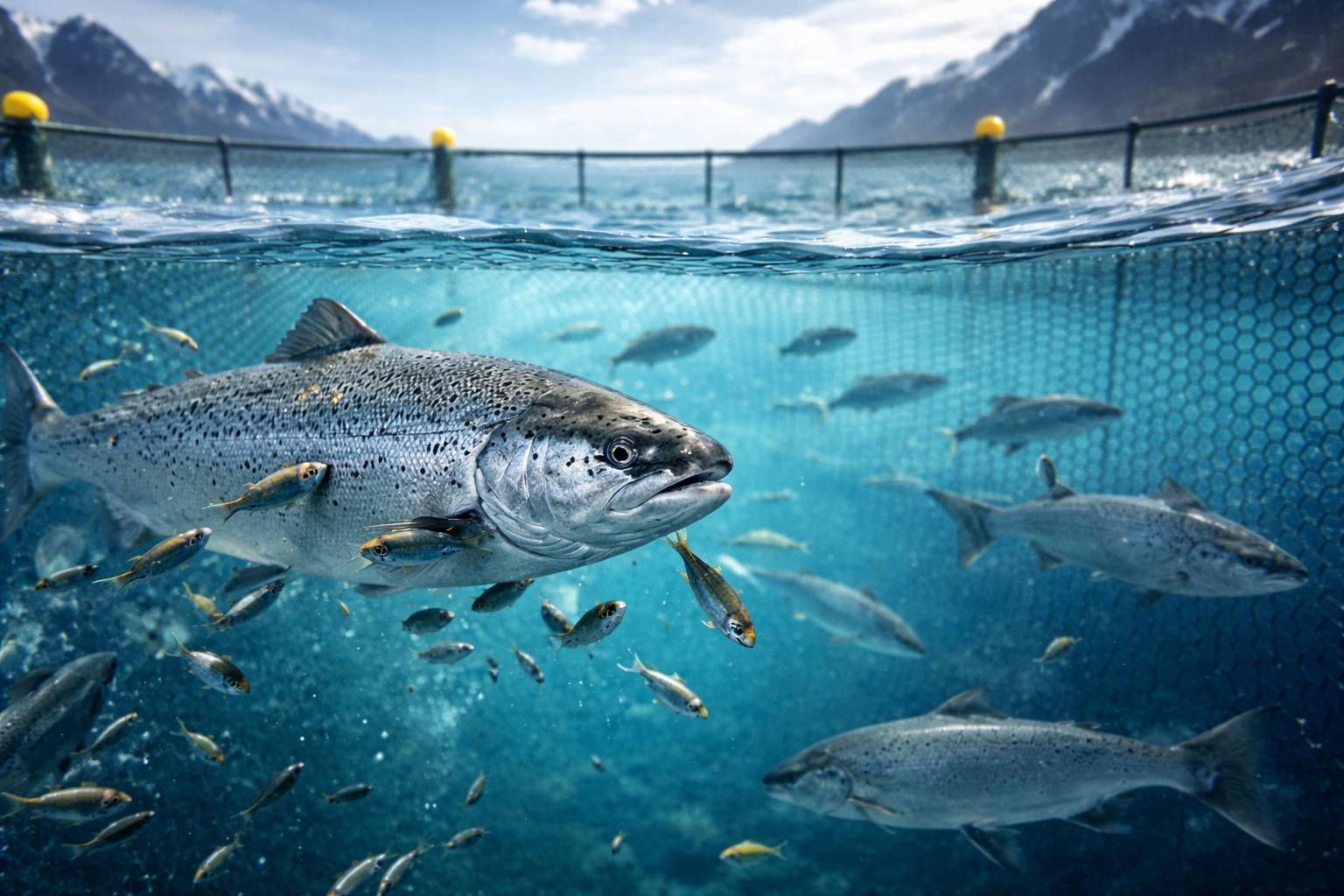
Millions of Cleaner Fish Now Replace Chemicals in Norway and Canada, Control Parasites, and Save Over 50 Million Salmon Annually in Aquaculture.
The mental image that most people have about salmon production involves large tanks in the open sea, cutting-edge technology, and sophisticated markets distributing premium protein to the entire world. All of this is true — however, what almost no one imagines is that a significant part of this process depends on a small group of discreet, curious, and extremely efficient fish, capable of controlling parasites biologically and preventing millions of annual salmon deaths. They are called “cleaner fish” – Lumpfish and wrasse.
The phenomenon is so important that it already drives research, genetics, logistics, and export of living organisms on an industrial scale. Norway and Canada have become the most advanced centers of this model, transforming something that seemed simple, one fish eating another organism, into a large-scale sanitary mechanism with a direct impact on productivity, costs, and animal welfare.
Sea Lice: The Parasite That Threatens Salmon and Costs Millions to Producers
The problem begins with an almost invisible enemy to the general public: the sea louse (Lepeophtheirus salmonis). It is a parasitic crustacean that attaches to the salmon’s skin, pierces its mucosa, and feeds on blood and tissues. The consequence is a cycle of chronic stress, open wounds, weight loss, and high susceptibility to bacterial infections.
-
Low-Demand Brazilian Beef Offal Gains Popularity Abroad: Indonesia Purchases $19.5 Million, Boosting Revenue and Reducing Waste

-
Soy Expansion in Former Brazilian Savanna Sparks Water and Land Conflicts in Major Agricultural Frontier
-
Mexican Pest Threatens U.S. Cattle Herds at Historic Lows, Potentially Boosting Brazilian Beef Exports as Burger Prices Soar

-
Avocado Boom for European and U.S. Markets Fuels Water Crisis in Drought-Stricken Chilean Region




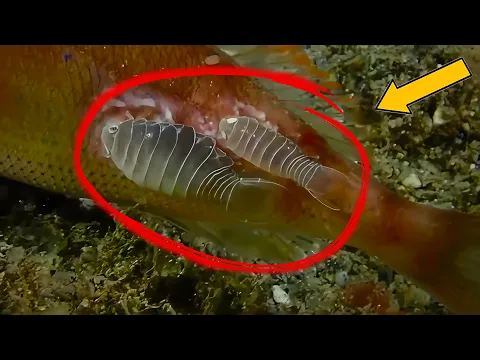

When the parasitic load becomes too high, entire batches have historically collapsed. Estimates from institutions like Nofima (Norway) and Marine Harvest/Mowi indicate that the sea louse was responsible, in some years, for billions of Norwegian kroner in losses, counting mortality, chemical treatment, drop in productivity, and quarantines.
The industry’s first response was technological and chemical: anti-parasitic baths, feed medications, thermal disinfection, and even mechanical procedures with water jets. The problem? Evolutionary selection made the parasite develop resistances, generating a classic case of an arms race between industry and biology.
It was at this moment that cleaner fish resurfaced as an alternative.
Lumpfish and Wrasse: The “Doctors” with Fins That Eat Parasites
The two most commonly used groups are:
- Wrasse (Labridae): especially Labrus bergylta and Symphodus melops
- Lumpfish (Cyclopterus lumpus), commonly known as “ball fish”
In the wild, these fish already feed on small crustaceans and ectoparasites in larger fish. The industry simply replicated a natural ecological behavior, placing them in tanks with infested salmon to clean their “patients.”
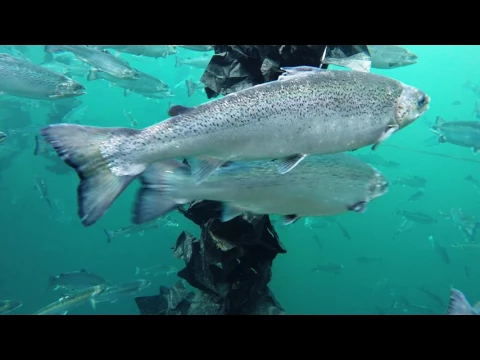
The result was immediate: significant reduction in the parasitic load, improved survival, and drastic drop in the use of chemical baths, something that directly impacts both industrial cost and the environmental image of aquaculture.
To achieve scale, three pillars were necessary:
- Captive breeding of cleaner fish in industrial volume
- Live transport and distribution logistics to marine farms
- Feeding training so that the cleaners adapt to the production environment
Today, tens of millions of these fish circulate between floating tanks in the North Sea, acting biologically and continuously.
The Real Impact: Less Chemicals, More Productivity, and Millions of Lives Saved
Research from Nofima, Mowi, SalMar, Cermaq, and animal health reports between 2020 and 2023 indicate that the adoption of this strategy has reduced mortality, reinfestation, and emergency interventions.
It is estimated that the combined use of wrasse and lumpfish saves between 50 and 70 million salmon each year, considering:
- deaths avoided by parasitism
- deaths avoided by secondary diseases
- reduced stress during critical periods
This has turned the cleaner fish into a sort of mobile sanitary unit, working silently within farms and protecting a sector that drives billions of dollars in global export.
The Industrial Side of the “Sanitary Fish”: Genetics, Management, and Welfare
For those who imagine the practice is rustic or improvised, the reality is the opposite. The industry has created a technical ecosystem to sustain the model, including:
- genetic selection and improvement: for more resistant and efficient fish
- animal welfare standards: because wrasse and lumpfish also die if management is inadequate
- feeding training: fish need to learn to maintain a dual diet — feed and parasites
- biosecurity: to prevent transmission of cross diseases
Norwegian labs are even testing electronic tagging, nutritional supplementation, and methodologies to reintroduce cleaners into the wild after the sanitary cycle, expanding the potential for sustainability.
Canada and Norway: Two Different Models for the Same Objective
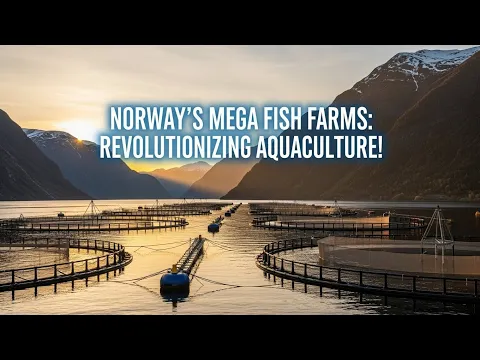
Although they share the same strategy, both countries operate with nuances:
Norway dominates the sector in scale, standardization, and genetics, acting as a pioneer in research and sanitary protocols.
Canada has reinforced the practice especially in British Columbia, where wild salmon populations coexist with floating farms, requiring less invasive methods with lower ecotoxicological impact.
Both converge on the same central point: biology works better — and cheaper — than massive chemistry.
A Biological Solution that Changes the Logic of Global Aquaculture
The use of cleaner fish has become an emblematic case because it combines:
- sustainability
- biosecurity
- productivity
- economy
- biological innovation
Unlike fleeting trends, this is a structural transformation of the sector, comparable to the use of ladybugs in fruit cultivation, bees in soy, or parasitic wasps in horticulture — always combining ecology with agribusiness.
The question now is no longer “does it work?”, but “which other parasites or pests can be controlled biologically on a large scale?”.
Institutions like FAO, Nofima, and ICES have been discussing this expansion for years.
A New Frontier for the Most Consumed Food of the Future
Industrial salmon is already treated as the premium protein of the 21st century, and its global market grows year after year. If aquaculture becomes predominantly biological, free of chemical baths and based on ecological interactions, the impact may include:
- drastic reduction of chemical residues
- lower risk of evolutionary resistance of pathogens
- lower mortality and higher protein yield
- more favorable public and environmental acceptance
All of this reinforces the view that aquaculture is entering a period of ecological engineering, where the best results come from mimicking natural systems — and not from attempting to combat them artificially.
While consumers see a salmon fillet at the restaurant or supermarket, a gigantic biological chain operates behind the scenes to allow that product to exist.
Cleaner fish are today one of the most impressive examples of how applied biology can solve industrial problems on a continental scale, anticipating a global trend: integrating nature and technology to produce food without degrading ecosystems.
The future of protein seems to lie less in the factory and more in the ecosystem, and Norway and Canada are already showing the way.





-

-

-

-

-

-

46 people reacted to this.