Portuguese
  Spanish


Mayor Releases R$ 116 Million for Clean Energy in Várzea Grande, But Implementation Details, Timeline and Energy Model Have Not Been Disclosed.
The mayor of Várzea Grande, Flavia Moretti (PL), released R$ 116 million for clean energy, and, consequently, took an important step towards sustainable solutions in the city.
Law No. 5,454/2025 authorized the opening of special additional credit in the municipal budget for the project “Implementation of Clean Energy System”.
However, despite the significant amount, many questions remain about the implementation and technical details of the project.
Historically, Várzea Grande has followed the growth of infrastructure and urban development projects, often focusing on traditional works such as paving, sanitation, and transportation.
However, in recent years, the concern for the environment and the need for renewable energy sources have gained prominence in public debate.
Thus, the allocation of resources for clean energy demonstrates that the municipal administration recognizes the importance of modernizing the energy sector and, at the same time, reducing environmental impacts.
Furthermore, attention to renewable energies has intensified globally in recent decades, as cities and local governments seek alternatives to reduce greenhouse gas emissions and dependence on fossil fuels.
In this context, investing in clean energy projects in Várzea Grande aligns with a long-term strategic vision.
This strategy can generate environmental, social, and economic benefits for the population.
-
Over 60 Tractors Take to the Streets in Lopera as Solar Parks Compete with Olive Groves, Affecting 13,000 to 100,000 Trees According to Conflicting Reports

-
Green Hydrogen Projects in Northeastern Brazil Stalled for 18 Months Awaiting Government Decree, Delaying Billions in Investments
-
Brazil Concludes Largest Energy Auction in History, Secures 18.97 GW and Mobilizes $12.8 Billion to Ensure Supply Until 2031
-
How Norway Produces More Energy Than It Consumes with Nearly 1,800 Hydropower Plants and Over 1,100 Reservoirs


Changes in Budget and Project Responsibilities
The approved project alters the Pluriannual Plan (PPA), the Budget Guidelines Law (LDO), and the Annual Budget Law (LOA) for 2025, placing the clean energy system as a municipal priority.
Additionally, the City Hall will cover the credit with resources from an operation provided for in Law No. 5,260/2024.
The Municipal Secretariat of Transportation and Works, through the Coordination of Works and Traffic, will be responsible for the execution.
However, the text does not detail essential points, such as the site of implementation, the execution timeline, and the technical goals of the project.
This lack of detail is not unprecedented in the history of public projects.
In many municipalities, especially in large-scale investments, budget laws authorize resources before defining the action plan.
Therefore, detailed planning generally occurs later by the responsible bodies, allowing for adjustments according to the availability of suppliers, technologies, and specialized labor.
Even so, the absence of precise information raises questions about transparency and oversight of public money usage.
The approved budget demonstrates that the municipal government prioritizes works and installations, allocating R$ 115.8 million for this category while reserving symbolic amounts for consumable materials and permanent equipment.
On the other hand, the concentration of the majority of resources in physical works indicates that the project is expected to contemplate, to some extent, the construction of infrastructure capable of generating or distributing clean energy in urban and rural areas.
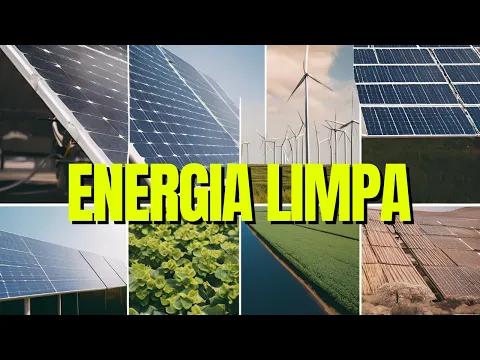
Although there is still no definition of the energy model, it is possible to envision modern technologies such as photovoltaic solar panels, small wind turbines, or hybrid distributed generation systems.
These choices consider national and global trends in renewable energy.
Moreover, the project can stimulate partnerships with universities and local companies specialized in sustainable technologies, encouraging innovation and professional training.
This way, collaboration between the public sector and private initiative increases the chances of success in large-scale clean energy projects.
Additionally, it strengthens the local economy and promotes knowledge transfer.
Historical Context and Importance of Clean Energy
The growing interest in investing in clean energy has historical roots.
In Brazil, the energy matrix has always had a strong presence of renewable sources, such as hydroelectric power.
However, in recent decades, energy diversification has incorporated wind, solar, and biogas, responding to the demand for more sustainable solutions and the need to reduce dependence on fossil fuels.
Thus, municipalities that invest in clean energy seek to reduce costs, minimize environmental impacts, and create opportunities for local economic development.
These initiatives also generate green jobs.
Bill No. 235/2025, which led to the law sanction, was presented by the government leader in the Chamber, councilor Bruno Rios (PL), and received 21 favorable votes.
Additionally, the Committees on Constitution, Justice, and Writing (CCJ) and Finance and Budget analyzed the proposal, ensuring compliance with legal and fiscal norms.
This process shows that approving large-scale clean energy projects requires not only financial resources but also political and technical support.
Thus, the investment follows legal parameters.
Investing in clean energy also generates environmental awareness among the population.
By monitoring the implementation of sustainable technologies, citizens and companies recognize the benefits of reducing conventional energy consumption.
Thus, engagement with resource conservation practices and environmental responsibility increases.
Transparency and Monitoring of the Project
Despite the approval and the significant amount allocated to the project, doubts remain about the execution and expected results.
The law does not state whether the credit received prior authorization from oversight bodies or if there will be financial counterparty from the municipality, aspects common in credit operations of this magnitude.
Therefore, this gap reinforces the need for continuous monitoring by the legislature and civil society.
This way, the resources allocated for clean energy can be used efficiently and transparently.
Investing in clean energy transforms not only the energy sector but the entire local economy.
For instance, the implementation of distributed generation systems reduces dependence on the conventional electric grid, decreases energy losses, and promotes technological innovation.
Moreover, it encourages environmental education, raising awareness among the population about conservation of natural resources and combating climate change.
The experience of other Brazilian municipalities shows that clean energy projects generate significant positive impacts.
Cities that adopted policies to promote solar energy managed to reduce public energy bills, foster small businesses, and create a sustainability culture among citizens and companies.
Consequently, the efficient application of R$ 116 million for clean energy in Várzea Grande can follow the same path, provided that it includes detailed planning and transparency in execution.
Moreover, energy diversification increases resilience against crises and market price fluctuations.
Municipalities that rely solely on traditional sources face greater risks, while investing in clean energy provides greater predictability and security in supply.
Impacts and Future of Clean Energy in Várzea Grande
The current context points to the need to modernize urban and rural energy infrastructure.
The population growth, the expansion of economic activities, and the greater demand for energy require innovative solutions that ensure sustainable and continuous supply.
Therefore, clean energy projects represent a strategic response to these challenges, aligning local development with global trends in energy efficiency and environmental impact reduction.
In conclusion, Mayor Flavia Moretti took an important step by releasing R$ 116 million for clean energy, signaling a priority for sustainable and innovative solutions.
However, the lack of details about execution, goals, and energy model reinforces the need for rigorous monitoring, transparency, and technical planning.
Implementing clean energy projects is not just a financial issue but also an opportunity for social, economic, and environmental transformation.
Thus, Várzea Grande can stand out in adopting sustainable public policies.
Throughout history, initiatives focused on clean energy have shown that well-planned investments generate lasting effects.
These projects preserve the environment, boost economic development, and improve the quality of life.
With R$ 116 million allocated for clean energy, Várzea Grande has the opportunity to transform public resources into concrete and sustainable solutions for future generations.