






 Portuguese
  Spanish


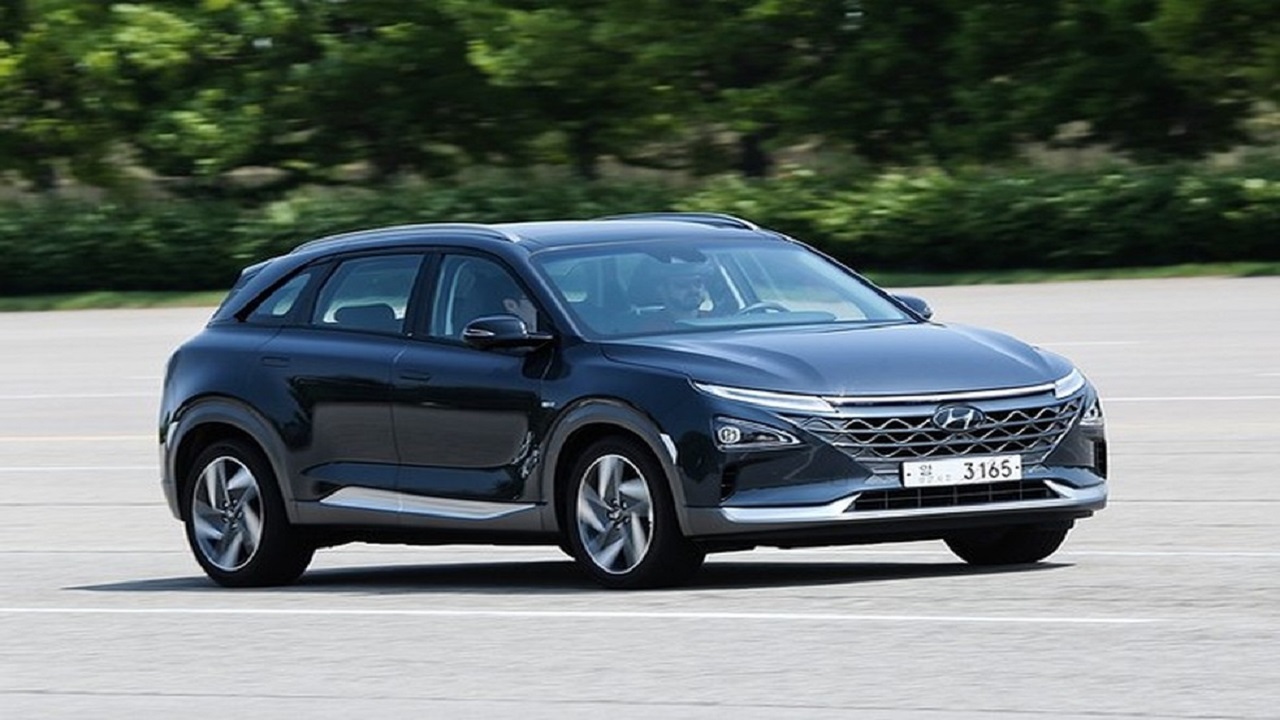
Observing Advances in Automotive Industry Sustainability, Hyundai Launched Its First Hydrogen-Powered Car Capable of Delivering a Range of 900 Km and Being Refueled in Just 5 Minutes
Currently, the automotive market is focused on electric or electrified cars, such as MHEV and PHEV hybrids. However, the truth is that not everything about such vehicles is perfect, especially regarding batteries, which remain a headache for the sector. With this in mind, Hyundai debuted in the market with its new hydrogen-powered car.
Read Also
Hyundai Nexo Has a 900 Km Range


In Australia, Hyundai’s first hydrogen-powered car is already available in the market. The vehicle can cover 900 km on a full tank and, while moving, it also purifies the air. For the first time, hydrogen fuel cell technology is applied in a commercially sold car, achieving such a high range with low refueling time.
The model that received the hydrogen cells is the Hyundai Nexo, a small vehicle that reaches out to all car manufacturers worldwide and sets a record in sustainability.
-
Toyota Launches First 100% Electric Car in Brazil: bZ4X with 343 HP, All-Wheel Drive, 361 km Range, Priced at $419,990 BRL, Limited to 99 Units

-
Chinese SUV Achieves 24.4 km/l, Outperforms Toyota Yaris Cross in Real-World Tests with 224 hp Hybrid System, Offers 51-Liter Tank for Greater Range, and Costs Up to R$ 5,000 Less.

-
Uber Black Revamps Fleet, Drops Ten Car Models and Sets Deadline for Electric BYD Dolphin
-
Chinese Giant Uses Metal Structures and Cranes to Deliver Over 700 Electric Cars to Brazil


The vehicle uses only 6.27 kg of hydrogen and can purify 449,100 liters of air during a single trip, contributing to the environment and the respiratory consumption of over 30 people throughout the day. Furthermore, the exhaust from Hyundai’s car emits only water.
Hyundai’s Hydrogen-Powered Car Can Be Recharged in Just 5 Minutes
The Hyundai model does not produce any type of pollutant gas, such as CO2. An equivalent vehicle to the Nexo, but with a traditional combustion engine, emits over 125 kg of pollutant gases while traveling the 900 km range.
The hydrogen engine enters the market to join electric vehicles and become part of the sustainable mobility solutions that the world is adopting. For electricity to be generated, Hyundai’s vehicle utilizes a hydrogen fuel cell system that passes gas through a membrane structure where it meets air from the external environment, a process that fuels the electric motor.
The electricity generated, including energy collected during braking, is stored in a lithium-ion battery. In addition to all these details and the range, the model can be refueled in just 5 minutes, a time that can be equal to or less than that of a combustion car.
Toyota Gains Attention with Its Hydrogen-Powered Car
In July, Toyota tested its hydrogen-powered Corolla. The racing model was equipped with a modified 3-cylinder engine to burn hydrogen like in a common internal combustion engine.
In addition to innovating with its Corolla, in June, Toyota also set the world record for distance traveled by a hydrogen-powered car with the Toyota Mirai model.
In total, 1,000 km were driven on French streets, with zero emissions and a single refueling. It is worth noting that the record for the model could have been even higher, considering that at the end of the route, the model still had 9 km of range left.





Be the first to react!