Portuguese
  Spanish


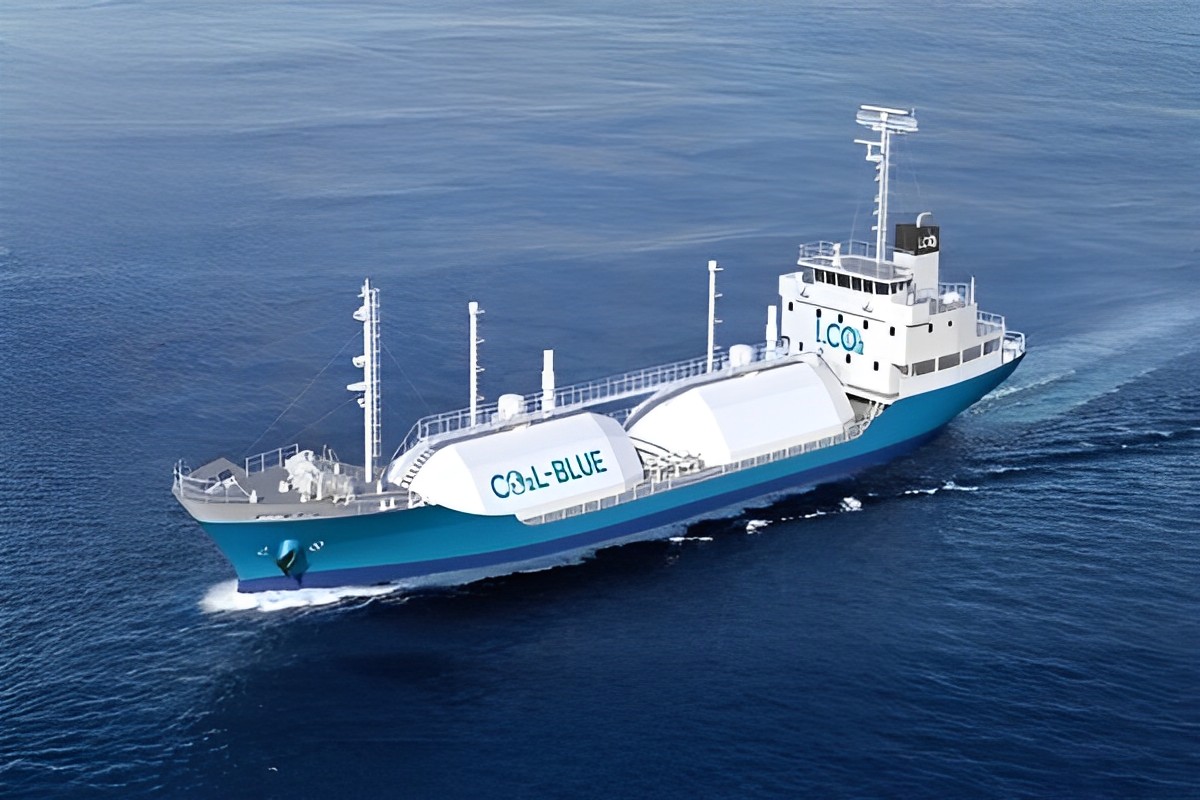

Mitsubishi Shipbuilding Launched The First CO2 Transport Vessel, Specifically Designed As A Demonstration Vessel To Showcase The Technology’s Potential For Use In Carbon Capture, Storage, And Reuse Initiatives.
As Part Of A Broader Collaborative Effort Sponsored By The Japanese Government, Several Companies Are Working Together On This CO2 Transport Vessel Project. Its Goal Is To Operate And Demonstrate The Vessel While Also Researching And Commercializing The Technology Needed For Carbon Transport.
Learn More About The CO2 Transport Vessel
At The Shimonoseki Shipyard & Machinery Works Enoura Plant In Japan, The Demonstration Vessel Was Unveiled During The Launch Ceremony. With A Length Of 236 Feet And A Cargo Tank Capacity Of 1,450 Cubic Meters, The Vessel Is Expected To Start Test And Demonstration Voyages By The End Of 2023.
Mitsubishi Began To Build The Vessel In October 2022, Leveraging Its Experience In Building LNG And LPG Carriers. The Shipyard Is Responsible For The Vessel’s Design, Including The Cargo Containment System And Gas Handling Technology.
-
The Port of Itaqui closes the best first semester in history with over 17 million tons and takes off as the locomotive of the Northern Arc.

-
Brazil’s North-South Railway to Auction Two Grain Terminals in Central Tocantins

-
AI-powered traffic cameras in São Paulo now issue fines for cellphone use and seatbelt violations around the clock

-
Free Upgrade to Professional Driver’s License Categories in Over 130 Locations in Brazil, Including Exams and Courses



Once Completed, The Ship Will Be Owned By Sanyo Kisen And Will Be Leased To The Japan Engineering Promotion Association (ENAA), One Of The Organizations Involved In The Demonstration Project. They Installed And Operated A LCO2 Maritime Storage Tank System For System Research And Development.
The New Energy And Industrial Technology Development Organization (NEDO) Of Japan Is Organizing And Sponsoring Demonstration Projects As Part Of Various Initiatives To Support The Commercialization Of CO2 Transportation Technologies.
Japan Also Sponsors The Hydrogen Energy Supply Chain Technology Research Association (HySTRA) CO2-Free Project And Last Year Demonstrated The World’s First Liquefied Hydrogen Transport Vehicle, The Swiss Border, In A Similar Project To Support The Development Of Liquid Hydrogen Transportation.
CO2 Transport Vessel Project
The CO2 Transport Demonstration Project Is Carried Out As Dalian Shipbuilding Industry Co., Ltd. The Dalian Shipbuilding Industry Corporation (DSIC), Based In China, Has Also Started Construction On The First Commercial CO2 Transport Vessels Designed To Support Capture And Storage Schemes. The 426-Foot Vessels Were Ordered In Late 2021 By Northern Lights, A Joint Venture Between Equinor, Shell, And TotalEnergies.
Based In Norway, Northern Lights Plans To Start Transporting And Storing Carbon By Mid-2024, With The First Phase Of Operations Having An Annual Capacity Of 1.5 Million Tons Of CO2. The First Steel Cuts For The Two Ships Are Expected To Be Completed By November 2022, Each With A CO2 Capacity Of 7,500 Cubic Meters. These Larger Commercial CO2 Carriers Are Expected To Be Delivered In 2024.