Portuguese
  Spanish


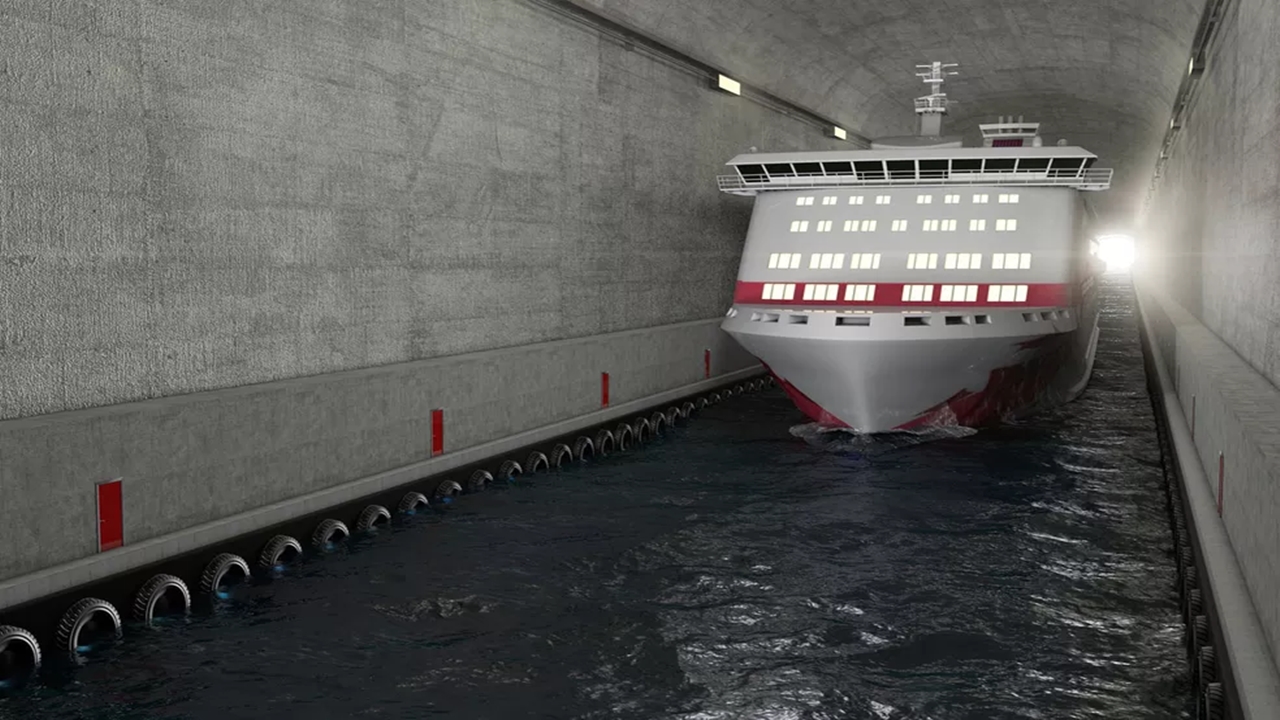

With 1.7 Kilometers, The Project Will Be The First Ship Tunnel Of This Size In The World And Will Be Built In Norway
The construction of the world’s first ship tunnel will soon begin in western Norway after the government approved startup funding. The Norwegian Coastal Administration (Kystverket) proposed a plan to complete a bidding process in 2021 and start construction in 2022, ahead of an expected opening in 2025 or 2026.
Also Read
- Recruitment and Selection Catering International in Macaé; job openings for candidates with and without experience
- Candidates Without Experience Called in RJ for 30 Positions for Technicians in Electronics, Mechanics and More at the ROV Oceanica Trainee Program
- Immediate Job Openings in Various Positions for the Perimetral Leste Works
The 1.7-kilometer tunnel will be large enough to allow cargo ships and most vessels from the coastal cruise fleet to pass. It will enable ships to bypass the dangerous waters of Stad, an exposed area of the ocean along the Norwegian coast. However, many cruise ships will be too large for the tunnel.
Safety First
The team behind the project—known as the Stad Ship Tunnel—stated that it is a “prerequisite” to increase safety and security for sailors in western Norway. For over 100 years, a tunnel has been proposed to help ships navigate around Stad, where the combination of wind, ocean currents, and waves makes the stretch demanding for vessels of all sizes.
-
Abandoned Factory in Rio’s North Zone Becomes Urban Hazard with Standing Water and Debris

-
The U.S. Navy Conducts Submarine Tests in Idaho Lake to Detect Underwater Noises Hidden by the Ocean

-
British Factory Transitions from Mechanical Parts to Producing 420,000 Electric Power Units Annually, Supplying 70% of Ford’s Electric Cars Sold in Europe
-
France Launches Network to Recycle 20 Million Cookware Pieces by 2027, Accepting All Brands for Aluminum and Coating Separation


According to the Norwegian Coastal Administration, the Vikings stopped their ships on land to avoid sailing around Stad in bad weather.
The organization explained that ocean currents and the topography of the seabed create difficult and often unexpected wave conditions: “Very high waves come from different directions at the same time, creating critical situations for ships. Heavy seas can also last for several days after the wind calms down, which in turn leads to difficult navigation conditions, even on calm days.”
The west coast of Norway is an economic powerhouse in fishing and aquaculture. Norway already exports farmed and wild fish to over 150 countries, and the industry is expected to experience rapid growth in the coming years.
However, much of the coastal freight transport occurs over land, largely due to the potential risks of navigating around Stad. A shipping company claimed that about 20% of boats are delayed in Stad, risking quality issues. A shorter and safer shipping route through the Stad Tunnel should result in more reliable and shorter maritime routes being established along the Norwegian west coast.
World’s First Ship Tunnel Will Have Guaranteed Funding
US$ 8.7 million will be needed to kick-start the project, which had initially been excluded from Norway’s proposed budget for 2021, despite the project’s inclusion in the National Transport Plan.
But opposition parties pressed hard, and the government changed its mind. The total cost of the project is expected to reach US$ 325 million.
“We will now begin the processes for acquiring properties in the area where the ship tunnel will be located, as well as implementing a project organization, preparing a bidding base, and initiating a tender,” explained project manager Terje Andreassen.