





 Portuguese
  English
  Spanish
  4 min of reading
  0 comments


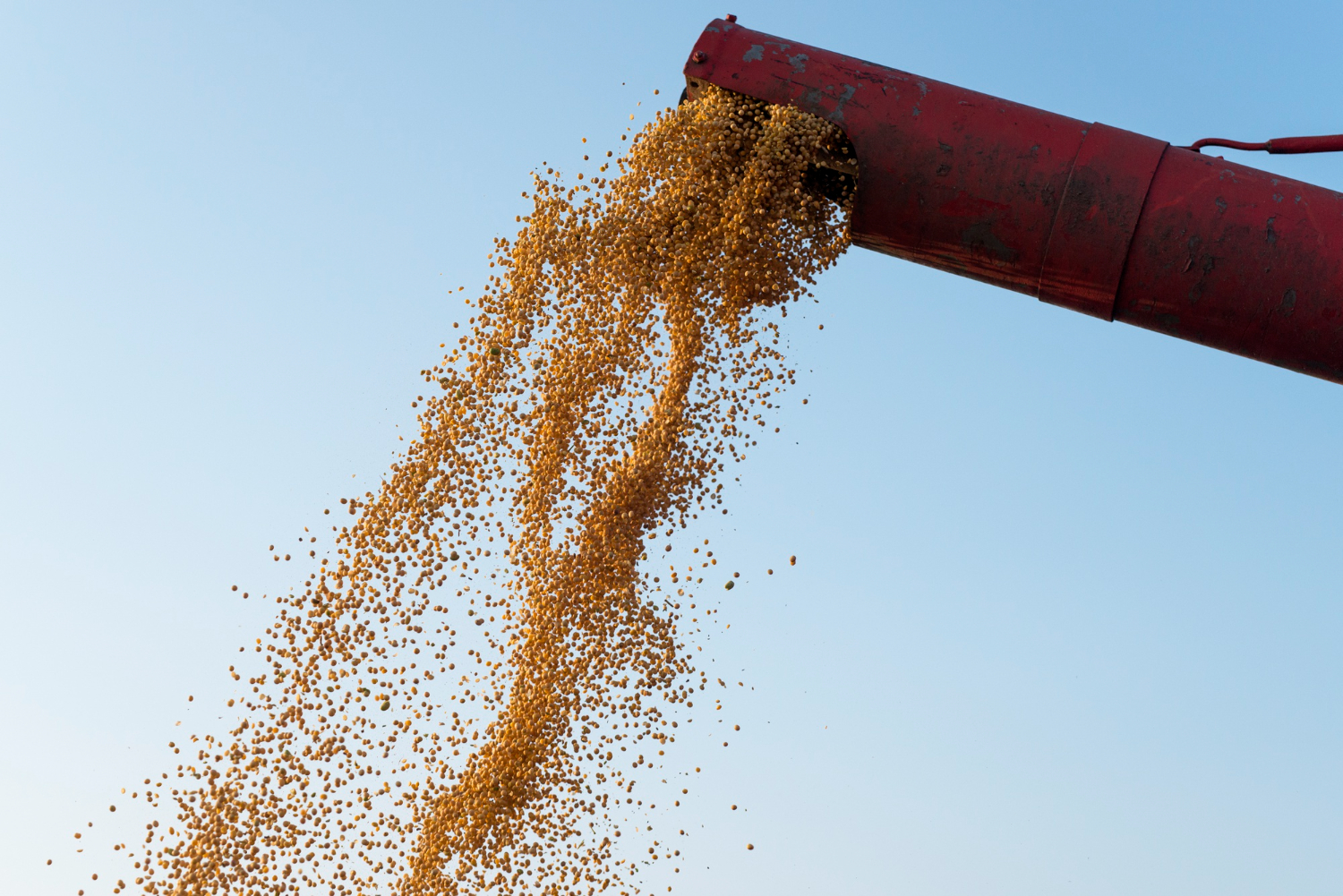
Focusing on the New Methodology Applied to Rural Insurance, Soybean Production in Brazil Now Includes Management Criteria Capable of Expanding Subsidies and Reducing Climate Risks
The soybean production in Brazil has gained a new tool to face periods of drought and improve access to rural insurance, thanks to a model that incorporates management levels in the climate risk assessment, according to a report published.
The initiative was tested for the first time in Paraná and demonstrates how more careful soil practices can increase the subsidy percentage and strengthen crop stability.
In the pilot project, 29 areas, totaling about 2,400 hectares, adopted the system and had specific classifications based on the management applied.
-
Without money for a tractor or Tobata, a farmer from Presidente Getúlio bought an old motorcycle from an auction and created an agricultural tricycle that carries up to 900 kg of fertilizer in the field; in five years, he has already sold eight to neighbors.

-
A single tank in the lake of a plant yields 90,000 kilos of tilapia every six months, and the company wants to multiply this by 500 to take Mato Grosso do Sul from 11th place to the top in the country.
-
Russia recognizes Brazil as free from foot-and-mouth disease without vaccination on June 10, 2026, strengthens Brazilian agribusiness, and paves the way for more meat, fish, nuts, and new business with a billion-dollar market.

-
Fish farming becomes the new giant of Brazilian agribusiness and transforms tilapia into the “water ox,” in a chain that already moves R$ 11 billion per year and exceeds 1 million tons produced.



The Ministry of Agriculture and Livestock (Mapa) confirmed that this format is part of the Rural Insurance Premium Subsidy Program and could be extended to other regions.
The methodology, created by Embrapa, compares verifiable indicators and shows how caring for the soil reduces vulnerability to droughts.
By receiving incentives proportional to the adopted management, the producer has direct access to the return on investment made in land improvement.
Agricultural Zoning for Management and Climate Risk Management in Soybeans
The Climate Risk Agricultural Zoning at Management Levels emerged to address an old limitation: the difficulty of accurately measuring the climate risk of each plot.
In the pilot conducted in Paraná, the subsidy percentages were defined according to the management classification in soybean production in Brazil.
Approximately 5% of the participating area reached level four, which guarantees a 35% subsidy on rural insurance.
Meanwhile, 27% were classified at level three, with 30%, while 57% reached level two, receiving a 25% subsidy.
The remaining 11% stayed at level one, which offers the traditional 20% of the program. This new format meets the need for differentiation between neighboring areas that present distinct levels of soil care.
Remote sensing, integrated with the Management Levels Information System, allows for cross-checking images and laboratory data to verify erosion, vegetation cover, and land use patterns.
In one of the evaluated examples, contiguous areas received different classifications, demonstrating how the method identifies details that previously went unnoticed.
The experts at Embrapa emphasize that this capability for individualized analysis is likely to become essential as the number of operations increases.
Differentiated Rural Insurance with Good Conservation Practices in the Crop
The soybean production in Brazil is directly connected to practices that make the crop more resilient to drought periods.
Researcher José Renato Bouças Farias emphasizes that proper management reduces water deficit by increasing water infiltration and limiting surface runoff.
He explains that conservation practices increase water availability, reduce losses, and enhance crop productivity.
Since a large part of the soybean crops in the country relies solely on rainfall, soil management becomes decisive.
For this assessment, six indicators guide the classification of plots: time without tillage, percentage of cover crop, diversification of crops over three years, base saturation, calcium content, and aluminum saturation.
The process also requires prerequisites such as level sowing. The analysis is submitted by producers to insurers, accompanied by laboratory reports.
This data is cross-referenced by the Embrapa digital system, ensuring independence and precision in classification.
Agricultural Subsidy for Producers in Transition of Management
Cocamar confirms that differentiation among producers has always been a demand of the sector, especially in sandy soil regions.
The cooperative cites cases of farmers who, by varying management practices, achieve resilience even in years with dry spells.
Cooperative member José Henrique Orsini exemplifies this scenario by detailing that, due to not having implemented the corn and brachiaria consortium, he reached level two and will be entitled to a 25% subsidy.
If he had adopted the consortium, he would have reached level three, achieving 30%. In contrast, José Rogério Volpato, who cultivates sandy areas and has maintained a crop-livestock integration for over a decade, achieved level three classification.
The practices he has adopted include the intensive use of brachiaria, which breaks compaction layers, improves water infiltration, and creates a microclimate more conducive to plant development.
The soybean production in Brazil demonstrates the potential for expansion of this public policy. Normative Instruction No. 2 of 2025, published on July 9, regulated the ZarcNM following the approval of Resolution No. 107 by the Interministerial Management Committee of Rural Insurance.
The Mapa allocated R$ 8 million for the initial phase, and director Diego Almeida stated that the model should become permanent, expanding to other states and, in the future, to corn.
The mechanism creates economic incentives for more producers to adopt sustainable techniques concerning soybean production in Brazil, reducing losses and increasing resilience against climate variability.







Be the first to react!