Portuguese
  Spanish


International Recognition Highlights Brazil’s Leading Role in Energy Transition with Alexandre Silveira at the Forefront of Global Sustainable Agenda
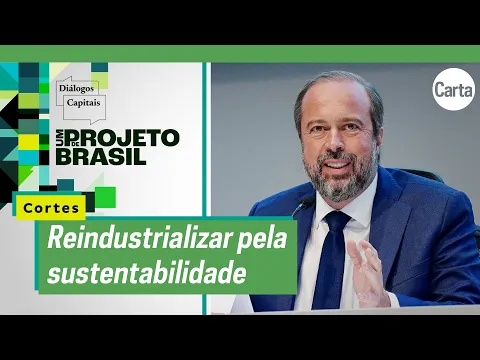
The leading role of Brazil in the energy transition has gained increasing recognition on the international stage. This prominence became even more evident with the appointment of the Minister of Mines and Energy, Alexandre Silveira, as Honorary President of the World Energy Council (WEC).
This honor reinforces Brazil’s relevance as a reference in sustainability, innovation, and energy security. Therefore, the title symbolizes not only a personal achievement but reflects the collective effort of the country to build a clean and balanced energy matrix.
Moreover, the recognition underscores the importance of Brazil’s participation in international forums, especially concerning aligning economic growth with environmental preservation and social inclusion. This strategic role positions Brazil in a global spotlight, influencing energy policy decisions in various regions worldwide.
-
Green Hydrogen Projects in Northeastern Brazil Stalled for 18 Months Awaiting Government Decree, Delaying Billions in Investments

-
Brazil Concludes Largest Energy Auction in History, Secures 18.97 GW and Mobilizes $12.8 Billion to Ensure Supply Until 2031
-
How Norway Produces More Energy Than It Consumes with Nearly 1,800 Hydropower Plants and Over 1,100 Reservoirs

-
Axia Energia Invests $280 Million in Q1, Increases Investments by 36%, and Turns Loss into $740 Million Profit


A Milestone in the Trajectory of Alexandre Silveira and Brazil
During the event, Silveira emphasized that international recognition demonstrates the strength of Brazilian energy policy. He stated that the country has shown it is possible to combine economic development with environmental and social responsibility.
For the minister, being appointed Honorary President of the WEC represents international confidence in the path Brazil has chosen to follow. Furthermore, this title projects the country as a reliable leader in the quest for sustainable energy solutions.
Brazil already has one of the cleanest energy matrices in the world, with over 80% of electricity coming from renewable sources. Among these, hydropower, wind energy, solar, and biomass stand out. This characteristic places the country in a privileged position in facing the global challenge of reducing greenhouse gas emissions.
The WEC’s recognition also highlights that Brazil has become a reference in energy governance. This means that the public policies adopted by the country not only promote efficiency but also strengthen strategic planning and the ability to attract large-scale investments.
The World Energy Council and Its Relevance
The WEC, established in 1923, has consolidated itself as one of the most important institutions in the global energy sector. With a presence in over 90 countries, it promotes debates, international cooperation, and scenario development that influence public policies and investments.
The council brings together governments, companies, and experts to discuss the future of energy in a transitional context. Its reports and strategic analyses guide global leaders in decisions that directly affect the future of energy security and sustainable development.
Thus, by assuming a prominent role in the WEC, Brazil broadens its influence in major international forums. Additionally, the country gains greater capacity to shape policies and attract investment aligned with clean development.
Brazil’s leadership is also reflected in its active participation in discussions about innovative technologies, such as energy storage, smart grids, and green hydrogen. In this way, Brazil demonstrates that it is prepared to lead the next phases of the global energy transition.
Brazil as a Central Actor in the Energy Transition
The Brazilian leadership did not arise by chance. It is the result of decades of investments in renewable energies, public policies aimed at energy security, and a historic commitment to environmental preservation.
In the 1970s, amid the oil crisis, Brazil launched the Proálcool, a pioneering program that encouraged the use of biofuels. This movement paved the way for the current relevance of ethanol and biomass in the national energy matrix.
Today, the country reaps the rewards of having invested in renewable sources when much of the world still relied heavily on fossil fuels. This legacy strengthens Brazil’s position as an example of a fair and sustainable energy transition.
Furthermore, Brazil brings to the international debate the need for a transition that includes social justice. The country advocates that clean energy must be accompanied by universal access and policies that respect the environment without compromising economic development.
The strong leadership of Brazil in the global agenda also stimulates the creation of new international partnerships. Companies and academic institutions have sought the country as a reference to develop research projects, innovation, and implement clean technologies.
Challenges and Responsibilities of Brazil’s Leadership in the Energy Transition
The WEC’s recognition also reinforces the challenges Brazil needs to face to sustain its leadership role. Among these is the advancement in energy storage, essential for balancing the variability of sources like solar and wind.
Another challenge lies in the expansion of electric mobility. To achieve this, it will be crucial to invest in charging infrastructure in all regions of the country. At the same time, there is an increasing need to dynamically digitize the electrical system with smart technologies that enhance efficiency and security.
In this way, modernization reduces losses, facilitates the integration of different energy sources, and ensures resilience in the face of climate changes. Equally important, ensuring access to clean energy in isolated communities reinforces that the transition should leave no one behind.
For example, bringing sustainable electricity to remote areas, especially in the Amazon, can reconcile local development with environmental preservation, reinforcing the inclusive character of the energy transition.
Moreover, Brazil needs to focus on the training of professionals and the creation of educational programs aimed at sustainability. This ensures that the expansion of renewable energies occurs safely and efficiently, with skilled labor to manage increasingly advanced technologies.
Paths to the Future of Energy in Brazil
With an abundance of natural resources, the country has unique conditions to lead the energy transition on a global scale. However, to maintain this leadership, it will be necessary to continue investing in innovation, research, and modern regulation.
The future of energy in Brazil depends on choices that unite environmental responsibility and economic growth. Projects involving solar power, offshore wind farms, and increased production of biofuels show the way to further diversify the energy matrix.
Furthermore, the regional integration can make Brazil an exporting hub for clean energy to South America. This cooperation strengthens energy security and creates opportunities for joint development among neighboring countries.
The country should also explore the potential of green hydrogen, which could become a new strategic source for export, attracting international investments and further consolidating Brazil on the global map of sustainable energy.
A Title That Symbolizes Brazil’s Global Projection
The title of Alexandre Silveira as Honorary President of the WEC symbolizes more than a personal tribute. It represents the international confidence in Brazilian leadership and the certainty that the country can be an example of a fair energy transition.
The recognition shows that Brazil is not just keeping pace with global transformations but also leading this process. By combining innovation, sustainability, and social inclusion, the country reaffirms its vocation to be a protagonist for a more balanced energy future.
Therefore, the path ahead for Brazil is one of challenges, but also of opportunities. The country has the chance to establish itself as a global reference and demonstrate that economic development and environmental preservation can go hand in hand.