






 Portuguese
  Spanish


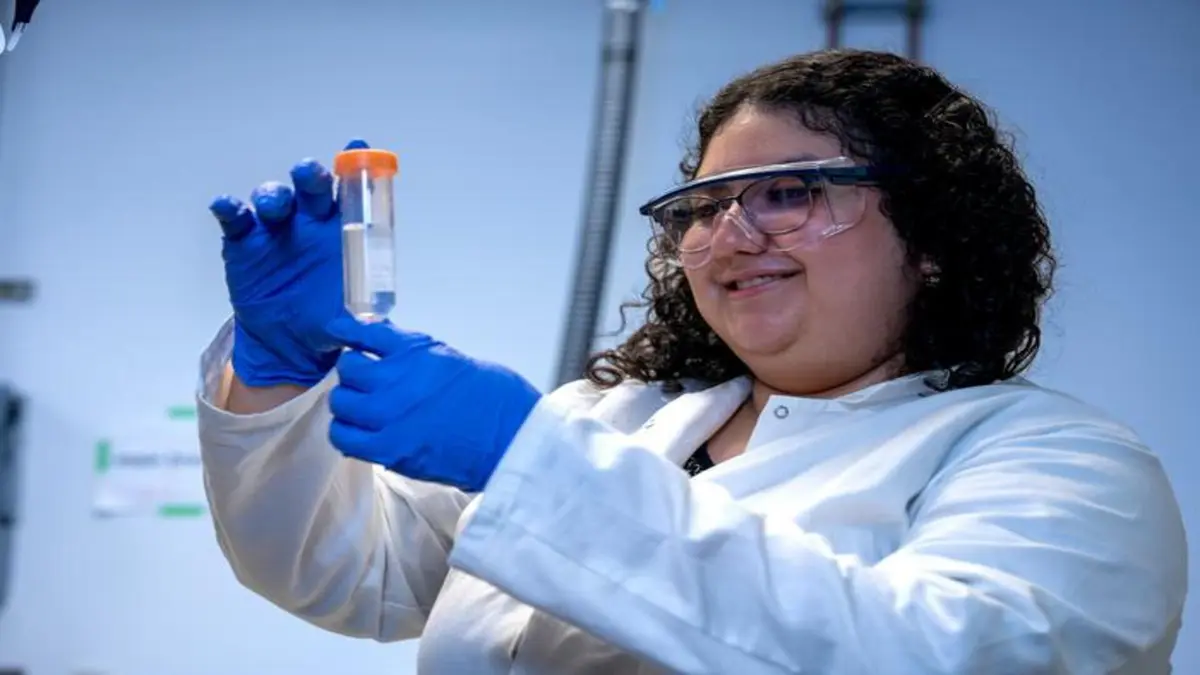

Technology Created by Scientists at Rice University Purifies Saline Water Using Solar Heat and Works Even Without Light, Filters, or Batteries.
Scientists from the United States have created a solar water purifier that continues to function even after sunset.
The innovation, developed by researchers at Rice University in Texas, could represent a revolution in access to drinking water in remote areas or those with limited infrastructure.
The system operates in a decentralized manner and does not rely on filters, batteries, or external storage units.
-
China Surpasses U.S. and Russia Combined in Submarine Production

-
Xiaomi Unveils Smart Glasses in Brazil with 12MP Camera, 4K Video, and AI Features, Challenging Ray-Ban Meta

-
Volkswagen Unveils Bold Strategy to Compete with Chinese Automakers in Brazil, Featuring 5,000 Parts, 76% Localization, and a Surprising Turnaround
-
Three Teens Win Global Prize for Low-Cost AI Microscope Diagnosing Malaria Species in Seconds for Remote Villages


This makes it simpler, more resilient, and more cost-effective than traditional desalination methods currently in use.
Purifier Works Without Sunlight and Filters
The new technology has been named STREED, an acronym in English for Solar Thermal Resonant Energy Exchange Desalination.
The main difference of the project is its ability to continue functioning even in cloudy conditions or at night.
While most desalination systems rely on direct sunlight or large sources of electrical power, STREED smartly recycles heat.
The system can keep the purification process active even after solar exposure ends.
To achieve this, scientists used a principle of physics known as resonant energy exchange. This technique, inspired by the behavior of pendulums and electrical circuits, has been adapted to manipulate heat flow.
As a result, thermal energy flows between two channels: one with heated saline water and the other with air. This continuous and oscillating movement of heat keeps the system operating efficiently, even without light.
System Does Not Use Membranes or Reverse Osmosis
Most current desalination technologies use a method called reverse osmosis, which requires large amounts of energy and fragile membranes. Additionally, this type of system often encounters problems when processing high salinity water.
In the new model, there are no membranes or filters. Instead, scientists created a structure with two simple channels. In the first, the saline water is heated. In the second, air circulates. As the water evaporates, the vapor moves into the air channel, where it condenses and turns into drinking water.
According to the researchers, this process prevents scaling and reduces maintenance needs. Salts and other contaminants are held back, and the system continues to operate without significant wear.
Proposal Addresses Isolated Communities
The main goal of the project is to provide a realistic solution for remote communities facing difficulties in accessing drinking water.
William Schmid, a PhD student in electrical and computer engineering at Rice University and lead author of the study, stated that the proposal aims to create a modular system that is easy to install and can operate off the electrical grid.
“We wanted to focus on decentralized and modular desalination systems,” Schmid explained.
This means that the technology can be used in remote locations without relying on large structures or complex facilities.
Promising Results in Testing
The first tests with prototypes were conducted in San Marcos, Texas. The system produced up to 0.75 liters of drinking water per hour.
Furthermore, simulations conducted in other cities in the United States, such as Portland and Albuquerque, showed a 77% higher water recovery efficiency compared to static systems.
The positive performance was also observed in low-light environments. This shows that STREED does not depend on intense sunlight to continue functioning, which expands its use possibilities.
Technology Can Be Accessible and Scalable
The team also took care to use simple and durable materials. This facilitates mass production and makes the equipment more accessible to resource-limited communities.
According to Alessandro Alabastri, assistant professor at the university and corresponding author of the study, the focus is on enabling the large-scale use of the technology. “We intentionally used durable, low-maintenance materials to make the system easily scalable and accessible,” he stated in an official statement.
Study Published in Scientific Journal
The research was published in the journal Nature Water and received support from the National Science Foundation, the U.S. Department of Energy, and the National Council of Science and Technology of Mexico.
According to the authors, the invention could pave the way for more sustainable and safe solutions in the water sector.
This advance could be crucial for regions suffering from a scarcity of drinking water or relying on limited infrastructure.


