Portuguese
  Spanish


Drainage of Organic Soils Changes Fire Dynamics, Increases Air Pollution, and Exposes Climatic Impacts That Cross Borders in Southeast Asia, Putting Pressure on Environmental Policies, Health Systems, and Production Chains Dependent on the Land.
The conversion of tropical peatlands into agricultural and commercial planting areas in Indonesia has profoundly altered the logic of environmental risk.
To enable the use of machinery and large-scale cultivation, channels and ditches lower the water level and transform naturally waterlogged soil into highly flammable material, changing the territory’s behavior in the face of fire.
More than just opening space for agricultural expansion, this process increases the likelihood of persistent fires.
-
Man with Metal Detector Finds Medieval Silver Seal in England, Uncovers 2,000-Year-Old Roman Gem with ‘Richard’s Secret’

-
Thailand Converts 8 Tons of PET Bottles into 3,500 School Backpacks, Showcasing Circular Economy with Over 40 Factories Involved

-
Mysterious Bats Spotted in Paris’s Père Lachaise Cemetery, Drawing Tourists to the “Vampire Cemetery”

-
From Selling Street Food to Leading a $300 Million Construction Firm: The Journey of a Brazilian Entrepreneur




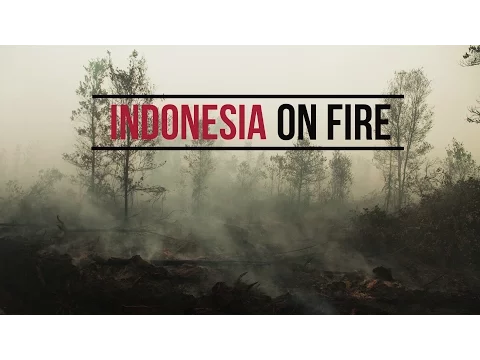
As a result, smoke reaches urban centers, and in severe episodes, crosses borders, directly affecting public health and increasing greenhouse gas emissions.
Part of this impact remains outside daily debate because peat does not react to fire like common vegetation.
In drained areas, flames advance through deep layers of soil, far from immediate perception, prolonging smoke release and increasing control operation costs.
Drained Peatlands and the Loss of Natural Sponge Function
Formed by the accumulation of organic matter over long periods under flooded conditions, peatlands have a low decomposition rate.
In their natural state, they act as water reservoirs, stabilize the terrain, and store large carbon stocks, as well as support ecosystems adapted to permanently wet environments.
The introduction of drainage disrupts this balance right from the early stages of land use conversion.
By opening channels, the water table recedes, the peat loses moisture, and a continuous oxidation process begins.

This change alters the physical structure of the soil, favors gradual land subsidence, and creates conditions conducive to combustion, even below the surface.
In this scenario, the landscape begins to hide a persistent risk.
Instead of depending solely on dry vegetation, fire finds organic matter accumulated at depth, capable of burning slowly for long periods when water ceases to function as a natural barrier.
Fires in Peat and the Limits of Conventional Fighting
Unlike surface burns, fires in peatlands pose additional challenges to rapid response.
As fire can move beneath the vegetation cover, flames are not always restricted to what is visible.
Thus, even after apparent control of the surface, subsurface hotspots remain active, reappearing days later and maintaining continuous smoke emissions.
Moreover, the logistics required for combat become more complex.
Effective containment requires a large volume of water, constant access to the terrain, and prolonged coordination to prevent fire reactivation in drained areas.
In light of this dynamic, traditional strategies often prove insufficient.
Costs also increase.
Prolonged fires escalate expenditures on personnel, equipment, and transportation, in addition to putting pressure on local communities, which face disruptions in routine and constant vigilance during drier periods.
Transboundary Smoke and Impacts on Public Health
For the population, the most immediate effect is the formation of a smoke haze that can spread over large areas.
In intense episodes, air pollution is not restricted to the vicinity of the fire hotspots.

Distant regions report deteriorating air quality, with restrictions on outdoor activities and impacts on the operation of public and private services.
Neighboring countries like Malaysia and Singapore have faced periods where smoke became a public health issue.
During those occasions, schools suspended activities, authorities issued alerts, and the population was advised to reduce exposure.
The smoke carries fine particulate matter and pollutants associated with incomplete combustion, increasing risks especially for children, the elderly, and people with respiratory diseases.
When it crosses borders, the problem gains another dimension.
Pollution ceases to be merely an internal challenge and begins to require regional cooperation, calls for prevention, and discussions on responsibility and oversight.
Peat, Carbon, and the Climatic Impact of Drainage
Over thousands of years, peatlands have accumulated large volumes of carbon under low decomposition conditions.
When this material burns, a significant portion of the stock is rapidly released into the atmosphere.
Even in the absence of fires, drainage accelerates the oxidation of organic matter.
This process converts previously stored carbon into gradual carbon dioxide emissions.
The combination of abrupt and continuous emissions explains why the protection and restoration of peatlands have taken a central role in climate strategies.
In this context, the debate goes beyond emergency fire fighting.
Structural decisions regarding land use and management models have come to be seen as determinants for reducing risks and emissions in the long term.
Fire Crises and the Alert of 2015
The severity of the problem became more evident in seasons marked by prolonged drought.
With less rain and extensive drained areas, the risk of fires increased in different regions of the archipelago.
Among the episodes most cited by studies and technical reports is the crisis of 2015.
During that period, extensive burning expanded the regional reach of smoke and reinforced the perception that the issue went beyond the environmental sphere.
Economic, health, and diplomatic impacts began to be part of the public debate.
Still, the recurrence of fires in dry years indicates that point responses have limited effects when the root of the problem remains associated with drainage.
Rewetting the Soil as a Prevention Strategy

Frequently, the restoration of peatlands is confused with simple replanting.
In drained areas, planting without recovering the hydrological regime maintains the risk of fire, since the decisive factor is the water level in the soil.
For this reason, restoration prioritizes rewetting.
In practice, this involves managing channels, reducing water loss, and reorganizing land management to keep the water table at a higher level.
With water at an adequate level, peat becomes less susceptible to fire, and oxidation decreases.
In areas affected by subsidence and terrain instability, returning to moisture also helps contain ongoing degradation processes.
Producing Without Draining and the Economic Challenges
The proposal to produce without draining has gained traction by addressing a central dilemma.
On one side, communities and production chains depend on the land.
On the other, drainage increases environmental and health risks.
In this context, paludiculture emerges.
The concept refers to productive systems adapted to waterlogged soils, aiming to reconcile income generation with maintaining high water levels.
In practice, this implies prioritizing species and management models tolerant to moisture.
Widespread adoption, however, faces challenges such as technical adaptation, market access, financing, and local governance.
Simultaneously, the private sector has begun to integrate the debate.
Pressures from buyers, certifications, and environmental commitments have led companies to adopt non-burning policies and monitoring.
The effectiveness of these measures depends on oversight, transparency, and consistent enforcement, especially in remote areas marked by land disputes.
By putting water back at the center of land management, the logic is inverted.
What was once treated as an obstacle is now recognized as natural infrastructure capable of reducing fire, smoke, and emissions.
If drainage turns soil into a fuse and leads pollution across borders, how many other fronts of agricultural expansion still insist on drying what needs to remain wet to avoid the next smoke season?