Portuguese
  Spanish


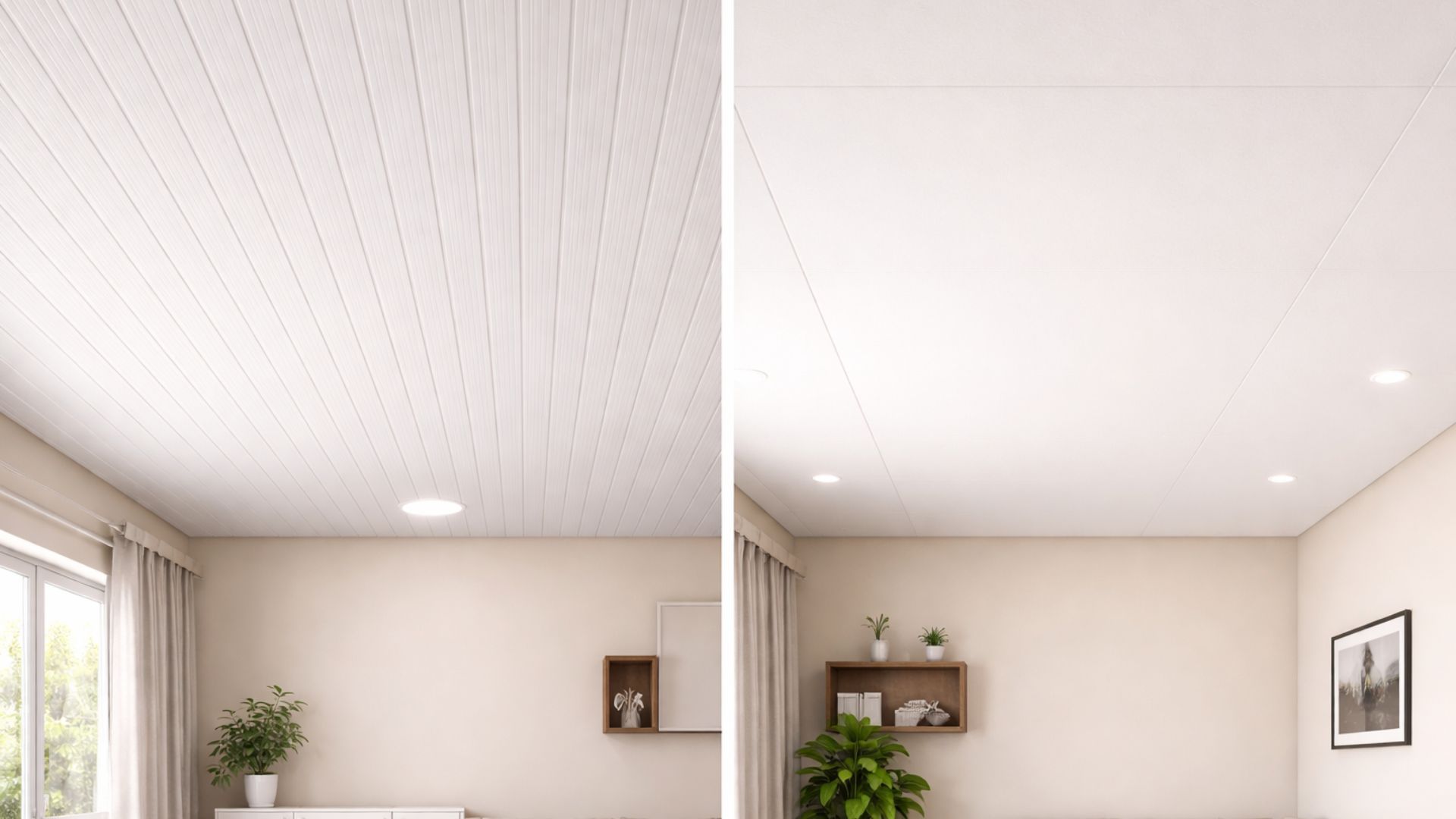


Comparison Between PVC Ceiling and Gypsum Ceiling in Popular Houses Reveals Cost Differences Per Square Meter, Execution Stages, Impact on Construction Time, and Maintenance Requirements, Based on Public Sheets, SINAPI Compositions, and Manufacturer Technical Manuals.
Installing a ceiling in a popular house with PVC or gypsum involves cost differences that go beyond the material price.
In public budgets formulated based on SINAPI, the two solutions appear as distinct compositions per square meter, with their own inputs and labor.
In these bases, the values can get close when the comparison considers only the ceiling installation, excluding complementary finishes or subsequent maintenance stages.
-
Brazilian City Makes Remarkable Leap, Becomes 4th Wealthiest in the Country with GDP of R$ 134.1 Billion

-
Controversial 6-day Workweek Elimination in Brazil Faces Economic Criticism Over Productivity Claims

-
Itaú to Refund Customers After 14 Years of Unauthorized Credit Card Charges; Agreement Includes No Interest or Adjustments, Deadline by 2028, with Potential Impact of Up to $6.5 Billion

-
Brazilian Company Grows from Bartering Soap for Food to Producing 30 Million Units Monthly, Challenges Global Giants with $100 Million Revenue and Expands into Premium Cosmetics



A bidding budget sheet dated November 11, 2025, from the municipality of Pium in Tocantins, presents the SINAPI composition 96111, referring to a ceiling with grooved PVC panels for residential environments, including a unidirectional fixation structure.
In this document, the reported unit cost is R$ 56.33 per square meter.
After applying the BDI, the unit price reaches R$ 73.17 per square meter.
The composition considers the supply and installation of the PVC ceiling as a complete service, according to the methodology adopted in the public budget.
Price of Gypsum Ceiling in Official Sheets
For the gypsum ceiling, an estimated budget sheet published by the municipality of Timbó in Santa Catarina registers the SINAPI composition 96109, referring to a ceiling with gypsum panels for residential environments.
In this case, the indicated unit cost is R$ 56.54 per square meter.
With the application of the BDI, the presented unit price is R$ 70.11 per square meter.
The proximity of values recorded in two public documents from different states illustrates a recurring aspect in public works budgets.
Depending on the reference period, location, and charges considered, PVC ceiling and gypsum ceiling can have similar direct costs per square meter when analyzing only the installation stage.
What the SINAPI Numbers Don’t Show Alone


These numbers need to be interpreted with caution.
SINAPI tables serve as a national cost reference, but prices vary by state, base month, and composition criteria.
Moreover, in many cases, the value that reaches the final consumer includes items that are not necessarily concentrated in the same sub-item of the budget.
Among these items are ceiling moldings, structural reinforcements, adjustments for fixtures, corrections of the existing ceiling, or painting services.
Differences in Execution and Labor
Regarding labor, the differences between PVC and gypsum are more related to the execution stages than to the isolated cost of the material.
The PVC ceiling is made up of interlocking panels fixed to a metal or wood structure, with a dry joint system.
Manufacturer technical manuals indicate that this type of ceiling can be cleaned with a soft cloth, water, and soap or neutral detergent, while also warning against using abrasive products.
These guidelines are associated with the maintenance profile described for the material.
Joint Treatment and Finish in the Gypsum Ceiling
In the case of gypsum, the execution of the ceiling panels involves the fixing of the sheets and, in drywall systems, joint treatment.
Technical manuals from drywall system manufacturers describe that the treatment should be done with specific compound and proper tape, following defined procedures to reduce the risk of cracks and surface imperfections.
This additional step influences the total construction time.
It precedes the final finish, such as painting, when this phase is planned in the project.
Construction Time and Subsequent Stages
Execution time is a factor often considered in renovations of popular houses.
This aspect, however, does not always appear explicitly as a closed number in the budget sheets.

Technical descriptions of PVC products available at retail often highlight that the ceiling is delivered as a final finish, requiring no subsequent painting.
This reduces the number of steps after installation.
For the gypsum ceiling, when the project includes painting the ceiling, this stage appears as an additional service.
In some budgets, painting is listed as a separate item from the ceiling.
In other situations, it is executed in sequence by the same team, but still represents a distinct phase in the schedule.
In practice, cost comparisons per square meter need to clarify whether the value considered refers only to the installed ceiling or to the finished ceiling, with completed finishing.
Maintenance and Behavior in Humid Environments
Maintenance is another point that differentiates the two solutions, especially in residences with a history of humidity or limited ventilation.
In the case of PVC, manufacturers describe the material as resistant to humidity, as long as installation follows technical recommendations.
The recommended cleaning procedures are usually simple and do not involve specific products.
For gypsum, the relationship with humidity is treated more specifically.
Manufacturers sell moisture-resistant boards, known as RU boards.
These boards are recommended for indoor environments such as bathrooms, kitchens, washrooms, and service areas.
At the same time, the technical documentation establishes clear restrictions, such as the non-recommendation for use in outdoor areas or places subject to direct and permanent contact with water.
These guidelines help to contextualize that gypsum maintenance depends on the correct choice of board type, environmental conditions, and the absence of leaks or seepage.

Everyday Use and Technical Criteria
In everyday use, technical and commercial materials associate PVC with ease of cleaning and lower need for periodic interventions.
Gypsum, on the other hand, is described as a solution that allows a smooth finish and greater flexibility for lighting and lowering projects, as indicated in manufacturers’ manuals and catalogs.
These characteristics do not change the central data observed in public sheets.
In SINAPI-based compositions, the cost per square meter of the installed ceiling can be similar between PVC and gypsum.
The final difference tends to arise when the budget incorporates or does not incorporate additional finishing and maintenance stages over time.
Limitations of Available Comparisons
Note: a single, standardized public source did not identify a national study comparing PVC ceiling and gypsum ceiling in popular houses with the same project, scope of services, and time horizon.
No surveys were located that add installation cost, subsequent stages, team productivity, and maintenance costs over a fixed period.
For this reason, the presented comparison is based on SINAPI compositions registered in public bidding sheets and on technical guidelines from manufacturers regarding installation, use, and maintenance.
Given these objective parameters of cost per square meter, execution stages, and technical requirements, when choosing between PVC ceiling and gypsum ceiling for a popular house, what tends to weigh more in the decision: the item’s value in the initial budget or the set of services and maintenance associated with usage over time?