






 Portuguese
  Spanish
  3 min of reading
  1 comment


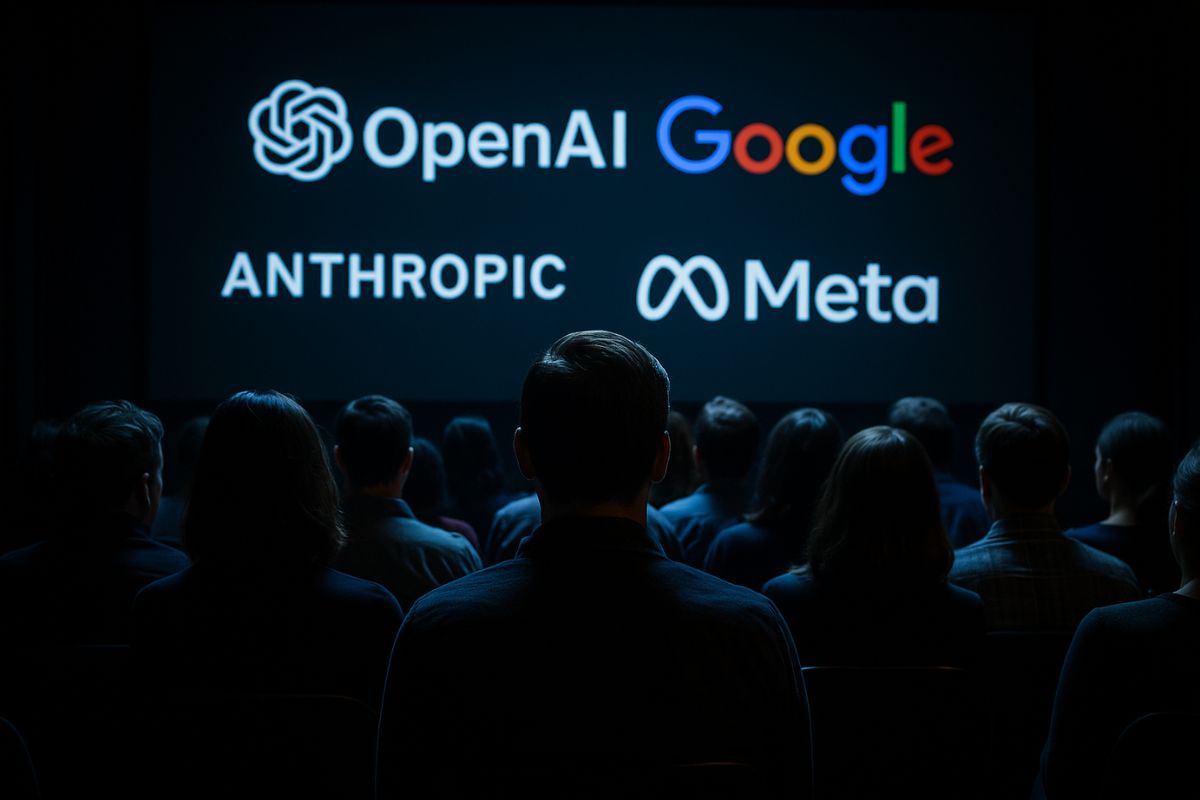

OpenAI, Google, Meta And Anthropic Are Reprogramming Our Way Of Thinking, And Almost No One Notices
Humanity is undergoing a silent revolution, deeper than the industrial revolution or the internet era. Instead of controlling roads, electricity, or data, a handful of companies is taking the reins of something even more valuable: the way we think. They are not just providing answers — they are shaping the questions. While everyone is worried about job replacement, we may be ignoring the most dangerous loss of all: intellectual autonomy.
Four Companies, A New Architecture Of Thought
The concentration of power in the hands of OpenAI, Google, Anthropic, and Meta goes far beyond technology. They not only develop the models that power virtual assistants and search engines but also define the limits of popular reasoning. We are facing the largest symbolic monopoly in history: not of physical infrastructure, but of mental criteria.
If we previously used search engines like Google to compare sources, analyze contexts, and arrive at our own conclusions, today we accept AI-generated answers as ready-made truths, even when we know these systems can make mistakes or present biased information.
-
They wanted artificial intelligence, but they drained the water from a village in Mexico: the water consumption of data centers caused a hepatitis outbreak, and big tech companies Amazon, Microsoft, and Google were forced to halt billion-dollar projects.

-
System created to save lives in disasters turned ‘against’ Brazilians overnight: a hacker attack sent out a false alert from Civil Defense with the word “misantropia” that went off on the phones of half the country, even in silent mode, and took down the Cell Broadcast.
-
In the cold desert of Ladakh, where it hardly rains, engineer Sonam Wangchuk created the ice stupa, a tower that freezes winter water and stores it for irrigating crops in the spring, a simple engineering feat that mimics nature.
-
For the first time in history, solar and wind energy generated more electricity than natural gas worldwide in a single month, April 2026, a milestone in the energy transition that shows renewable sources taking the lead in the global electric system.




Asking ChatGPT for a career strategy, Claude for a situational analysis, or Gemini for a public policy interpretation is, in practice, outsourcing our own judgment. This convenience comes at a cost: we relinquish the process of thinking to consume pre-fabricated conclusions — which seem so well-written that they are rarely contested.
China, even with giants like Baidu and Alibaba in the game, still maintains a more closed domestic and regulatory focus, making the global symbolic dominance of American companies even more evident.
A Future Where Original Thought May Disappear
In the medium term, the most dangerous consequence of this new model will not be job loss, but the loss of cognitive diversity. Language models like LLMs (Large Language Models), when trained with standardized and popular texts, tend to offer average, predictable answers tailored to general tastes. In the long run, this may stifle intellectual eccentricity — precisely the kind of thinking that generates creative breakthroughs, inventions, and paradigm shifts.
A similar phenomenon has already occurred with media platforms. TikTok influenced the structure of modern songs, reducing their length and anticipating hooks to capture attention. Spotify shaped listening habits and even shortened guitar solos. Why would it be different with language and reflection?
We are entering an era where knowledge is no longer the result of active search, but a product of immediate consumption. And the more concerning issue: shaped by algorithms whose biases and limitations remain invisible.
According to AI expert Gary Marcus, this centralization of thought “has dangerous implications for democracy and science, as it diminishes space for divergence and genuine debate.”
What Are We Willing To Give Up?
Delegating thought may seem comfortable in the short term, but it requires reflection: how much of this autonomy are we willing to relinquish in the name of practicality? The question is not technical, but ethical, social, and political.
Brazil, for example, is one of the countries that most utilizes generative AI tools in daily life, according to a survey by Ipsos. This mass adoption reinforces the warning: without public debate, regulation, and promotion of digital literacy, we are allowing a select group of companies to dictate what is reasonable to think — and how we should think.
Perhaps there is no way to stop the advance of these technologies, but we can still choose what role we will have in this transformation: conscious protagonists or passive consumers of manufactured ideas.





You consistently prove that social media can be force for good