Portuguese
  Spanish


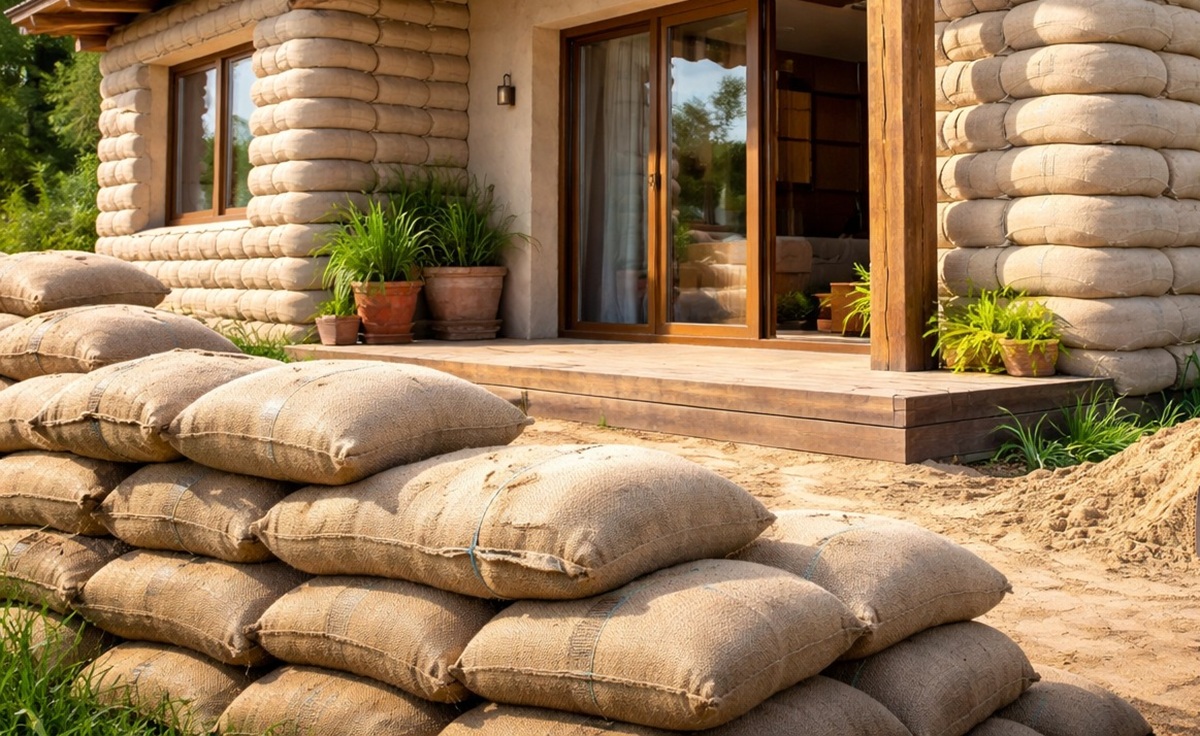


Technique With Sandbags Uses Compacted Local Soil, Barbed Wire Between The Rows And Walls Over 30 Cm Thick To Build Houses Up To 100 M², Reduce Costs By Up To 30% And Improve Thermal Insulation In Rural Areas And Arid Regions
Building with sandbags uses compacted and stacked sandbags to form structural walls, a technique applied in homes up to 100 m², with cost reductions of up to 30%, especially in rural areas and arid regions.
How Sandbag Construction Works
The sandbag technique involves filling sturdy bags with sandy soil or local earth, which are stacked in successive rows. Each layer is manually compressed or compacted with simple tools to ensure structural stability.
Barbed wire is used between the rows to create friction and prevent sliding. The result forms thick walls capable of supporting significant vertical loads. Compression is the central principle that guarantees strength and stability.
-
Entrepreneur Turns Rio Cemetery Canteen into a Successful Snack Chain Generating $4.9 Million Annually and Expanding to Metro Stations

-
Rare fox feared “extinct” found alive on Caribbean island after over two decades without official sightings

-
21-Year-Old Brazilian Student Turns Homemade Popsicle Hobby into $100,000-a-Month Business

-
Australia Dumps Hundreds of Thousands of Tons of Gravel into Rivers to Restore Natural Barriers and Reverse 150 Years of Erosion




The sandbags function as structural modules. After the walls are raised, a coating of mortar, stabilized earth, or cement plaster is applied. The finish protects against moisture, solar radiation, and surface wear.
The thickness of the walls can exceed 30 centimeters, which contributes to thermal insulation. In hot regions, the thermal mass helps maintain more stable indoor temperatures throughout the day.
Building with sandbags also allows for curved shapes. Circular and vaulted structures are common as they better distribute compression forces. This feature expands architectural possibilities without increasing technical complexity.
Where Sandbags Are Most Used
Sandbags are more common in rural areas, remote communities, and regions with limited access to industrial materials. Countries with dry climates and sandy soil availability adopt the technique as a low-cost alternative.
Community projects and social housing use sandbags to reduce costs associated with concrete and bricks. Savings can reach up to 30% compared to conventional systems, depending on the availability of local labor.
In areas prone to natural disasters, sandbag construction is applied in emergency housing. The speed of execution and the use of local materials facilitate quick reconstruction.
There are also reports of use in educational centers and small community structures. The simplicity of the method allows for the quick training of teams, reducing dependence on highly specialized professionals.
Structural Performance And Technical Aspects Of Sandbags
The structural performance of sandbags depends on the proper compaction and alignment of the rows. Compression turns the assembly into a monolithic mass capable of withstanding moderate vertical and lateral loads.
Tests conducted in different contexts indicate good resistance to low to medium intensity seismic activity, due to the flexibility and ability to dissipate energy. The rounded shape of the buildings contributes to this behavior.
The foundation is usually simple, made up of a stone or lean concrete base. The first row of sandbags must be protected from rising moisture to prevent material degradation.
Durability is linked to external protection. Proper coatings prevent infiltration and extend the structure’s lifespan. Without protection, sandbags may suffer premature wear from rain and sun exposure.
The final cost varies depending on the type of soil, transportation of materials, and the finish chosen. In projects up to 100 m², savings mainly come from the replacement of ceramic blocks and the reduction of cement usage.
Economic And Environmental Advantages Of Sandbags
Building with sandbags uses local soil as the main input, reducing transportation and associated emissions. This factor directly impacts the budget and environmental footprint of the project.
The technique requires simple tools and labor that can be trained in a short time. This increases accessibility for communities with limited resources and decreases the need for heavy equipment.
The thermal insulation provided by thick walls can reduce cooling costs. In hot climates, thermal mass absorbs heat during the day and gradually releases it at night, stabilizing indoor temperature.
In addition to the economic aspect, sandbags allow for the reuse of materials and adaptation to the surroundings. The flexibility of forms facilitates integration with the terrain and varying topographical conditions.
Limitations And Challenges In The Application Of Sandbags
Despite the advantages, sandbags have limitations. The technique requires detailed planning to avoid structural problems resulting from inadequate compaction or incorrect alignment.
Protection against moisture is a critical point. Failures in this aspect can compromise the integrity of the walls. The choice of coating and proper execution are determinative for the longevity of the construction.
In urban areas with strict regulations, the approval of projects with sandbags may face normative restrictions. The lack of broad technical standardization remains a challenge in some municipalities.
Another relevant factor is public perception. Although sandbags demonstrate consistent structural performance, there is still cultural resistance compared to traditional masonry methods.
Even with these challenges, building with sandbags continues to be adopted in projects up to 100 m², especially where cost reduction and the availability of local soil are decisive.
The technique shows that systems based on compression and rational use of materials can meet specific housing demands. When correctly executed, sandbags offer a viable structural alternative, with adequate performance and controlled costs, consolidating as an applicable solution in different geographical contexts.