Portuguese
  Spanish


Constant negative temperature, thick ice layer, and adapted life make the Bandera volcano cave a rare natural phenomenon
An unusual natural formation located in the Zuni Mountains, New Mexico, has sparked scientific and tourist interest for decades.
The Bandera Volcano Ice Cave maintains a stable temperature of -0.6°C, even surrounded by a hot desert environment.
This contrast between intense cold and external heat makes the site one of the most curious natural phenomena ever recorded, according to regional studies consolidated over time.
-
Brazilian Students Turn Recycled Plastic Bottles into Synthetic Yarn for Scarves to Aid Needy Families

-
Why the Same Citrus Fruit Has Different Names Across Brazil and How Varieties Differ
-
India Paints Road Red and Uses Smart Asphalt to Slow Drivers and Protect Wildlife in Nature Reserve

-
Yellow vs. White Fat: The Little-Known Difference That Can Impact the Quality and Flavor of Your Barbecue



Geological formation reveals unique volcanic origin
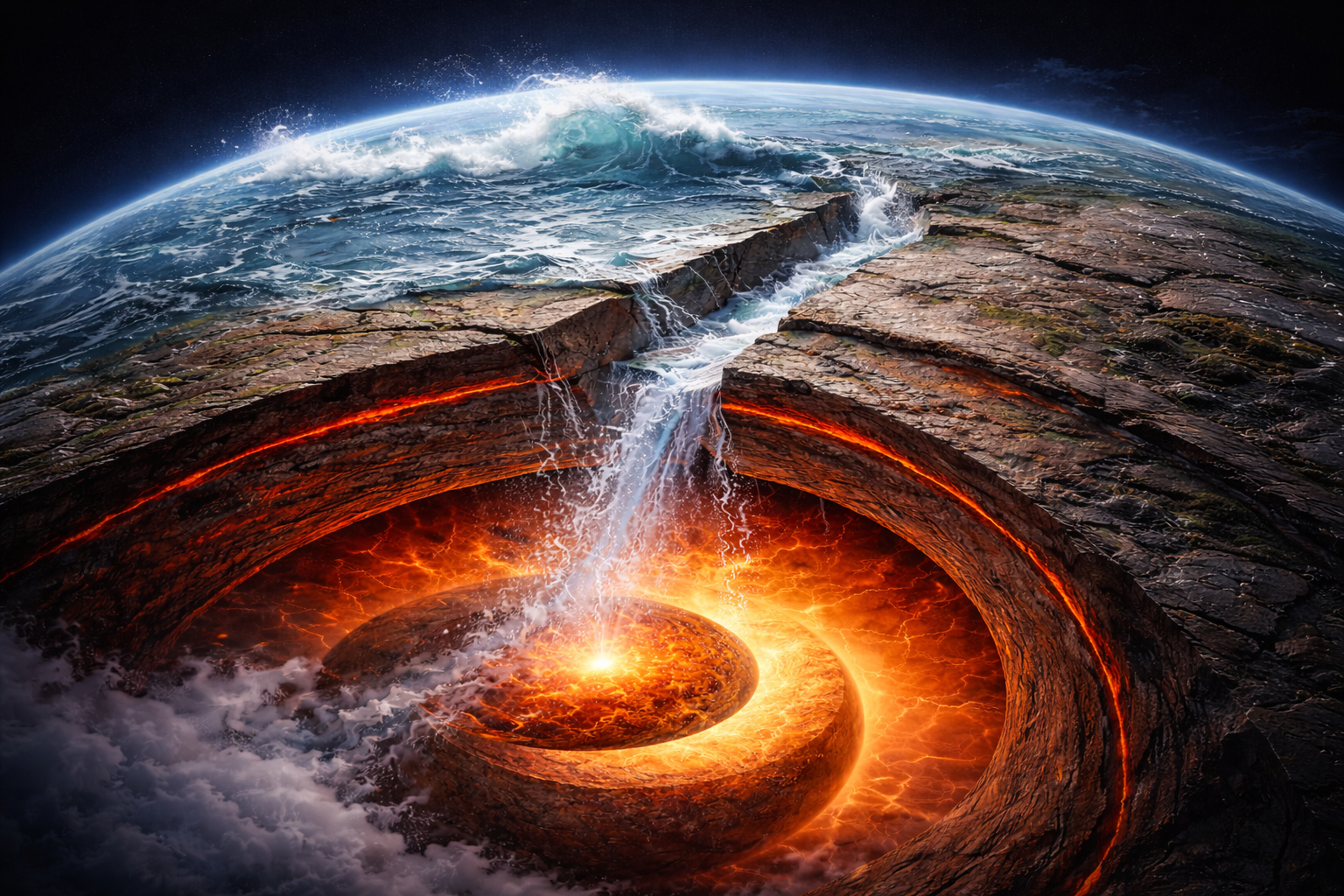
The cave was formed from a collapsed lava tube, a direct result of ancient volcanic activities in the region.
During these eruptions, according to records from the United States Geological Survey (USGS), the lava advanced beneath the earth’s surface.
The outer layer cooled and hardened quickly.
The internal flow, however, continued to move, creating empty tunnels that gave rise to the cave’s current structure.
The porous composition of the walls plays an essential role in this thermal system.
This feature allows for the retention of cold air inside and reduces the entry of external heat.
The internal environment, thus, remains permanently frozen.

Ice thickness and thermal balance over millennia
The interior of the cave houses a layer of ice that can reach up to 6 meters thick.
This ice undergoes a continuous process of natural renewal.
Water from rain and melting snow enters the cave and freezes upon touching the cold ground.
This cycle, repeated over thousands of years, has allowed for the gradual accumulation of ice, preserving its structure even under high external temperatures.
The constant temperature of -0.6°C ensures the stability of this unique environment.
Extreme environment hosts surprising life forms
The presence of life in this extreme environment surprises researchers.
The cave hosts Arctic algae, which grow directly on the frozen surface.
These algae form a blue-green layer, visible on the ice.
Local scientific observations indicate that these organisms have a high capacity for adaptation.
The development of these life forms occurs even under conditions of intense cold, isolation, and low light.
This behavior highlights the resilience of life in extreme environments.
Scientific importance and ongoing interest
The cave represents an important reference for scientific studies.
Researchers analyze the interaction between volcanic activity and environmental conditions in this type of formation.
The site also contributes to understanding how natural systems maintain thermal balance over long periods.
These characteristics increase interest in research on extreme ecosystems and biological adaptation.
Scientists and visitors remain attentive to this rare natural phenomenon.
The combination of permanent ice, volcanic origin, and the presence of life raises an inevitable question: how many other extreme environments remain unknown on the planet?