






 Portuguese
  Spanish


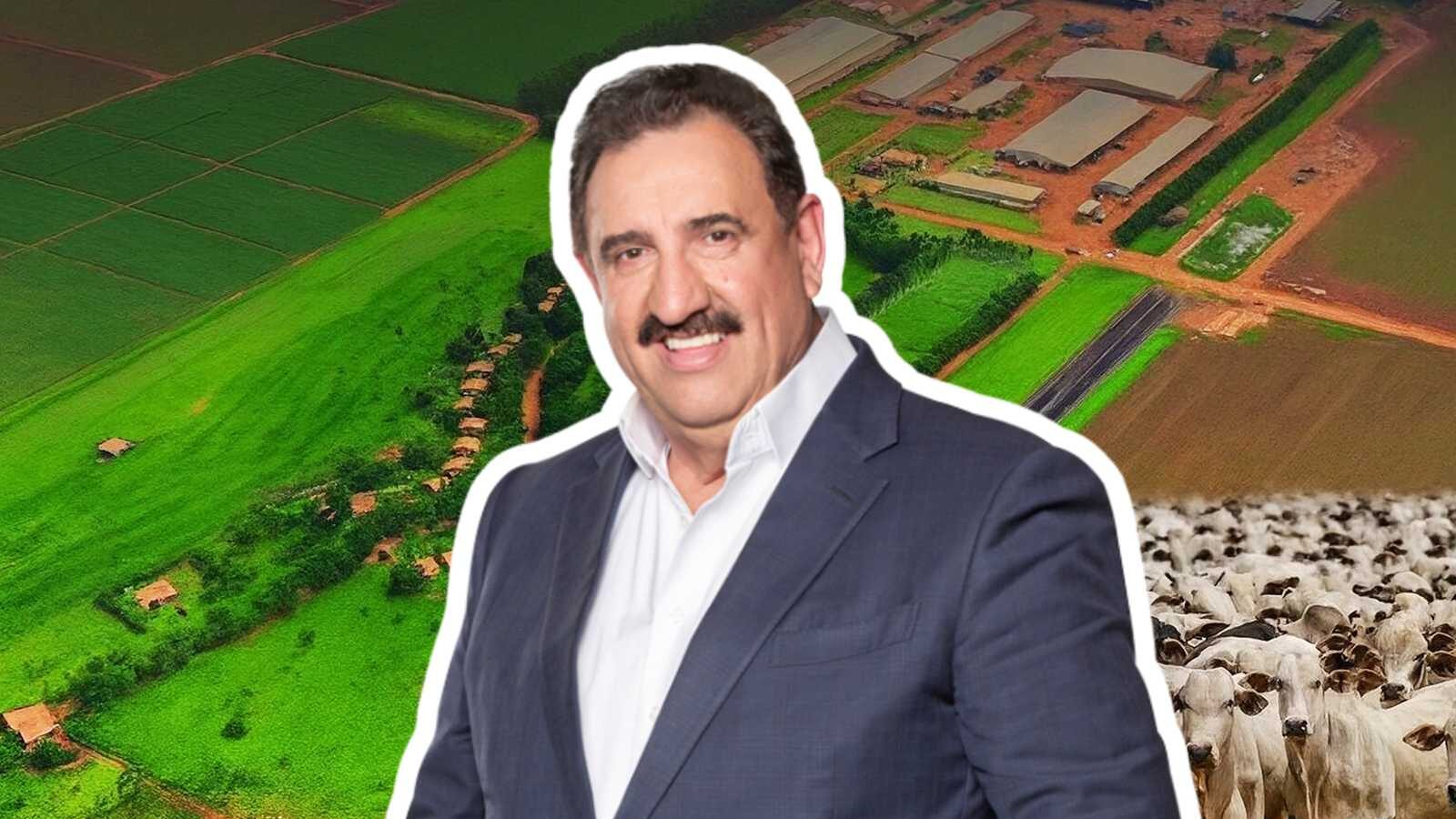


The Presenter Carlos Massa, Better Known as Ratinho, Built a Trajectory That Goes Far Beyond Television. Over the Decades, He Transformed His Popularity Into Solid and Diversified Businesses, Ranging from Hospitality to Agribusiness, Including Radios, TV Stations, and Private Brands.
The presenter Carlos Massa, nationally known as Ratinho, was the guest of the podcast “Os Nagles”, hosted by Leda Nagle and Duda Nagle. This interview took place in June, with the video available at the end of the article.
During the interview, the communicator revisited his personal and professional journey, talked about vanity, recalled experiences on television, and commented on his participation in soap operas and films.
In addition, he highlighted his role as a businessman, investor, and landowner, establishing himself as an influential figure in both communication and agribusiness as well as hospitality.
-
21-Year-Old Brazilian Student Turns Homemade Popsicle Hobby into $100,000-a-Month Business

-
Australia Dumps Hundreds of Thousands of Tons of Gravel into Rivers to Restore Natural Barriers and Reverse 150 Years of Erosion

-
Bird-Inspired Robot Glides on Air Currents up to 10 m/s, Balances Itself, and Aims to Save Energy in Industrial Inspections and Meteorological Balloons
-
Eight Artists Secretly Lived in a Hidden 70m² Apartment Inside a Shopping Mall in Brazil for Four Years




Most Profitable Businesses
Throughout the interview, Ratinho was asked which of his businesses generated the most financial return.
Among farms, soybeans, corn, coffee, and work in television, he surprised everyone by revealing that his main source of income is neither in the field nor in communication.
The communicator highlighted that hospitality has become his most profitable sector, especially due to high demand in large urban centers.
“I think proportionally, it’s hotels. Hotels make me a lot of money. Hotels make more money. I have hotels at the airport. Hotels make a lot of money, especially at the airport.”
According to him, location is crucial for the success of the business, as establishments close to airports operate at full capacity, serving passengers in transit, fairs, and corporate events.
Focus on Mid-Sized Hotels
Ratinho also detailed the model of enterprise he adopts. He explained that he prefers to invest in mid-sized hotels, designed to accommodate guests who spend little time in each stay, without betting on luxurious resorts. For him, this model has less risk, is simpler to manage, and offers quick returns.
“I do mid-sized hotels. Small ones, no. Resorts are also not my business. Resorts require a lot of work. I’m a partner in a few, but it’s not the focus. What really works is transit hotels.”
The presenter emphasized that hotels aimed at corporate guests or transit travelers maintain stable occupancy, while resorts require high investments, constant maintenance, and are heavily dependent on tourism seasonality.
Market Trends
When commenting on the real estate scenario, Ratinho pointed out that people’s behavior has changed in recent years.
According to him, new generations no longer prioritize large spaces or possessions like owning a car, but rather practicality and shared services. Therefore, compact and well-planned apartments have become a solid market bet.
“The guy has come to the conclusion that he doesn’t need to own a 500 m² apartment to live. He can live in a 40 m² space, well made and decorated. This works. Nowadays, the best business is studios.”
He highlighted that studios of 30 to 40 square meters, when well-designed, offer comfort, practicality, and lower costs, attracting primarily singles and smaller families.
For Ratinho, this trend should grow even more as it aligns with the reduction in family sizes, the increasing use of transportation apps, and the demand for modern structures in condominiums, such as shared laundries, coworking spaces, and meeting rooms.
The Salesman’s Calling
Ratinho highlighted that his main skill has always been selling, something he learned since childhood. He shared that he started as a shoeshiner and soon realized he could stand out by serving customers at home during the week to retain them.
“Anything I can sell, if I like the product, I will sell. I like to sell.”
According to him, this aptitude remains to this day in television. His shows are completely filled with advertisers, with no space available for new insertions.
“While other programs struggle to sell sponsorships, mine has no vacancies until December. All the merchandising spots are already sold.”
Creating His Own Businesses
Ratinho recalled a time when major advertisers avoided his show because they considered the content controversial. To overcome this barrier, he decided to advertise his own products, creating parallel businesses.
“So let me create a feed factory. I created Foster, which is still operational today. I started making money with my products because I knew how to sell.”
He explained that he began to associate with companies, assuming the risk of sales, and the strategy worked.
“I guarantee the sale, and it worked.”
Transparent Management on the Farm
During the interview, Ratinho explained how he manages his rural properties and emphasized the importance of transparency with employees. He revealed that he adopts a practical methodology to calculate the profitability of agricultural production, especially soybeans.
“On my farm, I ask: how much did the soybeans yield? It yielded X. How much did it cost to plant? Y. How much would I earn if that money were in a savings account? I take all this, put it on the board, and show the final result.”
According to him, after closing the accounts, part of the profit is shared with the team.
“What’s left, 20% is yours. I call the employees and show them exactly how much it yielded. Everyone knows how it works.”
Grupo Massa
Founded fifteen years ago by businessman and presenter Carlos Massa, Grupo Massa is originally from Paraná and is now considered one of the largest communication and business groups in the country.
The company brings together 5 TV stations affiliated with SBT in Paraná, over 75 radios spread throughout Brazil, forming the Rede Massa FM, the second largest radio network in Brazil.
In addition to the communication sector, Carlos Massa has expanded his business presence into other areas of significant economic relevance.
In the agribusiness, he manages vast areas of agricultural production, particularly in Acre, which exceeds hundreds of thousands of hectares, dedicated to the cultivation of soybeans, corn, and coffee.
Millionaire Farms in Acre
The site CompreRural provided further details about Ratinho’s agribusiness ventures, where he owns many properties.
In Acre, he manages nearly 200 thousand hectares, consisting of two large farms: one with 150 thousand hectares, the largest in the state, and another with 40 thousand hectares.
Although there is no direct agricultural cultivation, the lands allow for legal timber exploitation within the law.
Located along BR-364, they face typical challenges of the region, such as tensions with land squatters and proximity to the Indigenous Land of Rio Gregório, inhabited by Yawanawá, Kaxinawá, and Katukina-Pano communities.
Sustainable Agribusiness in Paraná
In Paraná, Ratinho bets on innovation and environmental preservation. At Fazenda Costa Rica, in São João do Ivaí, 50% of the area is virgin forest, protected by his decision.
In Apucarana, he maintains Fazenda Ubatuba, which spans 508 hectares, dedicated to soybeans with conservationist practices.
The most famous property is another Fazenda Ubatuba, also in Apucarana, with 1,100 hectares. Purchased in 2004 for R$ 9 million, it is now valued at around R$ 80 million. There, Ratinho preserves coffee-growing traditions:
- 1.3 million coffee plants, along with soybeans and corn, are part of the production.
Café no Bulé and Recognition as “Rural Emperor”
The presenter created and licensed the brand Café no Bulé, which has become the fifth best-selling brand in the country. Known for his obsession with keeping costs low, he claims this discipline is a core part of his success.
With farms, beef cattle, coffee, soybeans, and corn, Ratinho has established a true agribusiness empire. Today, he is recognized as one of the largest agricultural producers in Brazil, earning millions of reais each month — proving that his financial success goes far beyond television.
A Success Story
Ratinho’s journey shows how the combination of charisma, boldness, and business vision can transform a popular presenter into one of the country’s biggest entrepreneurs.
From the mustache that became a trademark on television screens, through the hotels that became his main source of profit, and reaching the millionaire farms in Paraná and Acre, he built a diversified empire.
Whether on the SBT stage, in the harvested coffee, or in the hotel businesses in São Paulo, Ratinho maintains the essence of a born seller and practical manager, sharing results with his team and betting on transparency.
More than a television figure, he has established himself as a symbol of Brazilian business success, balancing tradition, innovation, and discipline to continue growing in different areas.






Quanta gente invejosa e com dor de cotovelo, vão se esforçar mais e tentar melhorar de vida.
O Ratinho é uma pessoa que sempre batalhou na vida e tudo que conseguiu foi através do seu trabalho dedicação e objetivo
E um exemplo que serve para as pessoas que querem atingir seus sonhos e buscar o sucesso na vida. Nosso país precisa de gente que trabalhe e pare com toda essa politica que deixa o povo cada dia mais dependente
O trabalho é a dignidade do ser humano
Parabéns ratinho e desejo muita saúde e felicidade para você e sua família
Han han já vi esse filme de perto e não foi com o ratinho. Sei como adquirem terras e se tornam riquíssimos.
Esse começou batendo com um cacetete em um fax e gritando expressões de baixo escalão no rádio. Foi parar no SBT onde está até hoje porque não tem para onde ir além da RedeTV que paga menos.