Portuguese
  Spanish


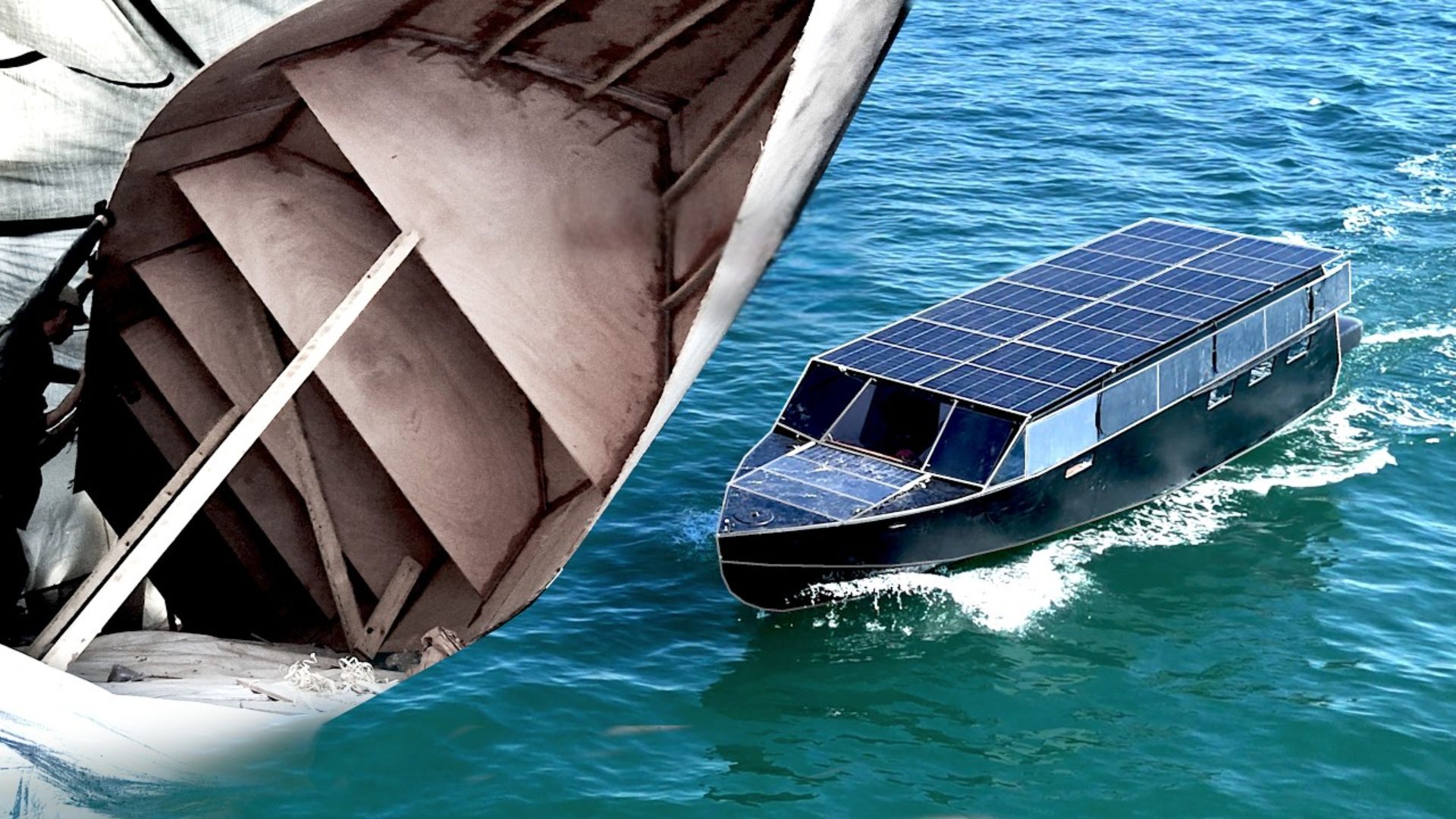


Built over six months in a forest shed, with a tight budget, the solar and electric boat Helios 11 is the second prototype by Lukas Sjoman from the True North Yachts channel. He himself admits that the vessel is made for calm and protected waters, like those of the Baltic, and not for the open ocean.
Tired of traveling by plane and staying in vacation rentals, a remote worker decided to build a solar and electric boat on his own to live and sail freely. Named Helios 11, the boat is about 11 meters long, was built in a shed in the middle of the Nordic forest, and uses marine plywood, fiberglass, and eight solar panels on the roof. The project took about six months, with a tight budget and almost everything done by hand.
The motivation, according to the author himself, was simple and ambitious at the same time. As he works online, he wanted to be able to move anywhere without giving up having a space of his own, and the boat became this floating home. Before Helios 11, he had already built a smaller first prototype, and it was this experience that gave him the courage to tackle a larger vessel.
The dream of freedom that became a solar and electric boat
Working online, the builder wanted total freedom to travel, but without relying on flights or accommodations, and decided that the solution would be to have his own boat.
-
18-Year-Old Student Designs Modular Microhouse from Fiberglass and PET to Combat Homelessness in Brazil, Plans to Live in Prototype for a Year to Demonstrate Quick Assembly

-
The Frenchman Who Brought the World Cup to Life: Overcoming Resistance and Crossing the Atlantic with the Trophy to Create Football’s Biggest Tournament

-
Archaeologists Reexamine 4,500-Year-Old Tombs in Ancient Mesopotamia, Suggesting Some Early Kings May Have Been Powerful Women
-
The North Face Co-Founder Donates Vast South American Lands to Create National Parks in Patagonia, Turning Private Wealth into Environmental Legacy



The first step on this path was a smaller prototype, the Vigilant 8.5, about 8.5 meters long, which he assembled in about three months and which, according to him, reaches 25 knots, about 46 kilometers per hour, with a small 20-horsepower Tohatsu outboard motor.
It was living on this first boat that sparked the desire to build something bigger.
After spending a few months aboard in the Nordic archipelago, he set off for the Helios 11, a solar and electric boat about 11 meters long designed to be a true home.
The proposal was to combine the light weight and simplicity of the first project with more internal space and the energy independence of solar panels.
Marine plywood, epoxy, and the method of learning by doing
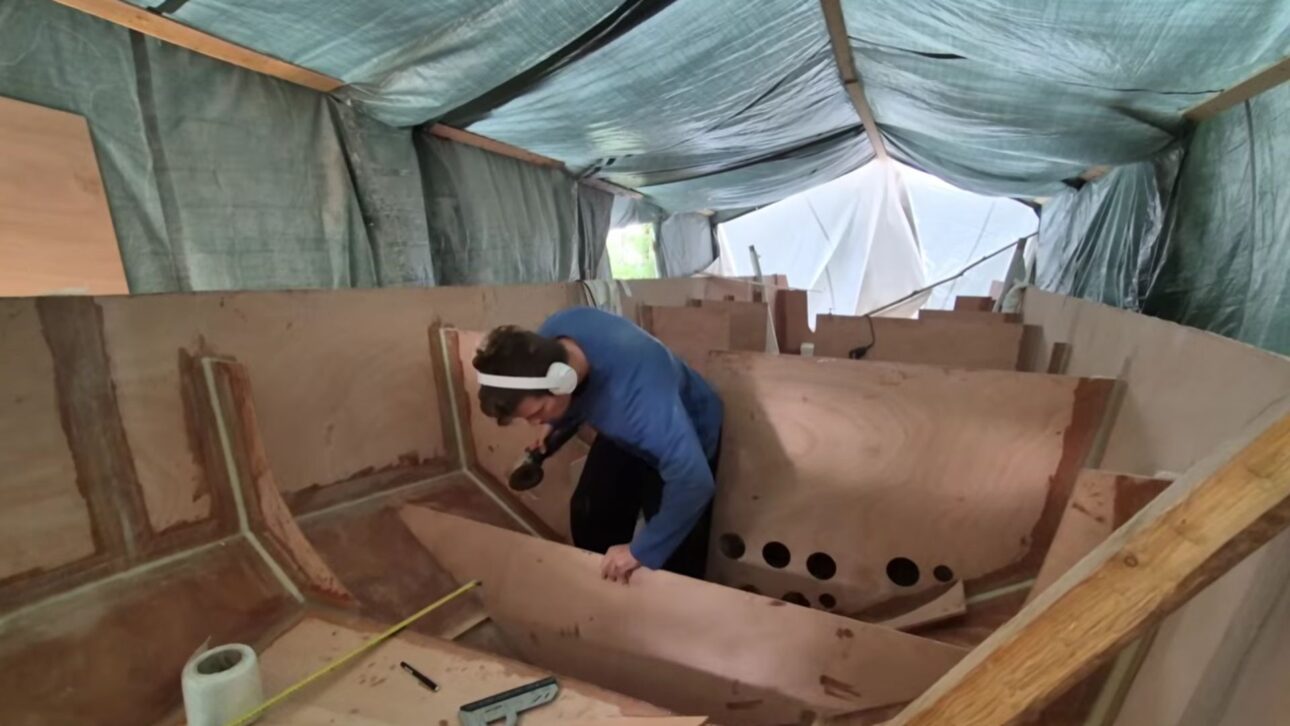
This shelter cost about 750 euros, and the set of materials, including wood, roof, and tarp, amounted to around 1,500 euros, roughly 4,500 to 9,000 reais at the current exchange rate.
The hull was made of okoumé marine plywood, purchased in sheets costing about 9 euros each, with approximately 60 of them for the entire boat, joined by beveled joints and curved over bulkheads spaced one meter apart.
On top of the wood, fiberglass and epoxy resin are applied, providing strength to the structure.
The builder uses biaxial fiberglass and a technique of first soaking the wood in epoxy, letting it dry, and only then applying the fiberglass, which makes the bonding stronger.
The keel, made of teak, about 6 meters and 10 centimeters high, was constructed as a separate and waterproof structure.
He admits that much of the measurements were done by eye, without precision instruments, because, in his words, that’s enough for someone who is not going to compete.
Even so, the empty hull weighs less than 500 kilos and is quite rigid.
Eight panels on the roof and an electric motor
The heart of the boat’s autonomy is on the roof.
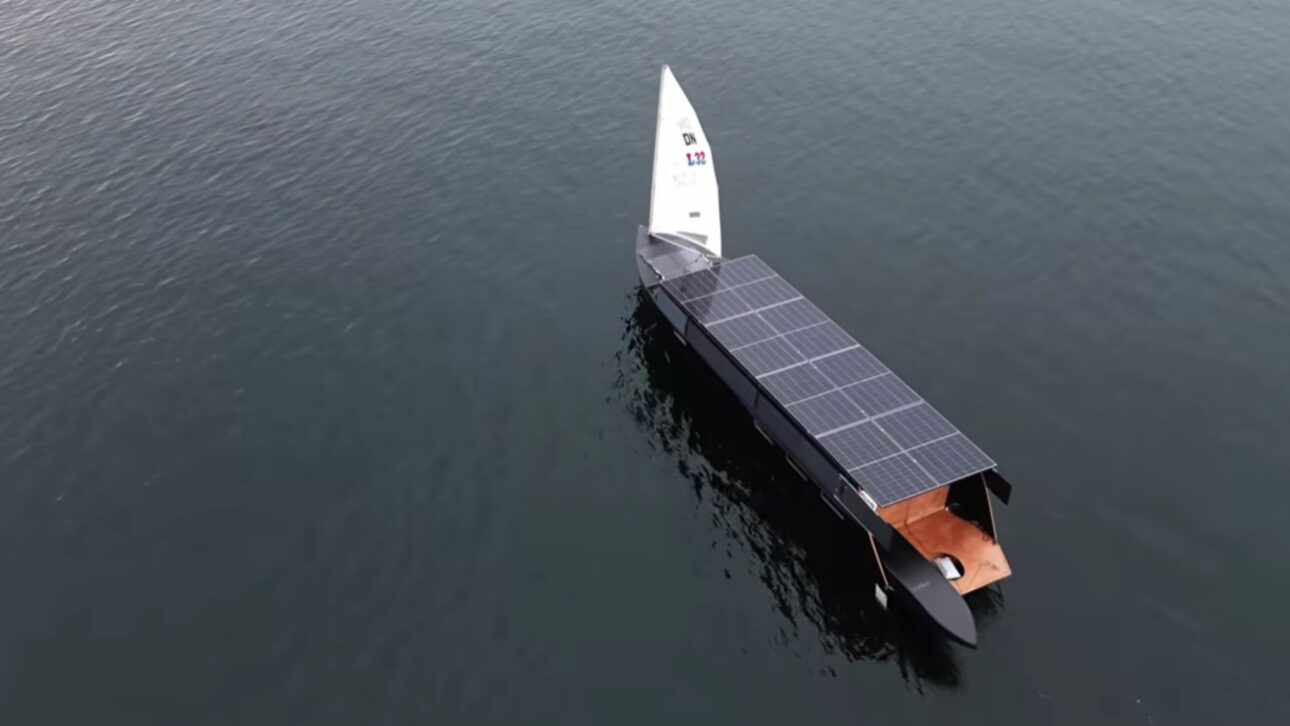
There are eight standard solar panels, installed over a central beam that leaves a gap of about 2 centimeters for ventilation, which improves performance and prevents the interior from overheating in summer.
Propulsion is provided by a 6 kW electric outboard motor, weighing about 30 kilos, powered by batteries, in an arrangement the author describes as simple to install.
Inside, the Helios 11 was finished like a compact house.
The upper walls use thinner plywood, 6 millimeters, to reduce weight, and everything was painted with marine paint, black below the waterline and white inside, along with polycarbonate windows.
There is a bed, kitchen, bathroom, and plenty of storage space, and it was with this set ready, after installing panels, batteries, and motor, that the solar and electric boat made its first trip across the Baltic Sea.
The limits that the builder himself recognizes


Despite the pride in the result, the author is honest about what the solar and electric boat is not.
He makes it clear that he is not a professional, that he works guided by observation and that some parts turned out fragile, like the doors and the table, or not very resistant, like the hatch, enough for a big wave, but not for giant waves.
The most important message is about where to sail, as he states that the method is suitable for building a real boat for calm and protected waters, like those of the Baltic Sea, and not for facing the open ocean.
There is also a warning that goes beyond the technical part and talks about health.
The builder shares that he exhausted himself throughout the project and reflects on the irony of sacrificing present health and freedom in the name of future freedom.
The lesson he takes, and shares with those thinking of doing the same, is not to take the project too far, not to rush, to take breaks, and even to pay someone to help occasionally, instead of working oneself to death.
The Helios 11 shows that it is possible to build a solar and electric boat to live in with little money, as long as the size of the challenge is respected.
The combination of marine plywood, fiberglass, and solar panels gave this remote worker a floating and independent home, capable of navigating the Baltic powered by the sun.
At the same time, the author’s own caveats remind us that it is a handcrafted project, aimed at calm waters, and not a substitute for a certified ocean-going vessel.
And you, would you have the courage to leave everything and live on a solar and electric boat built with your own hands? Do you think it’s worth trading comfort and security for this freedom on the water, or are the risk and work not worth it? Share your opinion in the comments, respecting different opinions, and share the article with those who dream of living at sea.