Portuguese
  Spanish


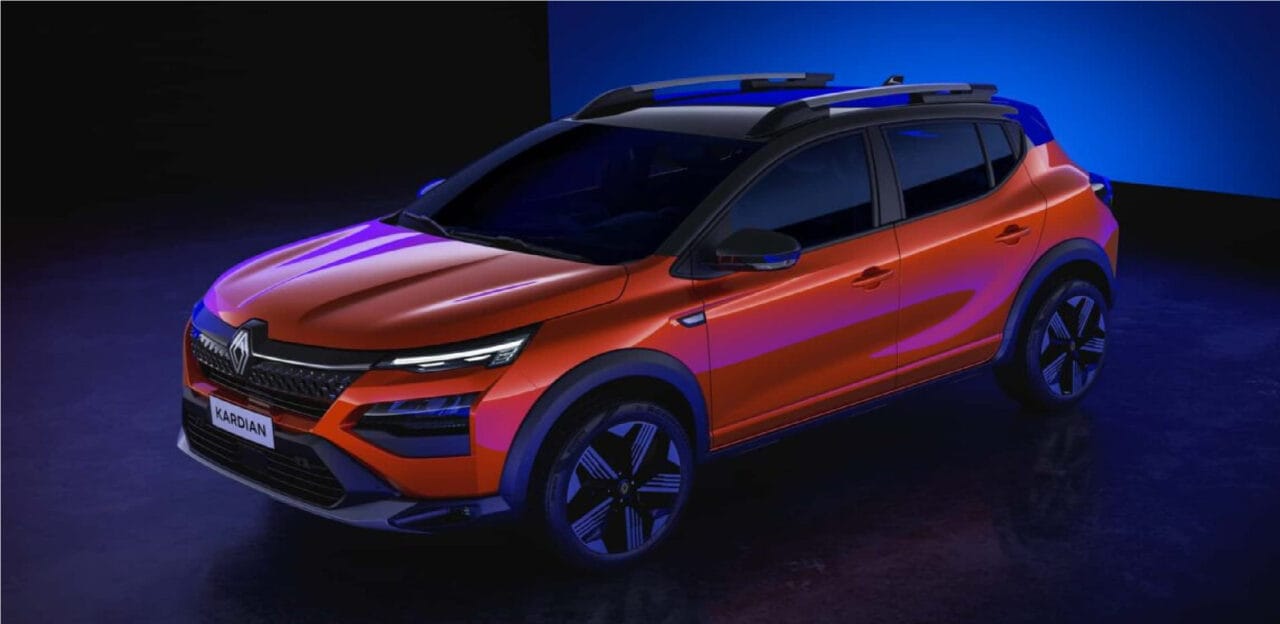

The Investment Made by Renault in Its Factory in Curitiba Focuses on the Brand’s Project to Launch Its New Vehicle, Kardian
The automotive industry continues to be a prominent sector in the global economy, and Renault reinforces its position with a significant announcement. Luiz Pedrucci, president of Renault for Latin America, recently stated that the automaker plans to invest 300 million euros, equivalent to about R$ 1.6 billion, in its factory in Curitiba. The purpose of this investment is to facilitate the launch of the Kardian, the brand’s newest vehicle.
Renault has played a significant role in the automotive industry in Brazil and other markets. The announcement of a 300 million euro investment in its factory in Curitiba to launch the Kardian is an important step for the company. The Kardian represents a significant addition to Renault’s vehicle lineup, and the investment will serve multiple purposes.
The Importance of Renault’s New Vehicle
The Kardian vehicle is a vital part of Renault’s strategy to continue its expansion in the automotive market. Production of the Kardian at the Curitiba factory is set to begin in January, with a national launch scheduled for March 2024. This vehicle is based on the first platform launched in Brazil by Renault in the last 15 years, demonstrating the company’s commitment to innovate and invest in the Brazilian market.
-
Rolls-Royce Turns Heads with 30-Inch Floating Wheels, 6.6-Liter V12 Engine, and 563 Horsepower

-
2019 Kia Sportage EX: A Spacious and Cost-Effective SUV with 2.0 Flex Engine and Panoramic Roof
-
Fiat Strada Becomes Top Seller in June, Surpassing Onix, Polo, Hilux, and T-Cross with 107 HP Engine and 732 km Range.

-
Suitcase-sized hydrogen engine spins at 25,000 rpm, nearly doubling the efficiency of conventional cars and replacing exhaust smoke with water vapor


This investment in the factory not only expands Renault’s presence in Brazil but also positively impacts the country’s economy. Currently, Renault is completing an investment of R$ 2 billion made in the last two years in Brazil. The new investment of 300 million euros reinforces Renault’s commitment to the Brazilian economy and job creation.
Export Perspectives for the Kardian
An important feature of the Kardian is that it will not be solely aimed at the Brazilian market. Renault plans to export this vehicle from its industrial complex in Paraná to at least 20 countries in the Latin American region. This is proof of the importance of the Latin American market for Renault, as it represents the brand’s largest market outside Europe.
The Renault factory in São José dos Pinhais, where the Kardian will be produced, has an annual production capacity of 330,000 vehicles. According to Luiz Pedrucci, there will be no capacity limitations for Kardian production. This means that Renault is ready to meet the demand from both the Brazilian and export markets.
Coexistence with Current Models
A common question regarding a new launch is whether it will affect existing models. Luiz Pedrucci clarified that the arrival of the Kardian does not mean the end of any current Renault models. The production of the Sandero, for example, will continue, demonstrating Renault’s commitment to maintaining its range of models to meet diverse consumer needs.
Renault’s commitment to the Brazilian and Latin American markets is evident. Brazil is Renault’s second-largest market, and Latin America is a key market for the company. The news of the 300 million euro investment demonstrates Renault’s dedication to expanding its presence and market share in this region.