






 Portuguese
  Spanish


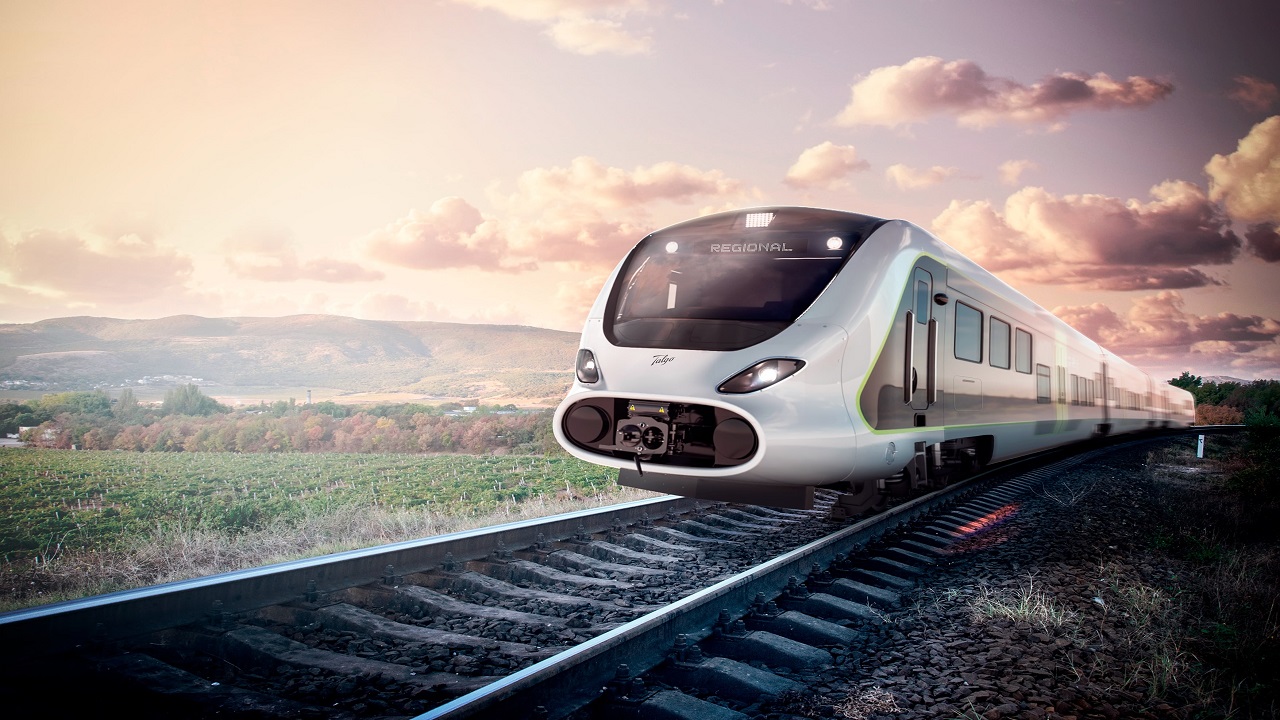

Sustainability in Vehicles Is Everywhere and Being Developed Across All Segments. Evidence of This Is Repsol’s Partnership with Talgo for the Development of the First Hydrogen-Powered Train
Repsol and Talgo have formed a partnership to develop a hydrogen-powered train project, promoting a fully renewable and CO2 emission-free rail transport. The agreement between the companies was signed this Monday (19) at Talgo’s factory in Las Rozas, Madrid.
Read Also
The Renewable Hydrogen-Powered Train Is Becoming a Reality


Present at the signing were Juan Abascal, Executive Director of Industrial Transformation and Circular Economy at Repsol, and Carlos Palacio Oriol, President of Talgo. Additionally, the event also featured Emiliano López Atxurra, President of Petronor.
-
Why can the crane operator only obey the correct signalman on the construction site: among dozens of workers, a hand raised by the wrong person can confuse the maneuver and turn a load of tons into an immediate risk.

-
What changes with the new public transportation rules that can reduce pressure on fares and pave the way for zero fare in Brazil?
-
Argentina confirms Belgian giant to lead strategic Paraná River waterway and promises to reduce logistical costs on one of South America’s most important routes
-
MBRF surprises the logistics sector by demonstrating how Artificial Intelligence can directly influence deliveries throughout Brazil by reorganizing distribution routes in seconds, optimizing fleet usage, reducing logistics costs, and speeding up product arrivals even in the face of unforeseen road incidents.
Through this partnership, Repsol and Talgo will provide an innovative solution to make the renewable hydrogen-powered train a reality. Talgo will be responsible for the development, construction, and launching of the new medium-distance cars, while Repsol will offer its renewable hydrogen generation infrastructure.
The companies highlighted that this collaboration will promote the achievement of one of the objectives set in the Hydrogen Roadmap, approved by the Government in October, which aims for the operation of two commercial train lines powered by renewable hydrogen.
Objective of the Companies
Repsol aims to become a major player in the development of renewable hydrogen on the Iberian Peninsula and also plans to install a capacity of 400 MW by 2025, and up to 1.2 GW by 2030.
Talgo, on the other hand, has a line focused on the development of hydrogen-powered trains and has already developed the Vittal One train, a solution for medium-distance lines that is powered by a hydrogen battery. The project will be the first hydrogen-electric double train, and the company is already planning to place it on the tracks.
Sustainable Trains Can Unblock Urban Mobility Bottlenecks
The companies are continually seeking ways to generate sustainable vehicles, whether electric cars, electric motorcycles, future flying electric cars, and many others; rail mobility is also keeping pace. In May, the first solar-powered tourist train in Latin America began offering rides between Argentina and Peru.
The train is equipped with solar panels on its roof and was developed to preserve the environment and demonstrate that solar energy is a sustainable source that can be utilized in any transportation or business. The rail vehicle received investments of approximately US$ 9 million.

Graduated in Journalism and Marketing, he is the author of over 20,000 articles that have reached millions of readers in Brazil and abroad. He has written for brands and media outlets such as 99, Natura, O Boticário, CPG – Click Petróleo e Gás, Agência Raccon, among others. A specialist in the Automotive Industry, Technology, Careers (employability and courses), Economy, and other topics. For contact and editorial suggestions: valdemarmedeiros4@gmail.com. We do not accept resumes!


