






 Portuguese
  Spanish
  3 min of reading
  0 comments


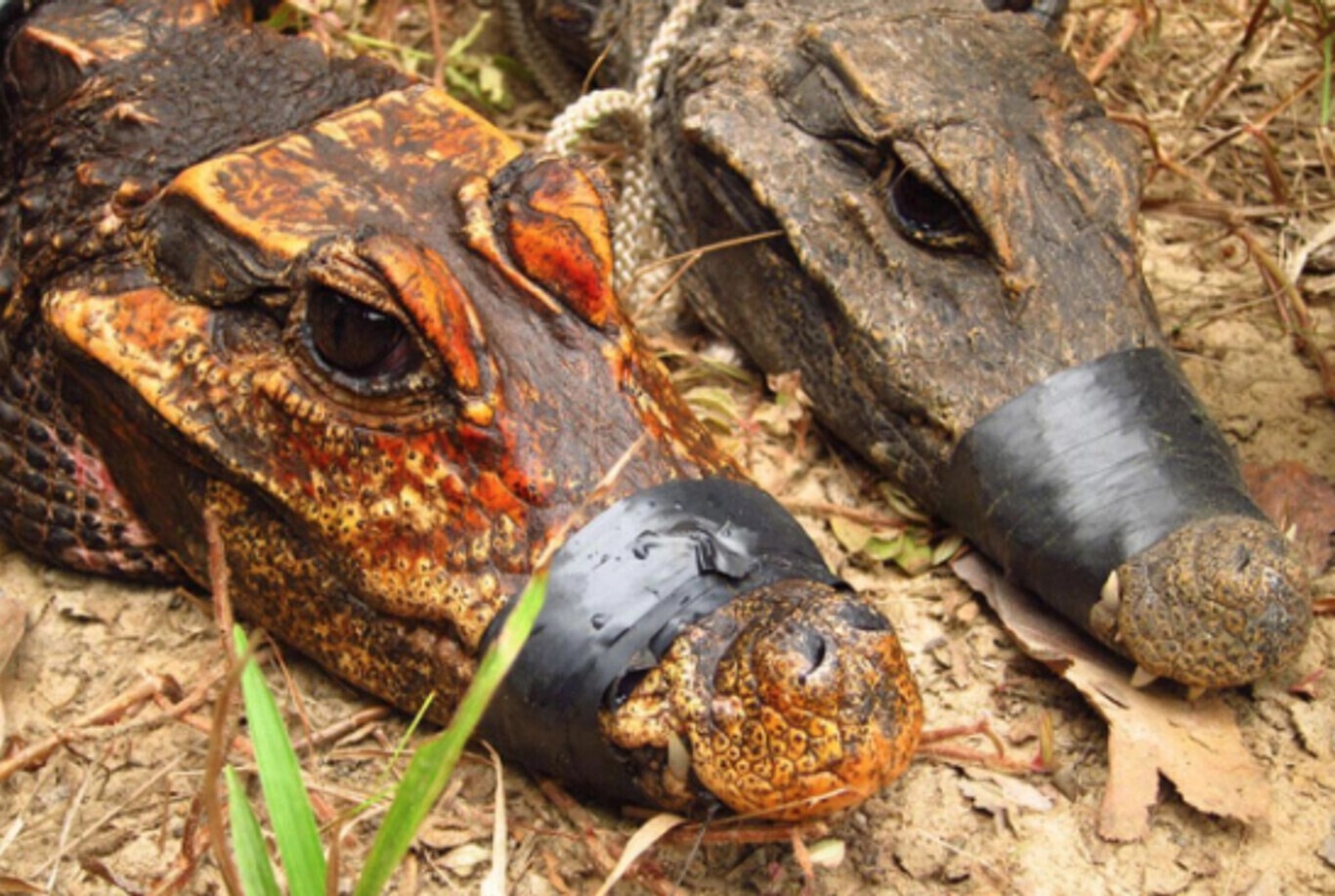
For Millennia Underground in Gabon, Reptiles Face Guano, Lack of Sunlight, and Scarce Resources, Revealing Extreme Adaptations That May Indicate a Singular and Still Mysterious Evolutionary Path
Deep inside Gabon, Central Africa, an almost inaccessible setting harbors an intriguing evolutionary story. Amid the Abanda cave complex, a population of Dwarf Crocodiles has begun to live away from sunlight, immersed in permanent darkness. There, according to scientific reports, these reptiles have adopted unexpected behaviors and developed unusual characteristics.
Life in Darkness
Scientifically classified as Osteolaemus tetraspis, the Dwarf Crocodiles found in the caves differ from those that inhabit rivers and swamps.
According to a study cited on ResearchGate, these animals have managed to adapt to the extreme conditions of the subterranean environment.
-
Engineers in Brazil deploy a robot dog to enter pipelines of a R$ 134.7 million project, facing mud, sand, humidity, and toxic gases, and send data in real-time without exposing workers.

-
Brazilian family creates machine that transforms seawater into fresh water, produces up to 130 liters per hour, facilitates routine on vessels, and boosts family business along the country’s coast.
-
A doctor from Minas Gerais warns that sleeping with the fan pointed at the body all night is not as harmless as you think; it dries out the respiratory tract, causes mucus buildup, spreads dust mites, and can even irritate the cornea of the eyes.

-
Ecuadorian volcano at 6,268 meters is more than 2,000 meters closer to space than Everest, which is 8,848 meters, because the Earth is wider at the equator.




With no access to sunlight, they have reorganized their way of life to survive in an ecosystem where the food chain is limited and highly specialized.
Known as “cave crocodiles,” they have primarily begun to feed on crickets and bats. The peculiar diet reflects the availability of prey within the cave system.
Another surprising aspect is the aquatic habitat: the animals swim in liquid excrement known as guano, a result of the accumulation of bat feces mixed with alkaline water.
DNA and Genetic Differences
Archaeologist Richard Oslisly explained to National Geographic that his team collected blood samples from nearly 40 crocodiles. The material was compared with the DNA of another 200 individuals.
The analysis revealed that the subterranean specimens managed to transmit distinct genes. The discovery suggests a process of genetic differentiation possibly associated with prolonged isolation.
This environmental separation has produced radical changes. While Dwarf Crocodiles that live outdoors depend on sunlight to regulate their metabolism, the cave dwellers survive for years in total darkness. The adaptation raises new questions about physiological plasticity in reptiles.
The Color That Stands Out
Among the most striking features is the orange coloration observed in some males. As highlighted, this pigmentation is not primarily attributed to genetic mutations.
The phenomenon would be linked to the subterranean lifestyle, especially continuous exposure to guano and alkaline water.
Prolonged contact with this mixture alters the appearance of the scales, creating the unusual hue.
Hypotheses and Mysteries About the Reptiles
In a statement to The Guardian, Oslisly presented a hypothesis regarding the development of the young. The eggs would be laid inside the caves.
After hatching, the young crocodiles would be able to enter and exit through small openings. However, as they grow, they would reach a size that keeps them confined. “They are in their own little prison,” he stated.
It remains unclear how these animals started living underground or how long they have occupied the caves.
It is estimated that at least three thousand years have passed since the first specimens entered in search of food or shelter.
The team emphasizes that, if the current pace and isolation are maintained, it is very likely they will evolve into a new species. Whether this will happen soon remains uncertain—a riddle that continues to challenge scientists and researchers.
With information from Xataka.


-

-

3 people reacted to this.