Portuguese
  Spanish


Residents of Northern Santa Catarina invest in building bunkers with food stock for more than a year, solar energy with batteries, and satellite internet, in reinforced concrete projects with vegetative cover that combine food and energy self-sufficiency to face crisis scenarios like natural disasters.
Residents of Santa Catarina are taking preparation for extreme scenarios to another level by building bunkers on rural properties in the North of the state, structures that go far beyond a reinforced basement and function as complete autonomous survival systems. In Joinville, businessman André Luiz built a bunker from scratch in the middle of the forest using concrete and iron, a project designed to withstand extreme situations including everything from natural disasters to conflict scenarios, and which will receive vegetative cover on the surface to make the structure invisible to drones and aircraft flying over the region. Inside the bunkers, André stores polenta, pasta, beans, sugar, and other non-perishable foods that ensure subsistence for an extended period without the need for external resupply.
The case of Joinville is not isolated. In São Bento do Sul, Sandro Gilberto Jankoski dedicated more than a decade to building a bunker on his rural property, a space designed to maintain a stable temperature throughout the year and which houses stocks of rice, beans, wheat, salt, and seeds for future cultivation, as well as solar energy stored in batteries and satellite internet. According to Sandro, the structure would allow living isolated for more than a year in case of crisis, and he has already tested the effectiveness of the storage: “Recently I finished some rice that I had stored since 2011,” he reported, demonstrating that the internal conditions of the bunkers preserve food for periods that far exceed the conventional shelf life.
What is inside the bunkers built in Santa Catarina

The bunkers in Northern Santa Catarina are not improvised holes in the ground. The structure of André Luiz in Joinville was built with reinforced concrete and iron, materials chosen for their resistance to impacts, soil pressure, and climate variations, and the project includes vegetative cover that makes the surface of the bunker blend with the natural terrain around, a measure that the businessman considers essential to prevent the location from being identified by aerial equipment. André documents the process on social media, where he has already published videos showing both the construction and the daily use of the space, including the preparation of meals with the food stored in the bunkers.
-
Ferrari, BMW, Tesla, and Chinese Automakers Shift from Copper to Aluminum Wiring to Reduce Weight and Costs in Electric Vehicles

-
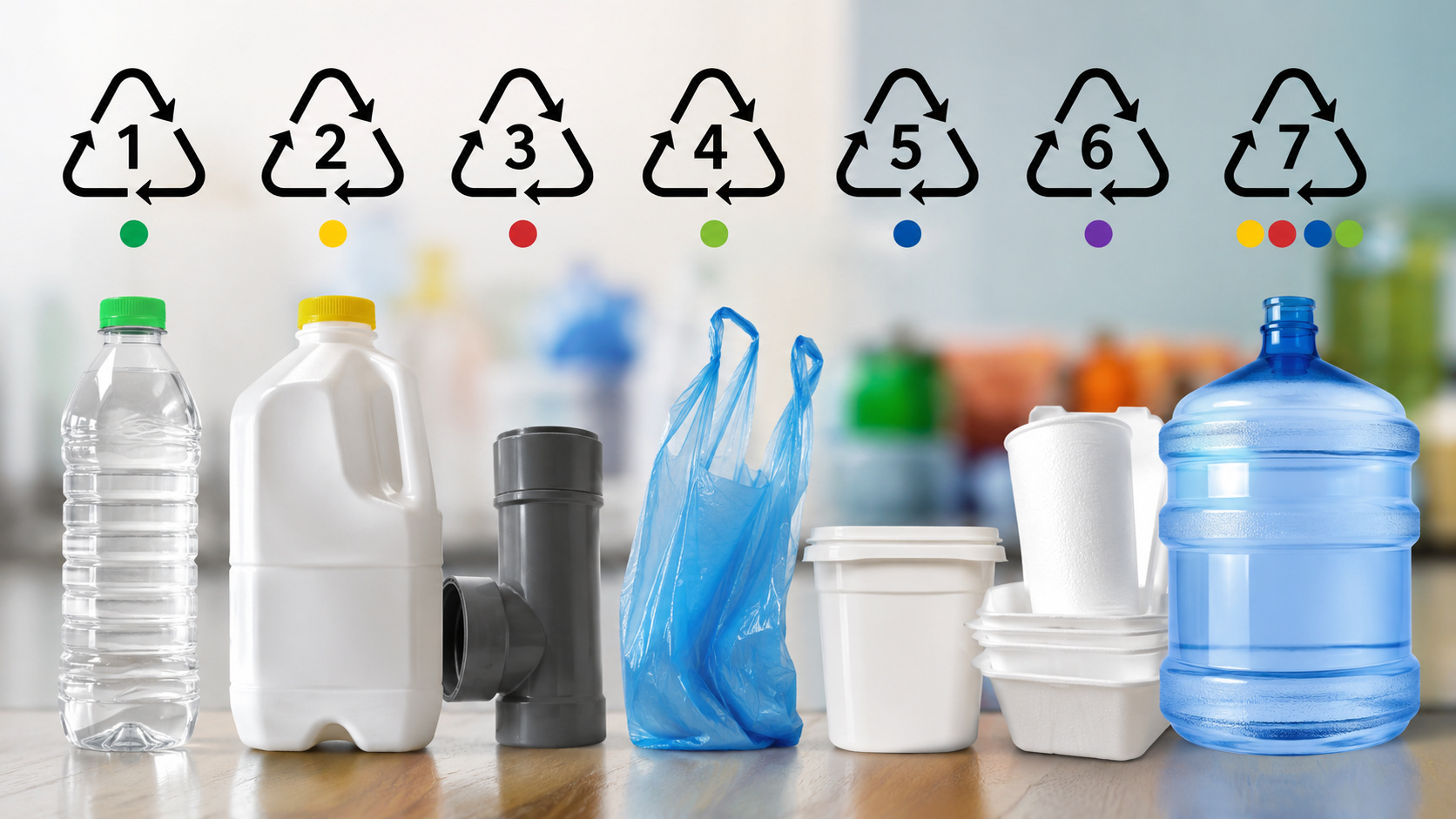
Understanding Plastic Codes: Numbers 1 to 7 on Packaging Aid Efficient Recycling and Boost Circular Economy

-
400 km² of Greenhouses in Almería, Spain, Astonish American Visitor by Producing Millions of Tons of Produce for Cold-Weather Markets
-
Antarctic Volcano Emits Microscopic Gold Particles That Travel Up to 1,000 Kilometers Across the Continent



Sandro’s bunker in São Bento do Sul has a more long-term sustainability approach. In addition to stocks of dry foods and seeds for future planting, the property has solar panels that power batteries capable of providing electricity independent of the public grid, and satellite internet ensures communication even if the terrestrial telecommunications infrastructure is compromised. The underground environment of the bunkers maintains a pleasant temperature and constant darkness, conditions that Sandro points out as ideal for food preservation: the absence of light and heat slows the degradation of grains and flours for years beyond what supermarket shelves allow.
Why residents of Santa Catarina are building bunkers
The motivation of bunker builders in Northern Santa Catarina combines pragmatism with a worldview that prioritizes autonomy. Sandro explains that his structure was designed to ensure autonomy in the face of situations like natural disasters, economic crises, or supply difficulties, scenarios that for residents of a region frequently hit by floods, landslides, and storms are not hypothetical: they are events that have already occurred and may repeat with increasing intensity. Santa Catarina has a history of disasters that have left entire cities without supplies for weeks, and those who have experienced these events understand why someone would dedicate years and resources to building bunkers that ensure independence when the system fails.
André Luiz goes beyond natural disasters and designs his bunkers to withstand extreme conflict situations. The decision to size the structure to withstand nuclear attacks and to camouflage it against drones reflects concern with geopolitical scenarios that, although they may seem distant from the reality of Santa Catarina, are part of the calculation of those who build bunkers as a form of existential insurance against the unpredictable. For these builders, investing in underground structures is not paranoia: it is preparation they hope never to need to use, but which they prefer to have available rather than regret not having built.
How the food and energy self-sufficiency of bunkers works
The survival strategy in bunkers rests on three pillars: food, energy, and water. Food stocks prioritize long-lasting items such as rice, beans, wheat, salt, sugar, pasta, and polenta, products that, under adequate temperature and humidity conditions, retain nutritional properties for years, and stored seeds allow bunker occupants to start their own cultivation when external conditions stabilize. The logic is to survive with the stock while the crisis lasts and rebuild productive capacity when it passes.
Solar energy with battery storage solves the electrical issue without grid dependence. Panels installed on the properties where the bunkers are located capture energy during the day and store it for nighttime use and on cloudy days, a system that powers internal lighting, communication equipment, and essential tools without consuming fossil fuel, which would have limited availability in a crisis scenario. Satellite internet complements the system by ensuring that bunker occupants maintain contact with the outside world and access information about the evolution of the situation that led to their isolation, a capability that shelters built decades ago did not possess.
What the construction of bunkers in Santa Catarina reveals about the current moment
The bunker phenomenon in northern Santa Catarina is part of a broader movement growing in Brazil and worldwide. The combination of climate change intensifying natural disasters, geopolitical instability fueling fear of conflicts, and supply chain fragilities exposed during the pandemic created an environment where the idea of self-sufficiency ceased to be exclusive to fringe groups and began to attract entrepreneurs, liberal professionals, and families who view bunkers as a logical extension of a personal contingency plan. In Santa Catarina, a state that combines vulnerability to severe climatic events with a culture of individual initiative, the ground is fertile for this type of investment.
André’s and Sandro’s bunkers represent different extremes of the same impulse. André builds for the worst imaginable scenario and designs against military threats; Sandro builds for civil crises and prioritizes long-term agricultural sustainability. What both share is the conviction that relying exclusively on public systems and centralized supply chains is a risk that can be mitigated with individual preparation, and their bunkers are the concrete materialization of this philosophy.
And you, would you build a bunker if you had the means? Do you think it’s an exaggeration or intelligent preparation? Leave your opinion in the comments.