Portuguese
  Spanish


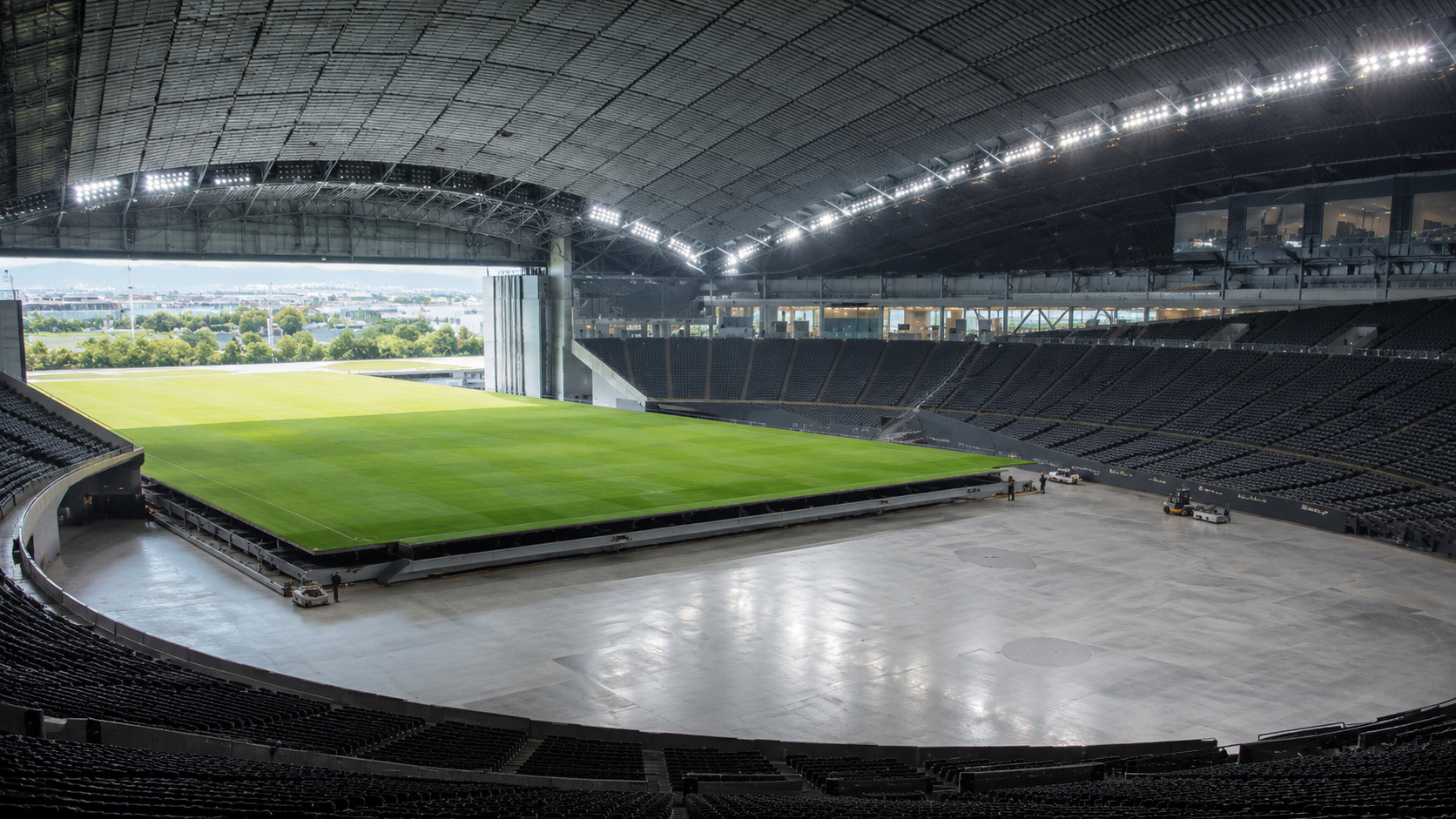

The Sapporo Dome shows how a stadium in Japan can go beyond changing the floor, using air pressure to move a giant natural grass field, keep the arena versatile, and transform the turf into a movable heavy engineering structure
While many stadiums only change the floor to host events, the Sapporo Dome in Japan moves an 8,300-ton natural grass field into the arena. The structure rises 7.5 centimeters by air pressure and moves on 34 wheels.
The information was released by Kawasaki Heavy Industries, manufacturer of the Sapporo Dome’s Hovering Stage system. The company explains that the movable stage is lifted by air pressure, moved, and rotated by wheels, which reduces the direct weight on them.
In practice, the stadium doesn’t just change the floor’s appearance. It moves an entire turf, with professional field size, as if it were a huge industrial platform entering the arena.
-
A Simple Bar of Soap Could Be the Key to Effortlessly Cleaning Stubborn Oven Grease

-
Brazilian Woman Turns 1.3 Tons of Waste into Over 4,000 Sustainable Bags and Accessories
-
Brazilian Container Factory Innovates by Halving 40-Foot Units Seamlessly to Create Autonomous Market Pods

-
Former XP Partners Launch Yuool, a Recycled PET Bottle Shoe Brand, Becoming Brazil’s First B Corp Footwear Company with $15 Million Revenue




The Sapporo Dome moves an entire natural field and transforms the arena into a giant machine
The most curious point of the Sapporo Dome is the way the field enters the stadium. The natural grass is not fixed to the interior of the arena. It can be brought from outside to inside when the space needs to host football.
The field measures 120 by 85 meters and weighs about 8,300 tons. Even with this size, the structure moves at 4 meters per minute, supported by 34 wheels and sustained by air pressure.


This set makes the stadium look like a large-scale machine. The arena not only makes room for another event. It physically moves an essential part of the game.
How air pressure makes the grass rise without levitation
The technology draws attention, but it needs to be explained simply. The field does not levitate. The system uses air pressure to lift the structure by 7.5 centimeters, reducing the direct weight on the wheels.
This layer of air acts as an invisible support between the stage and the ground. With less load on the wheels, the turf can thus move with more control.
Kawasaki Heavy Industries, manufacturer of the Sapporo Dome’s Hovering Stage system, detailed the key points of the mechanism. The air support allows moving and rotating the stage without relying on conventional tracks.
Why use movable natural grass instead of keeping everything fixed
The use of movable natural grass solves an important issue. A covered stadium may have difficulty maintaining a natural turf in good condition inside the arena, especially when the space also hosts other types of events.
At the Sapporo Dome, the natural field can stay outside the stadium and come in when needed. Thus, the arena gains flexibility without giving up natural grass for football.
This makes the stadium different from many arenas that rely solely on artificial grass, removable flooring, or adapted areas. In the Japanese case, the field itself is a movable part of the structure.
The numbers explain why this movable turf draws so much attention
The system’s data helps to understand the scale of the project. The field is 120 by 85 meters, weighs 8,300 tons, rises 7.5 centimeters, and moves at 4 meters per minute.
The 34 wheels do not carry everything alone. The air pressure reduces the direct load and allows the stage to move forward with more stability.
That is why the case draws attention outside Japan. The idea of an arena swallowing an entire natural grass field is simple to imagine but difficult to execute.
The difference for stadiums that only have a retractable roof or floor
Many modern stadiums impress by opening and closing the roof. Others change the floor to host shows, fairs, or different sports events.
The Sapporo Dome takes a different approach. The main change is in the movement of the entire natural field, a heavy structure that enters the stadium to transform the arena into a football venue.
The difference lies in the size of the moved piece. It is not a small panel, nor just a layer of flooring. It is a complete field, with natural grass, brought inside by an air and wheel system.
What makes this system rare among large stadiums
The system is rare because it combines heavy weight, controlled movement, and sports use. A field of 8,300 tons needs to enter the arena with stability to be used in matches.
It is also noteworthy that the movement dispenses with conventional rails. Air pressure helps to alleviate the load and gives more freedom to the stadium’s design.
This type of solution shows how engineering can change the function of an arena. The stadium ceases to be just a sports building and starts to operate as a transformation machine.
The Sapporo Dome shows a different way of thinking about multipurpose arenas
The Sapporo Dome shows that a multipurpose arena can go beyond changing seats, lights, and floors. The stadium moves its own natural turf to adapt the space for soccer.
The most striking scene is simple to understand. A field of 8,300 tons enters the arena, rises 7.5 centimeters by air pressure, and moves on 34 wheels, in an operation that mixes sports and heavy engineering.
If a stadium can move an entire field to change its function, what will be the next limit of engineering in large sports arenas?