Portuguese
  Spanish


New technology joins electronic components, conducts electricity, and allows later separation of parts for reuse and recycling
An innovation created by researchers at Newcastle University in the United Kingdom has drawn attention for combining two important functions in the electronics sector. The team developed a reversible conductive glue capable of fixing components and conducting electricity, a function currently associated with traditional soldering. The breakthrough came from a reversible glue previously created to facilitate recycling and reuse of equipment. The new material expands this proposal, as it allows circuits to be assembled and then parts to be separated with a simple process.
Technical advancement targets the electronics market
The change began when chemist Bassam Aljohani and his colleagues sought support from electrical engineers to adapt the adhesive for use in electronics. From this collaboration, the glue gained metallic particles, which replace pigments during a manufacturing process similar to that of paint. This alteration made the material electrically conductive and paved the way for its application on metallic surfaces, plastics, and printed circuit boards. Tests showed good adhesion on these materials, reinforcing its potential as an alternative to soldering in certain applications.
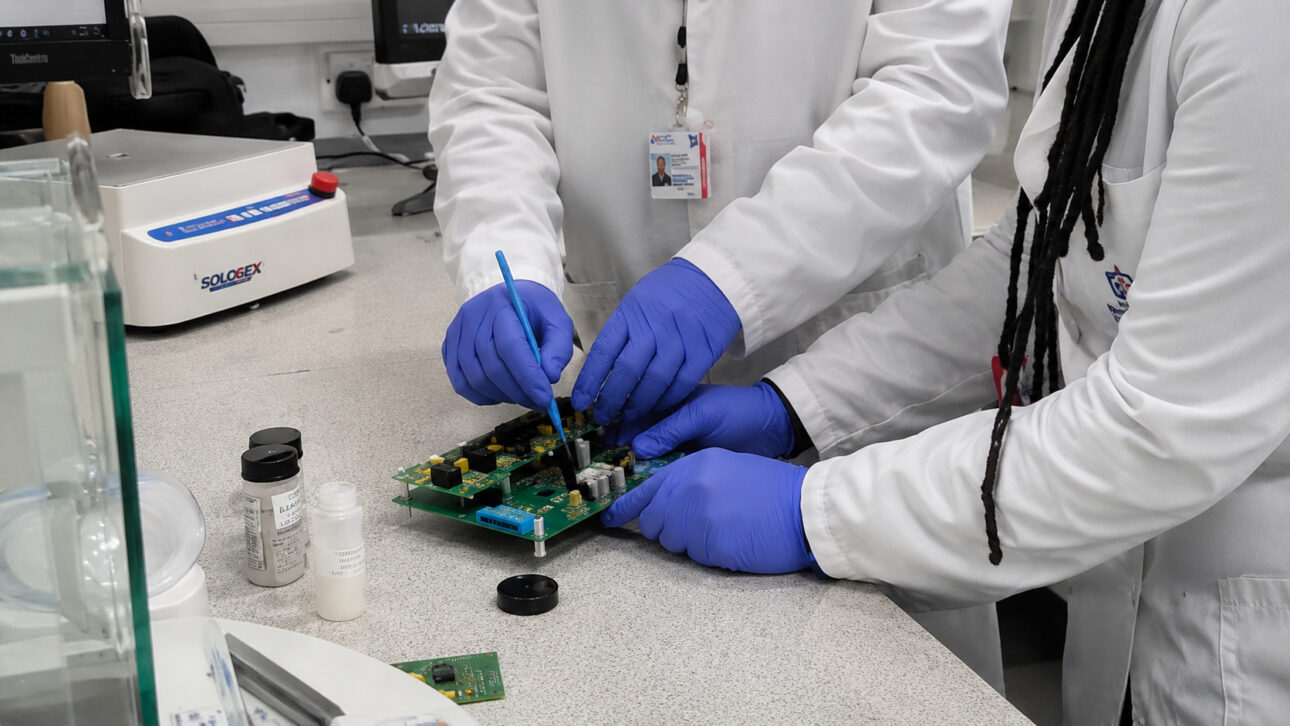
Gluing instead of soldering could simplify disassembly
The main difference compared to soldering appears in the disassembly stage. While soldering often requires complex and expensive processes, the glue can be deactivated by washing with acetone or alkaline solution. This makes it easier to separate components, which can then be sent for reuse or recycling. This point is relevant because desoldering often makes it impossible to reuse electronic parts, especially when removal damages components or requires high operational costs.
-
Apple Raises MacBook and iPad Prices as Memory Costs Surge by Up to 98%, Losing Edge Over Rivals and Highlighting AI Boom’s Impact on Consumers

-
China Establishes State Centers to Train Humanoid Robots, While the West Lags Behind with Makeshift Solutions
-
The Trap of Modern Technology: How Screen Overload and Digital Connections Can Impact Your Mental Health and Well-being
-
Wyoming Couple Grows Tropical Fruits Year-Round in -40°C Using Geothermal Greenhouse, Demonstrating Earth’s Heat Can Produce Oranges and Lemons in Snow Without Traditional Heating





Formulation reduces steps and avoids toxic fumes
The glue also presents advantages in the application method. The adhesive is single-component, thus eliminating the need for hardeners and simplifying use. Its water-based formula prevents the emission of organic solvent vapors, while its strength remains comparable to other commercial glues. During manufacturing, metal particles are added to the formula to ensure electrical conduction. Thus, the material combines adhesion, electrical performance, and reversibility in a single solution.

Reversibility is the differential of the new conductive glue
Electrically conductive adhesives have existed for a long time, but reversibility changes the scope of the technology. According to Bassam Aljohani, making this type of adhesive reversible offers a solution to a real and urgent problem. The statement summarizes the project’s goal: to allow electronic equipment to be assembled efficiently and disassembled with less difficulty. In this way, the innovation reduces barriers to recovering parts and increases material utilization.
Technology can change part of electronic assembly
Traditional soldering still plays a central role in the electronics industry, but the new glue offers an alternative for applications that require electrical conduction and subsequent disassembly. The material created by the University of Newcastle can facilitate the reuse of components, reduce complex steps, and make recycling more practical.
Could reversible conductive glue replace part of the solder used today in electronic equipment?