






 Portuguese
  Spanish


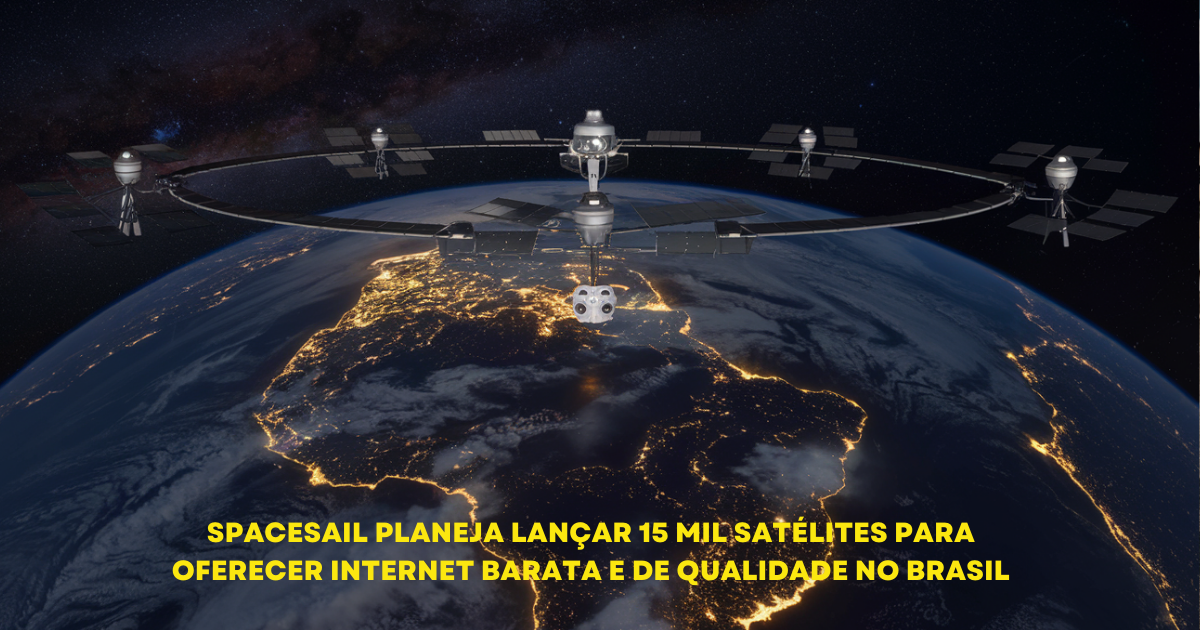


SpaceSail, nicknamed the “China Starlink,” plans to launch 15 thousand satellites to offer cheap and quality internet in Brazil. The initiative emerges at a turbulent time for Elon Musk and promises to revolutionize the connectivity sector in the country.
Brazil May Be On The Verge Of A Technological Revolution That Promises To Shake The Dominance Of International Tech Giants.
A recent agreement between the Brazilian government and an innovative company from China is promising to transform internet access in the country.
A Technological Revolution With Satellites And Low Prices
On November 19, 2024, the Ministry of Communications signed an unprecedented agreement with SpaceSail, a Chinese company nicknamed the “China Starlink.”
According to information released by the government, the company has committed to launching 15 thousand satellites into low orbit by 2030, with operations in Brazil expected to begin in 2025.
-
Bruno Guimarães, 28, Misses Crucial Penalty Against Norway in World Cup After Replacing Vinicius Jr.

-
Inspired by a school lesson on Africa’s water crisis, a young boy raised money through chores to fund a well that transformed a Ugandan community.

-
Brazilian Construction Worker Moves to France, Earns Up to €2,500 Monthly with Home Renovations, Gains Social Media Attention

-
US Navy Sinks USS Oriskany with 230 kg of C-4, Creating World’s Largest Artificial Reef in 37 Minutes





With this constellation of satellites, SpaceSail promises to offer high-quality internet at affordable prices, especially for remote regions and rural areas.
This measure seeks to reduce Brazil’s dependence on Starlink, owned by Elon Musk, and foster greater competition in the national satellite internet market.
According to the Ministry of Communications, this partnership represents a strategic opportunity to bring connectivity to places where it is still a logistical and financial challenge.
Advanced Technology And Aggressive Strategy
Today, SpaceSail only has 18 satellites in orbit, a modest number compared to the approximately 6,000 of Starlink.
However, the company bets on advanced low Earth orbit (LEO) satellite technology. These satellites operate at approximately 549 km from Earth, ensuring lower latency and greater data transmission efficiency.
Moreover, SpaceSail employs an aggressive pricing strategy, historically common among Chinese companies. According to experts, this approach is seen as essential to gaining ground in a market dominated by a single giant.
“The entry of a new player increases competitiveness and directly benefits the end consumer, who gains in price and service quality,” highlighted Thiago Ayub, technology director at Sage Networks.
Before starting operations, however, SpaceSail needs to meet the regulations required by Anatel and complete the installation of ground stations in Brazilian territory.
Economic And Social Impacts Of The Arrival Of SpaceSail
The expansion of SpaceSail could have a profound impact on strategic sectors such as education, agriculture, and even urban development.
The use of high-capacity satellites facilitates internet access in schools in remote areas, a priority for the Brazilian government, which seeks to establish partnerships with Telebras to enhance the initiative’s reach.
For isolated communities, the project is expected to be a game-changer. Regions where connectivity is non-existent may finally gain access to a cheaper and more reliable internet service.
Brazil, in turn, also plays an important role in this partnership. Since 2020, China has made it a national priority to create infrastructure for satellite internet.
The South American country, with its vast territory and logistical challenges, becomes an ideal laboratory for the large-scale application of this technology.
Elon Musk In Crisis: A Strategic Moment For SpaceSail
The arrival of SpaceSail comes amid a tumultuous phase for Elon Musk in Brazil. In August 2024, the Supreme Federal Court temporarily suspended the operations of the platform X (formerly Twitter), owned by the billionaire, due to the lack of legal representation in the country.
Additionally, accounts of Starlink were blocked due to non-payment of fines related to this case, which generated criticism of Brazil’s technological dependency on the American company.
President Luiz Inácio Lula da Silva has also publicly expressed his dissatisfaction with Musk, recalling the entrepreneur’s support for Jair Bolsonaro in the 2022 elections.
This turbulent scenario opens the door for SpaceSail to gain traction as a viable and competitive alternative.
A More Connected And Accessible Future?
With 45.9% of the Brazilian satellite internet market dominated by Starlink in July 2024, SpaceSail’s entry promises to shake up the sector.
Besides creating healthy competition, the initiative is expected to contribute to technological advancements, improvements in service quality, and price reductions.
Although ambitious, SpaceSail’s proposal is not without challenges. The need to meet regulatory requirements and deploy robust infrastructure are barriers that will need to be overcome.




Elon Musk em crise.?? Kkķkkkkkkkkķkjj
Aquela gordurinha passado na farinha com aquela cerveja gelada.
Meu deus, essa jornalista só pode ter ganhado muita picanha para fazer um artigo tão tendencioso, um contrato que ira revolucionar a internet para o Brasil??? Elon Musk já tem internet consolidada, foguetes do próprio que lançam seus próprios satélites e com foguete totalmente recuperável e pronto para outro lançamento em 24hs, agora me digam….. Como a internet chinesa ira revolucionar, se a empresa nem funcionando está??? Ainda tem gente que bate palmas pra isso….