Portuguese
  Spanish


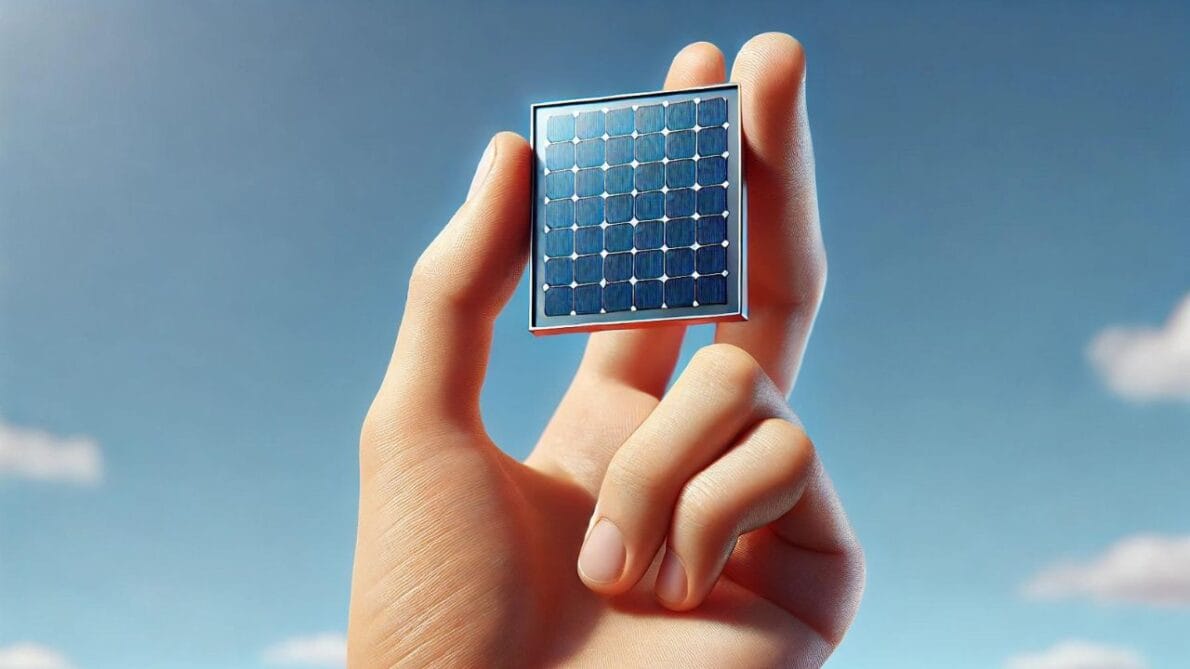

Discover How the Innovation of Quantum Dots Solar Panels Promises to Revolutionize Solar Energy and the Challenges That Still Need to Be Overcome.
Have you heard of Quantum Dots solar panels? This technology may sound like it came out of a Star Trek episode, but it promises to revolutionize various fields, including solar energy. Let’s explore how this innovation can transform everything, but also the barriers that need to be overcome for that to happen.
Quantum Dots (QDs) are microscopic semiconductor particles that can enhance the efficiency of solar panels. They can improve the energy conversion efficiency from the current 15-23% to up to 66%, according to calculations from the National Renewable Energy Laboratory (NREL). But if it’s so promising, why aren’t we using this technology widely yet?
Quantum Dots Solar Panels Rely on Complex Techniques and Expensive Materials
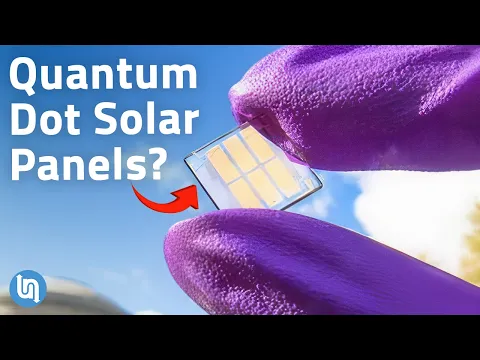

The answer lies in the engineering challenges. Quantum Dots solar panels rely on complex techniques and expensive materials, such as perovskites, which often contain toxic elements like lead. This raises environmental and health concerns. Additionally, these panels are sensitive to moisture, ultraviolet light, and high temperatures, factors that are inevitable in solar panels that need to last for decades.
-
More than 1,000 residents of a remote island in Kiribati now have clean water and electricity with solar systems operated by the community itself.

-
Island in Brazil Innovates by Installing 184 Solar Panels on Urban Lagoon to Generate Clean Energy
-
Japanese Island of 417 Residents to Test Living Half the Year Solely on Solar Power, Reducing Dependence on Diesel Brought by Ship
-
Brazilian Fishermen Use Solar Power to Produce Nearly One Ton of Ice Daily, Preventing Fish Spoilage Before Reaching Market




A team of researchers from Korea University and Ulsan National Institute of Science & Technology is working on a solution. They combined Quantum Dots with less toxic perovskites, such as tin-lead halides (TLHP), to create more stable and efficient solar cells. Even so, there are still issues such as the degradation of materials when exposed to air and intense sunlight.
The Revolution of Quantum Dots
Despite the challenges, the promise of Quantum Dots solar panels is immense. With the ability to generate more energy at a lower cost, this technology could radically change the way we produce solar energy. Quantum Dots can create multiple electron-hole pairs (excitons) per photon, significantly increasing the efficiency of solar cells. They are relatively cheap and easy to manufacture.
Revolutionary Potential
The truth is that while Quantum Dots solar panels have revolutionary potential, they still face significant hurdles before becoming commercially viable. Durability and toxicity issues need to be addressed, and there is still much research to be done.
If scientists can overcome these challenges, we may be on the brink of a revolution in solar energy. Until then, we will continue to rely on the more traditional, yet less efficient, solar technologies we know today.
The innovation of Quantum Dots solar panels is exciting, but caution and extensive research are necessary to ensure that this technology can truly “change everything” as promised.