





 Portuguese
  English
  Spanish
  4 min of reading
  0 comments


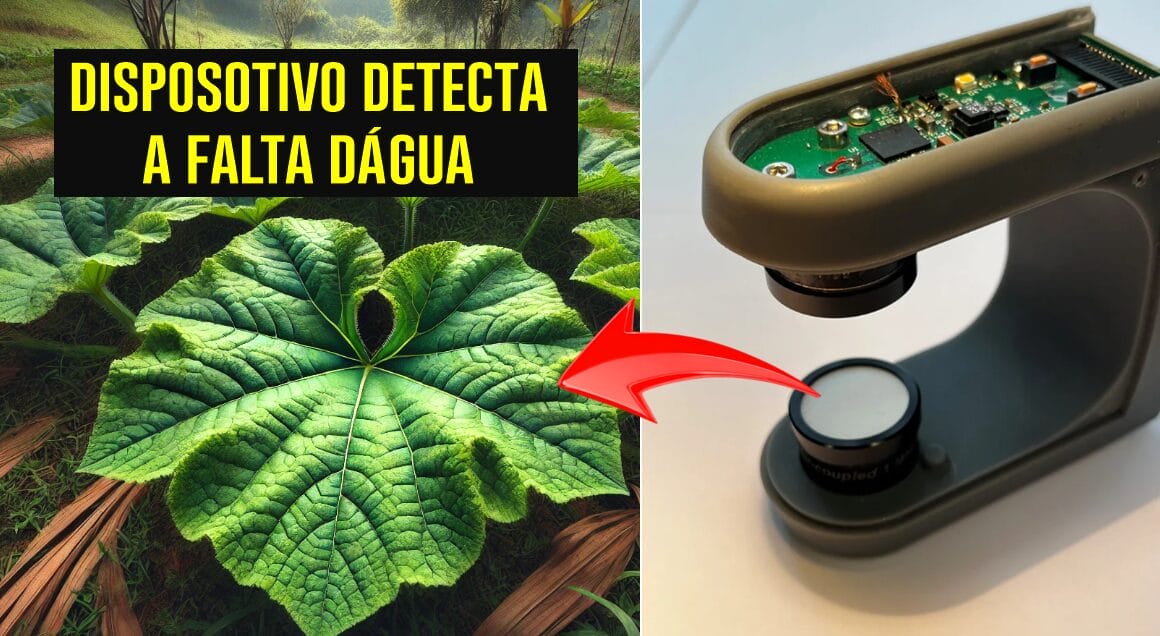
An Innovative Portable Device Detects The First Signs Of Drought In Crops Before The Leaves Start To Wither. Understand How This Technology Can Help Farmers Prevent Damage And Improve Efficiency In The Field!
Drought is becoming an increasingly alarming challenge in various regions of the world, directly impacting the ecosystem and human life. To face this challenge, scientists have been seeking innovative ways to monitor the health of crops, as these are essential for food security and the maintenance of balanced ecosystems.
The Challenge Of Drought For Plants And Farmers
Drought causes stress in plants, leading to biochemical changes that can compromise not only their growth but also their ability to produce nutritious food.
In wine-producing regions, it directly impacts the quality and yield of harvests. Vines, for example, have shallow roots, making them more vulnerable to water scarcity.
-
BYD officially enters the semiconductor race by launching the Xuanji A3, a self-developed chip in China that reinforces the technological verticalization strategy and can reduce costs in millions of smart vehicles.

-
While SpaceX lands rockets as a routine, Spain wants to enter orbit with its own recoverable microlauncher; the Miura 5 emerged from a Spanish startup, gained a complex in Kourou, and aims to transform small satellites into a sovereign European market.

-
Seven researchers from the Netherlands, Brazil, Russia, Romania, and Germany have reconstructed the largest lake that ever existed on Earth: about 10 million years ago, the Paratethys covered 2.8 million km², lost up to 70% of its surface, exposed 1.75 million km² of dry seabed, and transformed an ancient sea of Eurasia into a colossal geological scar.

-
68 researchers from 15 countries deciphered the tremor that made the Earth vibrate like a bell for nine days: 25 million m³ of rock and ice, a volume sufficient to fill about 10,000 Olympic swimming pools, collapsed into a fjord in Greenland, triggered a 200-meter megatsunami, and revealed a climate catastrophe that science did not expect to see on this scale.


The result is a decrease in grape yield and alterations in the sugar and acidity levels of the fruits, affecting the final quality of the wine.
For farmers, water management is a delicate balance. Over-watering crops can be just as harmful as a lack of water.
It is in this context that the need for precise and constant monitoring of the physiological state of plants arises, something that until recently relied on invasive and time-consuming methods.
A Technological Innovation To Monitor Water Stress
Scientists from Kaunas University of Technology (KTU), in Lithuania, in partnership with the Spanish National Research Council (CSIC), have developed an innovative device to assess the impact of drought on plants in a non-invasive manner.
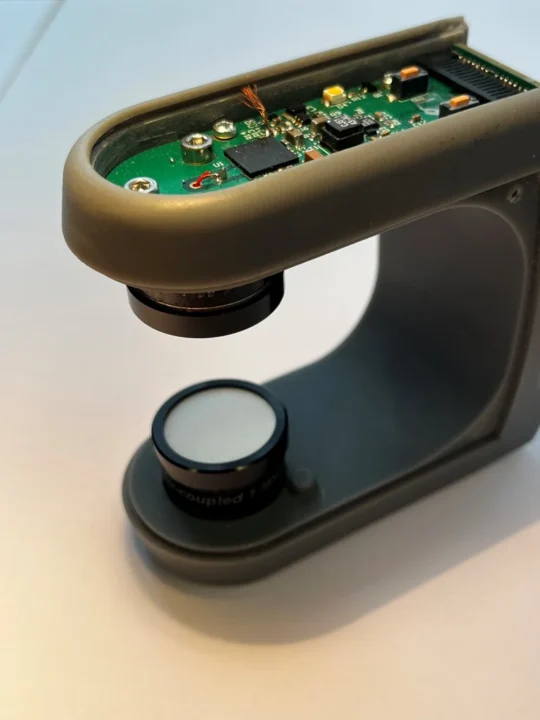
The new equipment uses non-contact ultrasound, being capable of measuring the mechanical properties of a leaf without cutting it or subjecting it to time-consuming laboratory processes.
This technology allows scientists to obtain real-time results directly in the field, without harming the plant.
The portable device, palm-sized, emits and receives ultrasonic signals through two transducers – one acting as the emitter and the other as the receiver.
The change in the captured signals indicates the physiological state of the plant, helping to quickly identify whether it is suffering from water stress.
How The Device Works In Practice
Kaunas University of Technology
The operation of the device developed by KTU is based on the ability of ultrasound to detect changes in the physical properties of leaves.
These measurements are correlated with parameters indicating the level of water stress, such as the relative water content and the water potential of the plants.
Moreover, the device is capable of transmitting the collected information to a smartphone, facilitating real-time monitoring by farmers and scientists.
One of the advantages of this device is its accuracy. It not only measures water stress but also other important variables such as temperature and humidity without the need for additional equipment.
This information is crucial to ensure that plants receive the exact amount of water, avoiding both drought and excessive irrigation.
Application In European Vineyards
The innovation is already being applied in European vineyards, which represent more than 50% of the world’s wine production.
In 2022, these vineyards suffered severely from drought, with estimates indicating that up to 18% of the plantations were at risk. This scenario is not limited to a single year.
In 2023, the Spanish Ministry of Agriculture forecasted a decline of more than 20% in wine production, a direct result of extreme weather conditions.
The ultrasound device offers an effective solution to this problem, helping vintners to monitor their vineyards and optimize irrigation.
With the ability to measure water stress in real-time, producers can adjust their water supply precisely, preserving the quality of the grapes and, consequently, the wine produced.
Expansions Of The Technology
Although the device was initially designed for vines, KTU scientists have already tested its effectiveness on other plants.
Furthermore, there are plans to expand its use in areas such as disease control in plants and even in industrial sectors, such as measuring fine materials.
Professor Linas Svilainis from KTU emphasizes that the device was developed for large leaves, over three centimeters in diameter, which are flat enough to cover the transducers.
However, he believes that the technology can be adapted to measure an even greater variety of plants in the future.
The device may also be a valuable tool for pest control, as changes in the mechanical properties of leaves can indicate the presence of diseases or infestations.




Be the first to react!